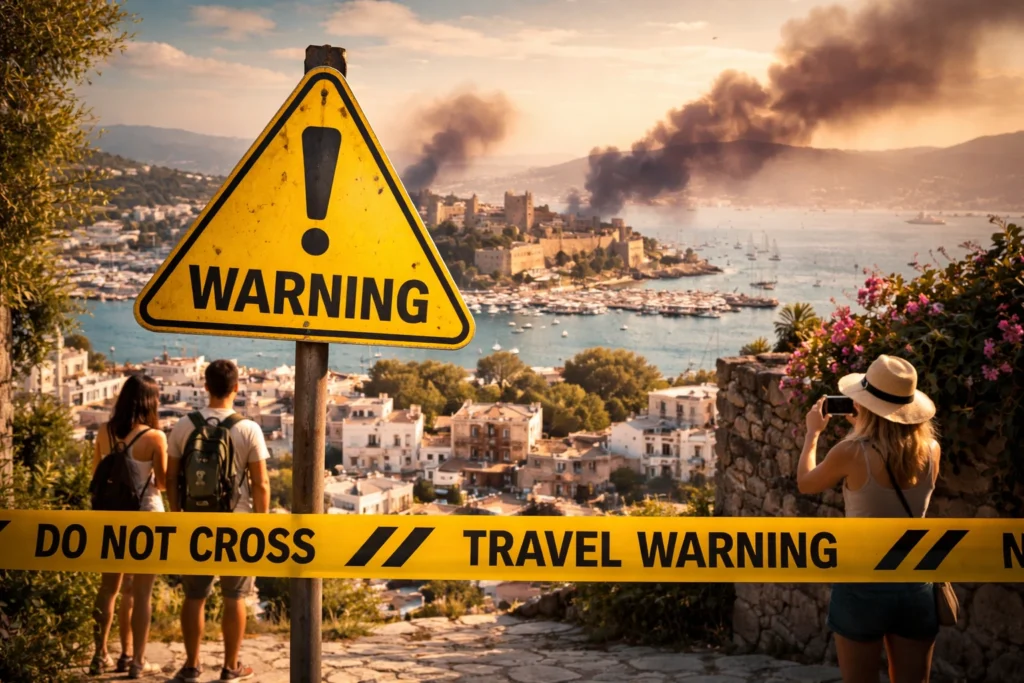
The UK government has issued a strong travel advisory for Turkey, Cyprus, and Greece. Authorities warn travelers about rising security risks across these regions.
The Foreign, Commonwealth and Development Office urges British nationals to avoid high-risk areas. Officials highlight growing instability linked to Middle East tensions. Travelers now face increased uncertainty when planning trips.
This advisory reflects concerns over military activity and regional spillover effects. As tensions rise, travel confidence across the Eastern Mediterranean continues to decline.
Turkey Faces Heightened Security Risks Near Borders
Turkey remains a major tourism destination with strong global appeal. However, border regions now face serious security concerns. Authorities have raised alerts across several provinces.
Southeast Turkey, especially Hatay Province, remains a high-risk zone. Roads near the Syrian border may close without warning. Ongoing conflict in nearby regions drives this volatility.
Hakkari Province also presents challenges for travelers. Visitors must secure permission from local authorities before entering. Military activity in this region continues to increase.
Despite these risks, major tourist hubs still attract visitors. Cities like Istanbul and Antalya continue to operate normally. However, travelers must stay alert and follow official guidance.
Cyprus Grapples with Security Concerns and Military Risks
Cyprus faces growing pressure due to its strategic location. The island sits close to conflict zones in the Middle East. This proximity raises concerns among global travel authorities.
Recent drone incidents near RAF Akrotiri have triggered alarms. This military base plays a key role in regional operations. Authorities now warn travelers to avoid nearby areas.
Security experts also highlight potential terrorist threats. Although Cyprus remains stable, risks cannot be ignored. Travelers should avoid sensitive locations and stay cautious.
The northern part of Cyprus adds another layer of complexity. Its disputed political status creates legal and safety concerns. Officials advise travelers to limit visits to this region.
Greece Remains Stable but Faces Emerging Risks
Greece continues to attract tourists with its rich culture and scenic landscapes. However, authorities now monitor the situation closely. Regional instability has raised new concerns.
Large protests and public demonstrations occasionally disrupt daily life. These events may affect transport services and tourist plans. Travelers should remain aware of local developments.
Security agencies also warn about potential threats in major cities. Athens and other urban centers remain under close surveillance. Increased security measures aim to protect residents and visitors.
Despite these concerns, popular destinations remain accessible. Islands like Santorini and Crete continue to welcome tourists. However, visitors must stay informed and vigilant.
Middle East Conflict Drives Regional Travel Disruptions
The ongoing conflict in the Middle East continues to reshape travel patterns. Military actions and geopolitical tensions influence nearby regions. This situation creates uncertainty across Europe and West Asia.
Countries like Turkey, Cyprus, and Greece now feel the indirect impact. Border tensions and security risks disrupt tourism and travel planning. Airlines and tour operators also adjust services accordingly.
Travel advisories reflect these evolving risks. Governments aim to protect citizens by issuing timely warnings. As a result, many travelers delay or cancel their trips.
Tourism Industry Faces Economic Pressure
Tourism plays a vital role in the economies of these countries. However, current conditions create new challenges for the industry. Hotels, airlines, and local businesses now face reduced demand.
Travel cancellations continue to rise as uncertainty grows. Many tourists prefer safer destinations during this period. This trend affects revenue across the Mediterranean region.
Industry leaders now focus on rebuilding traveler confidence. They promote safety measures and flexible booking options. However, recovery will depend on regional stability.
Travel Advice for UK Tourists Planning Trips
Travelers should take proactive steps before planning any trip. Authorities recommend checking official updates regularly. Reliable information helps travelers make informed decisions.
Visitors must avoid restricted or high-risk areas at all times. Following local authority guidance remains essential for safety. Travelers should also stay away from military zones and protests.
Comprehensive travel insurance provides added protection. It helps cover cancellations, medical needs, and emergency evacuations. Communication tools also remain important during uncertain situations.
Outlook for Travel in the Eastern Mediterranean
The situation in the Eastern Mediterranean continues to evolve. Governments and travel agencies monitor developments closely.
While popular destinations remain open, caution remains necessary. Travelers must stay flexible and prepared for sudden changes.
In the coming months, stability will determine travel recovery. Until then, safety and awareness remain the top priorities for all travelers.
For more travel news like this, keep reading Global Travel Wire