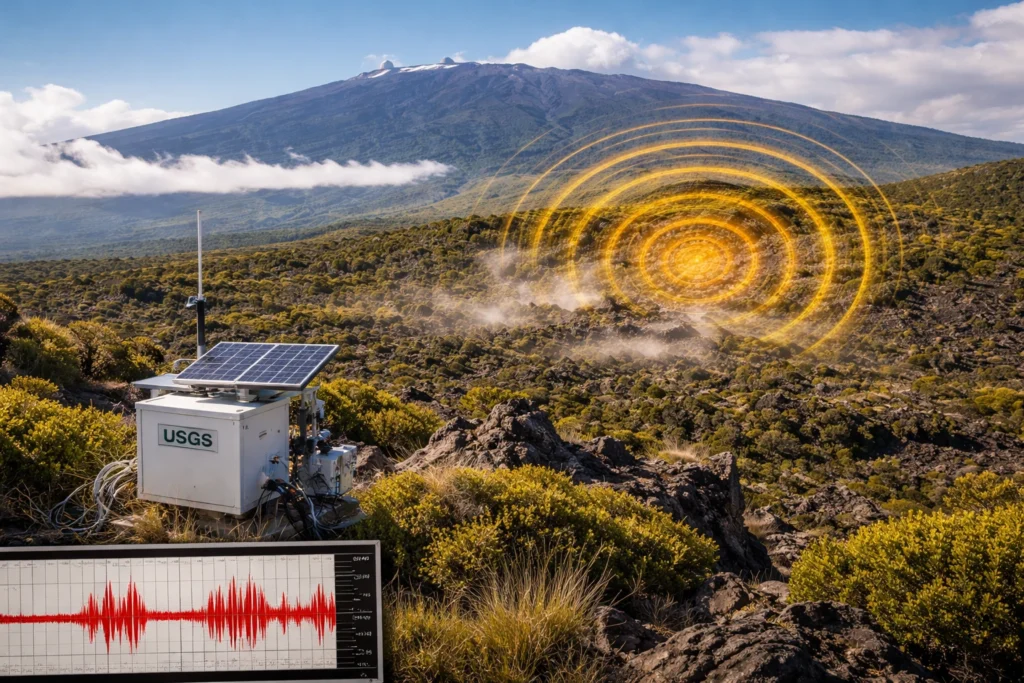
Scientists have detected a cluster of earthquakes beneath Maunakea in Hawaii. The USGS Hawaiian Volcano Observatory confirmed the activity in the Hāmākua region.
The swarm included around 28 small earthquakes within several hours. These events occurred at moderate depths beneath the surface. Experts confirmed no link to magma movement or volcanic activity.
This update reassures residents and travelers across Hawaii. Authorities continue to monitor the situation closely.
Details of the Seismic Activity
The earthquake swarm took place over a short time period. Most events recorded low magnitudes below 2. The strongest reached magnitude 3.
These earthquakes occurred between three and six miles underground. This depth places them beneath the Maunakea structure.
Scientists used advanced monitoring systems to track these events. Real-time data helped confirm the nature of the activity.
The clustering of earthquakes defines a swarm pattern. This pattern often indicates stress release within the Earth’s crust.
Location Highlights Geological Importance
The activity occurred on the northeast flank of Maunakea. This region lies above the older Kohala volcanic structure.
The area features a complex geological framework. It includes connections to deeper volcanic formations beneath the island.
However, experts confirmed no active magma chambers in this zone. The location supports a tectonic origin rather than volcanic activity.
This distinction plays a key role in risk assessment. It allows scientists to rule out eruption threats.
Seismic Pattern Shows Natural Stress Release
The earthquake swarm followed a clear pattern. Activity began slowly and then increased briefly.
Two moderate earthquakes marked the peak of the sequence. After that, activity paused for a short period.
This pause indicated a release of built-up stress. Later, smaller events resumed briefly before ending.
Such patterns reflect natural tectonic adjustments. They do not signal escalation or ongoing danger.
No Link to Magma Movement or Eruption Risk
Scientists confirmed that the earthquakes have no connection to magma movement. This finding remains the most important takeaway.
Volcanic earthquakes usually show rising intensity and changing depth. These features did not appear in this case.
Instead, the data supports a tectonic cause. Stress within the Earth’s crust triggered these small movements.
This confirmation rules out any immediate eruption risk. Hawaii’s volcanic system remains stable.
Geological Forces Behind the Activity
The earthquakes result from stress within the island’s structure. Hawaii’s volcanic islands carry immense weight.
This weight creates pressure on underlying geological layers. Over time, stress builds and releases through earthquakes.
The Kohala structure beneath Maunakea plays a key role. Its shape influences how stress distributes across the region.
This process occurs naturally and regularly. It forms part of the island’s long-term geological evolution.
Historical Data Supports Current Findings
Past records show similar earthquake swarms in this region. Events occurred in multiple years over the past decades.
These swarms shared similar characteristics in depth and magnitude. Most remained small and short-lived.
This consistency confirms a stable geological pattern. It shows that such events are not unusual.
Scientists rely on this history to assess current risks. The data supports a non-volcanic explanation.
Minimal Impact on Tourism and Daily Life
The earthquake swarm has not affected daily activities in Hawaii. No damage has been reported across the region.
Tourism continues without disruption. Flights, hotels, and attractions operate normally.
Travelers can visit Hawaii with confidence. The islands remain safe and welcoming.
This event may even attract interest in geological tourism. Visitors often enjoy learning about volcanic landscapes.
Ongoing Monitoring Ensures Safety
The USGS Hawaiian Volcano Observatory continues to monitor activity. Sensors track seismic movements across the islands.
Scientists analyze data continuously to detect any changes. This approach ensures early warning capabilities.
Authorities also provide timely updates to the public. Clear communication helps maintain trust and awareness.
The current situation does not require any emergency response. However, monitoring remains active and thorough.
Stable Outlook for Hawaii Travel
Hawaii remains one of the safest travel destinations globally. The recent earthquake swarm does not change this status.
Scientific evidence confirms stable volcanic conditions across the islands. Travelers can continue planning trips without concern.
Authorities emphasize awareness but not alarm. The islands continue to showcase natural beauty and resilience.
As monitoring continues, Hawaii stands prepared for any changes. For now, the outlook remains calm and stable for residents and visitors alike.
For more travel news like this, keep reading Global Travel Wire