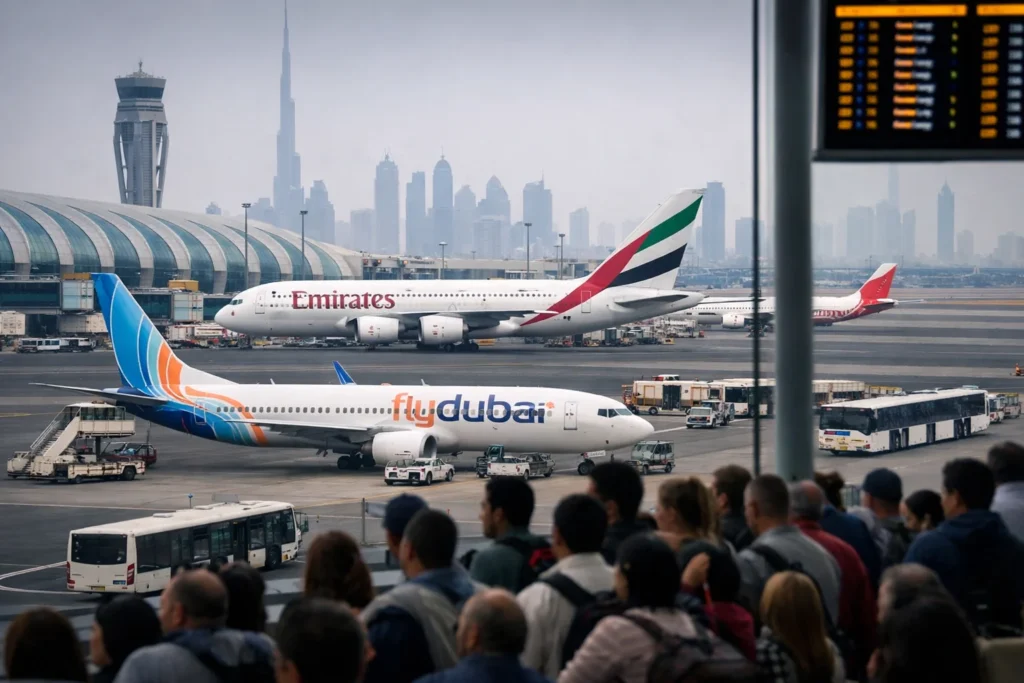
Dubai’s aviation network experienced significant turbulence today as Dubai International Airport reported widespread delays and a handful of cancellations, disrupting travel plans for thousands of passengers. The situation, involving multiple international and regional airlines, has once again highlighted the challenges faced by even the world’s busiest aviation hubs.
According to operational updates, a total of 81 flights were delayed while three were canceled, affecting both arrivals and departures. The disruptions extended across key routes linking Dubai with major cities such as Delhi, Karachi, Cairo and Mumbai, causing inconvenience for travelers and adding pressure on airport operations.
Among the airlines most affected, Emirates and FlyDubai accounted for the majority of delays. Emirates, one of the world’s largest international carriers, reported dozens of delayed flights, while FlyDubai also experienced a significant number of disruptions along with a small number of cancellations. Air India Express and several other regional carriers recorded additional delays, contributing to the overall congestion at the airport.
Dubai International Airport serves as a critical global transit hub, connecting passengers across continents. As a result, even minor operational disruptions can quickly escalate into larger issues, affecting connecting flights and causing delays to ripple across international networks. The current situation reflects how interconnected global aviation has become, where delays in one location can influence travel schedules worldwide.
Passengers traveling from South Asia and the Middle East were among the most impacted. Routes from Delhi and Mumbai experienced delays linked to operational constraints, while flights from Karachi also faced setbacks, leaving passengers waiting for extended periods. Travelers arriving from Cairo encountered both delays and cancellations, reducing available travel options and creating uncertainty for those with onward connections.
The disruption has created visible congestion inside terminals, with long queues at check-in counters and customer service desks. Many passengers have reported difficulties in obtaining timely updates or rebooking alternative flights, particularly during peak travel hours. For travelers with tight schedules, the delays have resulted in missed connections and extended waiting times.
While official explanations remain limited, industry experts suggest that a combination of operational challenges may be contributing to the disruptions. These can include air traffic congestion, aircraft rotation delays, crew scheduling constraints and external factors such as weather conditions in connected regions. Managing such complexities is particularly challenging at a high-capacity airport like Dubai International, which handles a large volume of flights daily.
The impact of these disruptions extends beyond immediate passenger inconvenience. Dubai’s economy is closely tied to its aviation and tourism sectors, both of which rely heavily on efficient and reliable air travel. As a global destination known for luxury tourism, business travel and large-scale events, any disruption in airport operations can affect visitor experiences and overall travel confidence.
Tourism plays a central role in Dubai’s global appeal. Attractions such as iconic skyscrapers, waterfront developments and world-class shopping destinations attract millions of visitors each year. When flights are delayed or canceled, tourists may lose valuable time during short stays, potentially affecting their overall experience. This can also have a ripple effect on hotels, tour operators and local businesses that depend on steady visitor flows.
Despite the challenges, Dubai has built a reputation for resilience in managing aviation disruptions. Authorities and airport operators are known for implementing rapid recovery measures, including improved coordination with airlines, enhanced passenger support systems and efficient rescheduling processes. These capabilities are expected to help restore normal operations quickly once the immediate issues are resolved.
Passengers affected by the current situation are advised to remain proactive. Regularly checking flight statuses is essential, as schedules may continue to change throughout the day. Staying in contact with airlines can help travelers secure alternative arrangements or receive timely updates. Flexibility in travel plans, including the willingness to adjust departure times or routes, can also reduce the impact of disruptions.
Travel experts recommend arriving at the airport earlier than usual during periods of uncertainty. This provides additional time to navigate potential delays in check-in, security and boarding processes. Keeping travel documents easily accessible and monitoring airline notifications can further streamline the experience during disruptions.
The current situation also highlights the importance of contingency planning within the aviation industry. As global travel demand continues to grow, airports and airlines must invest in systems that enhance operational reliability and improve communication with passengers. Real-time updates, digital tools and coordinated response strategies are becoming increasingly important in managing disruptions effectively.
In the broader context, today’s delays at Dubai International Airport serve as a reminder that even the most advanced aviation hubs are not immune to operational challenges. However, they also demonstrate the industry’s ability to adapt and recover quickly, ensuring that disruptions remain temporary rather than long-term setbacks.
In summary, Dubai International Airport has experienced a day of significant delays and limited cancellations, affecting flights across multiple airlines and destinations. While thousands of passengers have been impacted, ongoing efforts by airlines and airport authorities are expected to restore normal operations soon. Travelers are encouraged to stay informed, remain flexible and plan ahead to navigate the situation smoothly.
As global travel continues to expand, maintaining efficiency and reliability will remain a priority for major hubs like Dubai, ensuring that the city retains its position as a leading gateway for international travel.