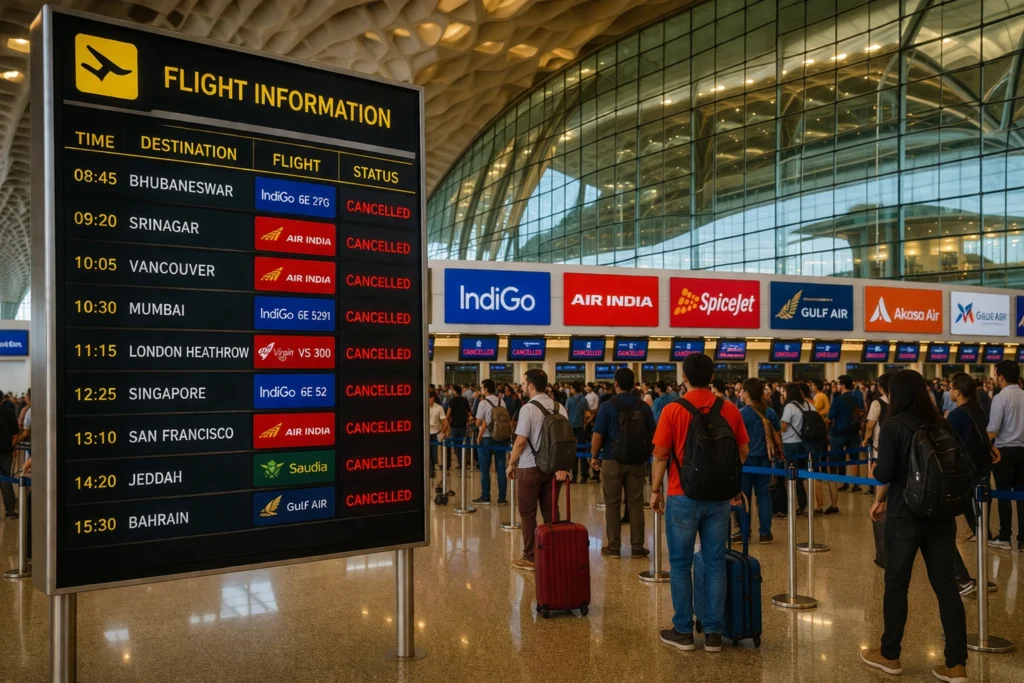
India’s aviation sector faces significant disruption in 2026 as airlines cancel over 30 flights across major cities. Travelers across the country deal with sudden schedule changes and uncertainty.
Airlines cancel both domestic and international routes during a busy travel period. This situation affects passengers traveling for business, tourism, and family visits.
Major carriers struggle to maintain schedules as operational challenges increase. These disruptions highlight growing pressure on the aviation network.
Delhi Experiences the Highest Number of Flight Cancellations
Delhi records the highest number of cancellations among all major cities. Several flights across key routes get withdrawn within a short period.
Both domestic and long-haul international routes face disruption. Passengers traveling to destinations across India and abroad encounter delays.
Routes to cities like Bhubaneswar and Srinagar face repeated cancellations. This pattern suggests ongoing operational strain rather than isolated issues.
Long-distance flights to global destinations also get affected. Travelers heading to North America and Europe experience major inconvenience.
Mumbai Sees Major Impact on Domestic Connectivity
Mumbai also faces widespread disruption across domestic routes. Airlines cancel multiple flights connecting major cities across India.
High-demand routes to cities like Varanasi and Bengaluru get affected. These cancellations disrupt travel plans for thousands of passengers.
Regional connectivity suffers as airlines struggle to maintain schedules. Travelers face limited alternatives on certain routes.
International travel also takes a hit with some routes facing suspension. This situation increases pressure on already crowded flights.
Southern Cities Report Continued Operational Challenges
Bengaluru and Hyderabad report fewer cancellations but still face notable disruptions. Flights connecting major cities and international destinations get affected.
Travelers in these cities face delays and limited options for rebooking. Even a small number of cancellations creates significant inconvenience.
Repeated disruptions on specific routes indicate broader operational issues. Airlines must address these challenges to restore reliability.
These cities remain key hubs for both domestic and international travel. Any disruption here affects the wider aviation network.
Chennai and Kolkata Face Strategic Route Interruptions
Chennai and Kolkata experience fewer cancellations, but the impact remains important. Key routes connecting major destinations get suspended.
Travelers in these cities face challenges due to limited flight alternatives. Even small disruptions can affect travel plans significantly.
Connections to regional and international destinations become less reliable. This situation affects both business and leisure travelers.
Airlines must improve planning to avoid further disruption in these important hubs. Stability remains critical for maintaining passenger confidence.
Kochi Adds to the Pressure on Domestic Routes
Kochi also reports flight cancellations that affect domestic travel. Even a single cancelled route creates ripple effects across the network.
Passengers traveling to major cities face delays and rescheduling issues. High-demand routes experience increased pressure due to fewer available flights.
This situation highlights the fragile balance within the aviation system. Small disruptions can quickly escalate into larger problems.
Airlines must address these issues to maintain consistent service across regions. Reliable connectivity remains essential for travelers.
Passenger Experience Suffers Across the Network
Passengers across India face inconvenience due to sudden cancellations. Many deal with last-minute changes and limited rebooking options.
Travelers struggle to secure seats on alternative flights. This problem becomes more serious on routes with fewer daily services.
Delays also affect connecting flights and travel schedules. Passengers must adjust plans quickly to avoid further complications.
Customer frustration grows as disruptions continue without clear solutions. Airlines must improve communication and support services.
Airlines Face Growing Operational Pressure
Airlines face increasing pressure to stabilize their operations. They must manage crew availability, aircraft scheduling, and route planning.
Operational inefficiencies contribute to repeated disruptions across multiple cities. This situation requires immediate attention from airline management.
Improved coordination can help reduce cancellations and delays. Airlines must invest in better planning and resource management.
Restoring reliability remains essential for rebuilding passenger trust. The aviation sector must act quickly to address these issues.
Broader Challenges Affect the Aviation Ecosystem
The scale of disruptions suggests deeper issues within the aviation system. Multiple airlines and airports face challenges at the same time.
Infrastructure limitations and rising demand add pressure to the network. Airlines must balance capacity with operational efficiency.
External factors also contribute to disruptions, including weather and global travel conditions. These challenges require flexible solutions.
The aviation industry must adapt to ensure smoother operations in the future. Strong coordination between stakeholders remains key.
Impact on Tourism and Business Travel
Flight cancellations affect both tourism and business travel across India. Travelers may reconsider plans due to uncertainty and delays.
Tourism destinations may see reduced visitor numbers during disruption periods. Hotels and local businesses also feel the impact.
Business travelers face delays that affect meetings and schedules. This situation creates additional challenges for companies.
Reliable air travel remains essential for economic growth and tourism development. Stability in the aviation sector supports overall progress.
Outlook for Recovery and Stability
Airlines must focus on restoring stability in the coming weeks. Improved planning and communication will help reduce disruptions.
Authorities may also step in to support the aviation sector. Policy adjustments can help improve operational efficiency.
Travelers should stay informed about flight updates and changes. Flexibility remains important during uncertain travel periods.
The industry must learn from these disruptions to improve future performance. Long-term solutions will strengthen the aviation network.
A Critical Moment for India’s Aviation Sector
India’s aviation sector stands at a critical point in 2026. Rising disruptions highlight the need for immediate action and improvement.
Airlines must address operational challenges to maintain service quality. Travelers depend on reliable schedules and efficient systems.
The coming months will shape the future of air travel in India. Strong efforts can restore confidence and ensure long-term growth.
For more travel news like this, keep reading Global Travel Wire