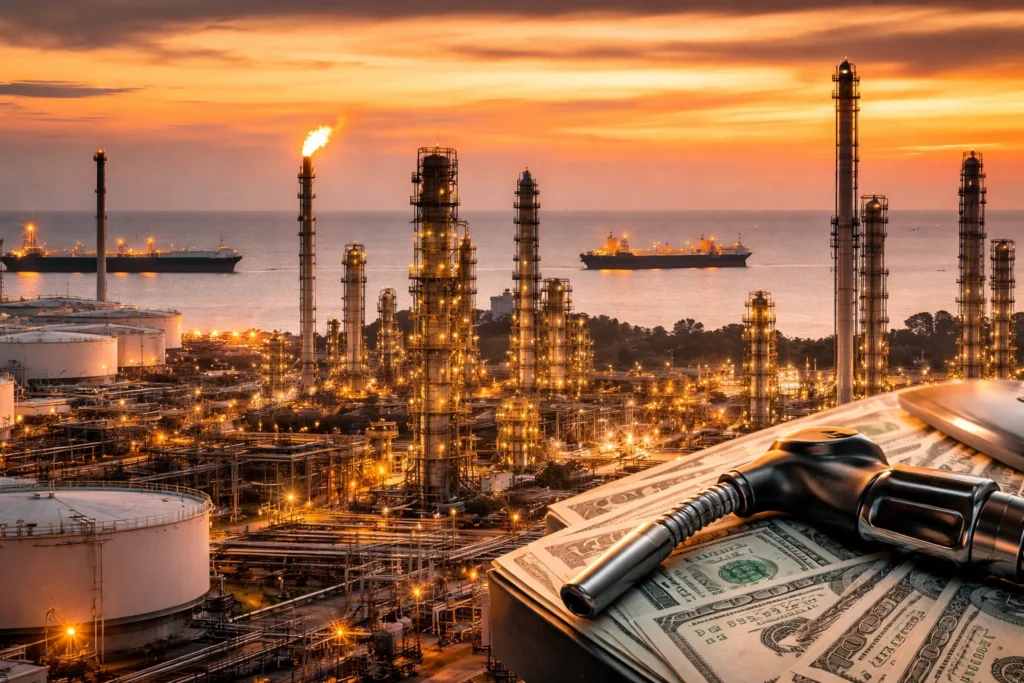
The ongoing conflict in Iran is triggering a global energy crisis with far-reaching consequences. Governments and industries are facing rising costs and supply disruptions. The situation now affects travel, tourism, and daily life worldwide.
Military activity in the Persian Gulf has disrupted key energy infrastructure. These disruptions have reduced supply and increased uncertainty in global markets. As a result, countries are scrambling to secure resources and stabilize their economies.
Critical Energy Infrastructure Faces Major Damage
Recent strikes have targeted vital energy facilities across the region. These include gas fields, refineries, and export terminals. Damage to these sites has weakened global supply chains.
The Ras Laffan terminal in Qatar lost a significant share of its export capacity. Repairs could take years, which adds long-term pressure on global energy availability. This disruption ranks among the most severe in recent decades.
The partial closure of the Strait of Hormuz has worsened the crisis. This route handles a large share of global oil shipments. Reduced flow through this chokepoint has tightened supply worldwide.
Oil and Gas Prices Surge Across Global Markets
Energy prices have risen sharply due to supply constraints. Brent crude oil has climbed significantly compared to pre-conflict levels. Other major benchmarks have followed the same trend.
Higher fuel costs are driving inflation across multiple sectors. Businesses now face increased operating expenses, which they pass on to consumers. This trend is raising the cost of living in many countries.
Economists warn that prolonged price increases could slow economic growth. The situation echoes past periods of high inflation and weak growth. Governments are monitoring these risks closely.
Fertilizer Shortages Raise Food Security Concerns
The crisis is also affecting global agriculture through fertilizer shortages. The Persian Gulf plays a key role in fertilizer production and export. Disruptions in supply have pushed prices higher.
Urea and ammonia prices have surged due to limited availability. Many countries depend heavily on imports for agricultural production. Rising costs may reduce crop yields and increase food prices.
Lower-income populations face the greatest risk from these changes. Food insecurity could rise if the situation continues. Governments are exploring ways to support farmers and stabilize supply.
Industrial Supply Chains Face Growing Pressure
The impact extends beyond energy and agriculture. Key industries are also feeling the effects of supply disruptions. Critical materials and resources are becoming harder to access.
Qatar’s role in helium production highlights another vulnerability. This resource supports technology, healthcare, and aerospace industries. Any disruption can affect multiple sectors at once.
Asian economies are particularly exposed due to heavy reliance on Gulf energy imports. Reduced supply could slow industrial production and economic activity in the region.
Governments Introduce Emergency Measures
Countries are taking urgent steps to manage the crisis. Many governments have introduced policies to reduce energy consumption. These measures aim to protect resources and control costs.
Some nations have limited office hours and reduced electricity use. Others have introduced fuel price controls or prioritized essential services. These actions reflect the seriousness of the situation.
Authorities are also releasing strategic reserves to ease immediate shortages. These reserves provide temporary relief but do not solve long-term supply challenges.
Travel and Tourism Face Major Disruptions
The global travel industry is experiencing direct impacts from rising fuel costs. Airlines are facing higher operating expenses, which may lead to increased ticket prices. Travelers could see fewer flight options and higher fares.
Tourism-dependent economies may struggle as travel demand shifts. Higher costs can discourage international travel and reduce visitor numbers. This trend could affect destinations worldwide.
Travel disruptions may also increase due to changing flight routes. Airlines may avoid certain regions, which can extend travel times. These adjustments add complexity to global travel networks.
The United States Shows Partial Resilience
The United States has some protection due to its energy production capacity. As a net oil exporter, it benefits from higher global prices. However, consumers still face rising fuel costs.
Gasoline prices have increased significantly, affecting daily expenses for households. Economic growth has also slowed, raising concerns about a potential downturn.
Despite this resilience, the broader global impact remains significant. The interconnected nature of markets ensures that no country remains fully insulated.
Long-Term Strategies Focus on Energy Transition
Governments are now focusing on long-term solutions to reduce dependence on volatile regions. Many are accelerating investments in clean energy and efficiency programs.
Diversifying energy sources has become a priority for national security. Countries are also exploring alternative supply routes to reduce risk.
International cooperation will play a key role in managing future crises. Coordinated policies can help stabilize markets and prevent further disruptions.
Why the World Is Closely Watching
The Iran conflict has evolved into a global economic issue. It highlights the fragile nature of energy and supply systems. Small disruptions can create widespread consequences across industries.
Rising costs, supply shortages, and travel disruptions show how interconnected global systems have become. Governments must act quickly to manage both immediate and long-term risks.
This situation serves as a reminder of the importance of energy security. It also underscores the need for resilient and sustainable systems worldwide.
Final Thoughts
The Iran conflict is reshaping global markets and travel patterns. Energy shortages and rising prices are affecting economies and daily life. The tourism sector is also facing new challenges.
Governments are responding with emergency measures and long-term strategies. However, uncertainty remains as the situation continues to evolve.
The world is now witnessing how a regional conflict can impact global stability. Future actions will determine how quickly markets recover and adapt to these changes.
For more travel news like this, keep reading Global Travel Wire