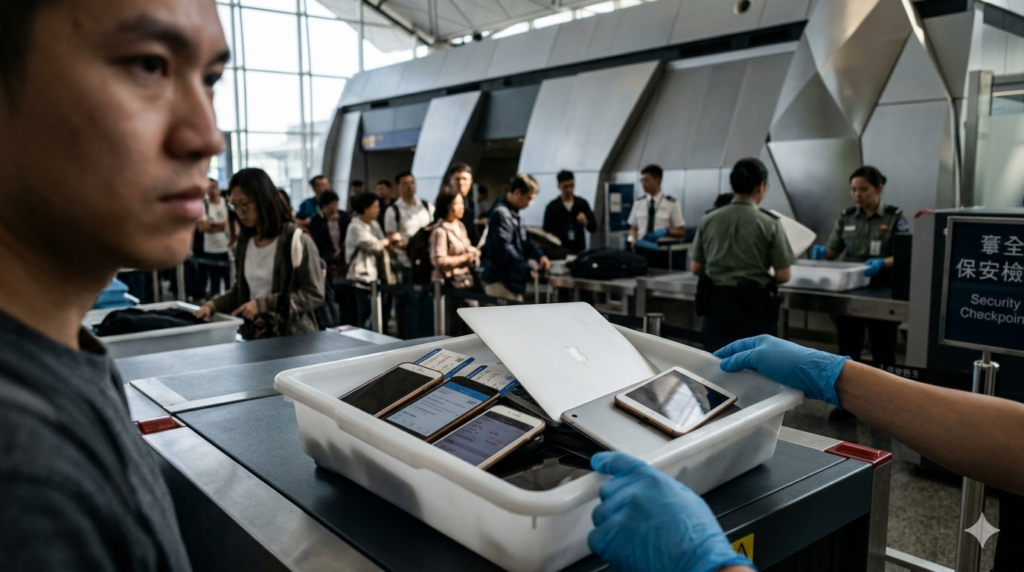
Hong Kong authorities have introduced updated implementation measures under the National Security Law, granting law enforcement expanded powers related to digital access and device handling—changes that are drawing increased attention from international travelers and the global tourism sector.
According to official government statements outlining enforcement procedures, police now have clearer authority to require individuals to provide access to electronic devices, including mobile phones and laptops, where such access is deemed relevant to national security investigations. The provisions also extend to requiring passwords or technical assistance for decryption when necessary.
The measures apply broadly to anyone present in Hong Kong, including residents, international visitors, business travelers, and transit passengers passing through Hong Kong International Airport. Authorities have also confirmed that law enforcement may seize and retain personal electronic devices as evidence if they are considered linked to potential national security concerns.
The Hong Kong government has emphasized that these powers are exercised within a legal framework designed to safeguard national security, and that enforcement actions are subject to judicial oversight where applicable. Officials have reiterated that the law targets specific acts defined under national security legislation and is not intended to affect ordinary travel or tourism activities.
However, the updated enforcement clarity is already influencing traveler sentiment and travel planning decisions, particularly among long-haul visitors and business travelers carrying sensitive or work-related data. Tourism stakeholders are closely monitoring how these developments may shape perceptions of Hong Kong as a global travel hub.
Hong Kong has long positioned itself as one of Asia’s most accessible and efficient transit gateways, with Hong Kong International Airport consistently ranked among the world’s busiest international aviation hubs. The airport’s role as a key transfer point for flights between North America, Europe, and Asia makes transit policies especially significant for global passenger flows.
For airlines operating through Hong Kong, the changes may lead to increased passenger inquiries regarding transit conditions and data security. Carriers are expected to update travel guidance in line with official advisories to ensure passengers are informed prior to departure.
Hotels and hospitality providers are also observing the situation carefully. While there has been no direct impact on accommodation operations, industry professionals note that traveler confidence plays a critical role in booking behavior, particularly in the premium and corporate travel segments.
Tourism officials continue to promote Hong Kong’s attractions, cultural experiences, and events calendar, highlighting the city’s resilience and appeal as a destination. Official tourism statistics in recent years have shown a gradual recovery in visitor arrivals following pandemic-related disruptions, with authorities aiming to restore Hong Kong’s position as a leading international destination.
At the same time, travel advisories issued by various governments often reflect evolving regulatory environments, and travelers are encouraged to review official guidance before departure. Industry experts suggest that transparency and clear communication will be essential in maintaining traveler confidence.
For visitors, the practical implications center on awareness and preparedness. Travelers carrying sensitive business information, confidential data, or personal digital content may choose to take precautionary measures, such as minimizing stored data on devices or using secure cloud-based access where appropriate.
Transit passengers—who traditionally may not have considered local legal frameworks due to short airport stays—are also now paying closer attention to entry and transit conditions. As Hong Kong International Airport remains a major global connector, clarity around these rules is likely to be a key factor in maintaining its competitiveness against other regional hubs such as Singapore and Seoul.
Despite these developments, Hong Kong continues to offer a wide range of tourism experiences, from its iconic skyline and culinary scene to its extensive hiking trails and cultural heritage sites. Authorities have reaffirmed their commitment to welcoming international visitors and supporting the tourism industry’s recovery.
The broader tourism impact will depend on how travelers perceive and respond to the updated enforcement environment. Industry stakeholders are watching booking trends, airline capacity adjustments, and visitor sentiment indicators to assess whether the changes influence travel demand in the coming months.
As global travel continues to evolve in a complex regulatory landscape, Hong Kong’s latest measures underscore the importance of understanding destination-specific laws. For travelers, staying informed through official sources remains the most effective way to ensure a smooth and compliant journey.
Stay updated and follow us- read more on Global Travel Wire.