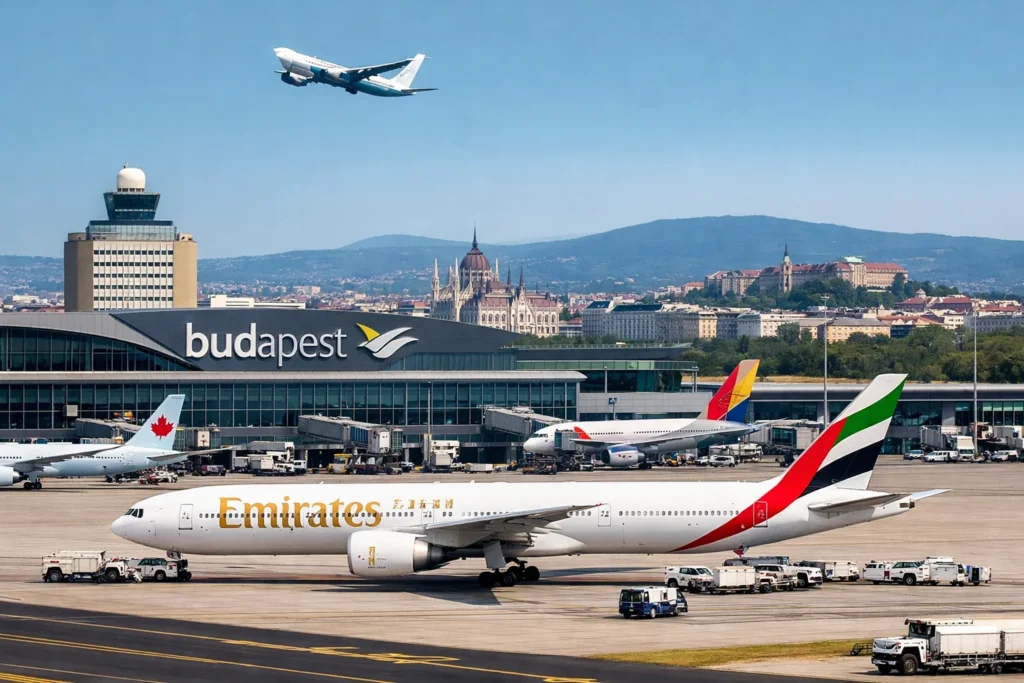
Hungary is strengthening its position on the global tourism map as Budapest Airport announces an ambitious expansion for the summer 2026 season. With a wider route network, increased flight frequencies, and the return of long-haul connections, the airport is set to become one of Central Europe’s most dynamic travel hubs.
The new schedule includes access to around 160 destinations, alongside hundreds of additional flights and millions of seats. This expansion reflects rising demand for international travel and signals strong growth for Hungary’s tourism and aviation sectors.
Return of Long-Haul Flights Marks a Key Milestone
A standout feature of the 2026 summer schedule is the return of long-haul services linking Budapest with major cities in North America and Asia. These routes are expected to significantly enhance global connectivity for both inbound and outbound travelers.
Direct flights to North America are being reintroduced after several years, offering improved access to major transit hubs. These connections will allow passengers to easily reach destinations across the United States and Canada, as well as onward locations in the Caribbean.
At the same time, renewed links to Asia are strengthening Budapest’s role as a bridge between Europe and the East. The addition of new routes to key Asian cities will support growing demand from both business travelers and tourists.
Strong Push for European Connectivity
Alongside long-haul growth, Budapest Airport is significantly expanding its European network. New routes and increased frequencies are being introduced to meet the needs of travelers seeking both leisure and business opportunities across the continent.
Key connections to major European cities are being enhanced, ensuring smoother travel options and greater flexibility. Popular routes such as Budapest to Frankfurt will see increased capacity, making it easier for passengers to connect to global destinations via major European hubs.
The expansion also includes new direct routes to emerging travel destinations, offering passengers more choice than ever before. These additions are expected to strengthen Budapest’s role as a central gateway in Europe.
Low-Cost Airlines Drive Affordable Travel Growth
Budget airlines are playing a major role in the airport’s expansion strategy. Several low-cost carriers are introducing new routes and increasing their operations, making travel more accessible to a wider range of passengers.
New connections to destinations across Southern and Eastern Europe are expected to attract tourists seeking affordable summer holidays. Coastal regions and island destinations remain particularly popular, with strong demand for Mediterranean travel continuing to rise.
The growth of low-cost services not only benefits outbound travelers but also encourages more visitors to explore Hungary. Competitive pricing and expanded routes are likely to boost visitor numbers and support local tourism businesses.
Rising Demand for Northern and Baltic Destinations
Travel trends indicate growing interest in Northern Europe, with increased demand for flights to Scandinavian and Baltic cities. Budapest Airport is responding by expanding capacity to these regions, offering more seats and improved connectivity.
These destinations are especially attractive to high-spending travelers, contributing to increased tourism revenue. The expanded network ensures that Budapest remains well-connected to some of Europe’s fastest-growing travel markets.
The rise in demand also highlights Budapest’s evolving role as a transit hub, with more passengers using the city as a connecting point for journeys across Europe and beyond.
Supporting Hungary’s Tourism Growth
The airport’s expansion is closely aligned with Hungary’s broader tourism strategy. By increasing international connectivity, the country aims to attract more visitors and strengthen its position as a leading destination in Central Europe.
Budapest itself remains a major draw, known for its historic architecture, thermal baths, cultural festivals, and vibrant culinary scene. Improved flight access makes it easier for international travelers to experience these attractions.
In addition to city tourism, the expanded network is expected to benefit regional destinations across Hungary. Visitors arriving in Budapest can easily explore nearby areas, including scenic countryside regions and river cruise routes along the Danube.
Increased Capacity to Meet Growing Demand
The addition of hundreds of flights and millions of seats reflects strong confidence in the recovery and growth of global travel. As passenger numbers continue to rise, Budapest Airport is positioning itself to handle increased traffic efficiently.
Enhanced infrastructure and operational improvements are being implemented to support the higher volume of travelers. These developments aim to ensure smooth passenger flow and maintain a high level of service quality.
The increased capacity also provides greater flexibility for airlines, allowing them to adjust schedules and respond to changing demand throughout the season.
Strengthening Budapest’s Role as a Regional Hub
With its expanded network, Budapest Airport is reinforcing its status as a key transportation hub in Central and Eastern Europe. Its strategic location makes it an ideal gateway for travelers moving between Western Europe, Asia, and North America.
The combination of long-haul and short-haul routes creates a well-balanced network that caters to diverse travel needs. Business travelers benefit from efficient connections, while leisure travelers enjoy a wide range of destination options.
This growth is expected to attract more airlines and partnerships, further enhancing the airport’s global reach.
Looking Ahead to a Record-Breaking Season
The summer 2026 schedule represents one of the most ambitious expansions in Budapest Airport’s history. With new routes, increased capacity, and improved connectivity, the airport is preparing for a busy and potentially record-breaking travel season.
Tourism authorities anticipate a strong influx of international visitors, driven by improved accessibility and growing interest in Hungary as a destination. The expansion also supports the broader European travel market, providing more options for travelers across the continent.
A New Era for Travel in Hungary
Budapest Airport’s expansion signals a new chapter for Hungary’s aviation and tourism sectors. By investing in connectivity and embracing evolving travel trends, the country is positioning itself for long-term growth.
As global travel continues to rebound, Budapest is emerging as a key player in the international aviation landscape. The 2026 summer schedule not only enhances travel options but also strengthens Hungary’s reputation as a welcoming and accessible destination.
With increased routes spanning Europe, North America, and Asia, Budapest Airport is set to play a central role in shaping the future of travel in the region.