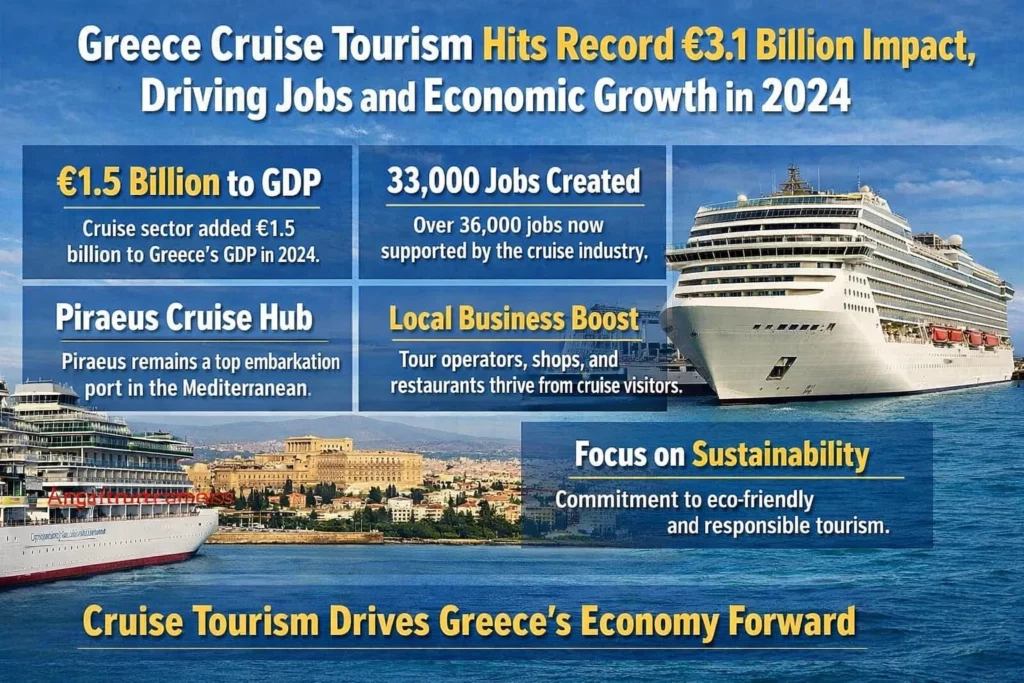
Greece has achieved a major milestone in its tourism sector as the cruise industry delivered a record-breaking economic contribution of €3.1 billion in 2024. This remarkable growth highlights the country’s rising prominence as a leading cruise destination in the Mediterranean and underscores the sector’s growing importance to the national economy.
The latest figures reveal a strong upward trajectory for cruise tourism, driven by increasing passenger arrivals, higher spending, and expanded port operations. The industry has become a vital pillar of Greece’s tourism ecosystem, supporting economic activity across multiple sectors.
Strong Contribution to GDP and Employment
The cruise sector’s impact extends beyond revenue, making a substantial contribution to Greece’s overall economic output. In 2024, the industry added approximately €1.5 billion to the country’s gross domestic product, reflecting its role as a key driver of growth.
Employment has also seen a significant boost, with more than 33,000 jobs supported by cruise-related activities. This represents a sharp increase compared to previous years, highlighting the sector’s ability to generate new opportunities across a wide range of industries.
Jobs linked to cruise tourism include roles in travel agencies, port services, hospitality, transportation, and ship maintenance. This diverse employment base demonstrates how the benefits of cruise tourism are distributed throughout the economy.
Rapid Growth Over Recent Years
The cruise industry’s expansion has been particularly notable over the past three years. Economic output has more than doubled during this period, reflecting strong recovery and increased demand following global travel disruptions.
Passenger and crew spending continues to play a major role in driving this growth. Visitors arriving by cruise ships contribute significantly to local economies through spending on dining, shopping, excursions, and cultural experiences.
In addition to passenger spending, cruise operators contribute to the economy through purchases of goods and services, including fuel, supplies, and port services. These transactions support local businesses and strengthen supply chains within Greece.
Piraeus and Athens Lead Cruise Activity
The port of Piraeus, located near Athens, remains the centerpiece of Greece’s cruise industry. As one of the busiest cruise ports in Europe, it welcomed millions of passengers in 2024, reinforcing its status as a major embarkation hub.
Piraeus benefits from its strategic location and modern infrastructure, making it an attractive starting point for Mediterranean itineraries. Its proximity to Athens allows visitors to easily explore iconic landmarks, historical sites, and cultural attractions.
The success of Piraeus has also had a positive impact on surrounding regions, with increased visitor numbers supporting tourism businesses across the wider area. From guided tours to hospitality services, the benefits of cruise tourism extend far beyond the port itself.
A Thriving Network of Local Businesses
The cruise industry has created a vibrant network of businesses that rely on the steady flow of visitors. Local enterprises, including tour operators, transport providers, restaurants, and retail shops, all benefit from cruise arrivals.
This interconnected ecosystem ensures that tourism revenue is distributed across multiple sectors, supporting small and medium-sized businesses throughout the country. The presence of cruise passengers helps sustain year-round economic activity, particularly in popular port cities.
In addition, cruise tourism encourages investment in infrastructure and services, further enhancing the overall visitor experience. Improvements in port facilities, transportation systems, and tourist amenities contribute to long-term growth.
Investment in Infrastructure and Capacity
To accommodate increasing demand, Greece has continued to invest in its port infrastructure and cruise facilities. Upgrades to terminals, docking capacity, and passenger services have enhanced the country’s ability to handle larger ships and higher passenger volumes.
These investments not only improve efficiency but also position Greece as a competitive destination in the global cruise market. Enhanced infrastructure ensures smoother operations and better experiences for travelers, encouraging repeat visits.
The development of cruise-related infrastructure also supports other sectors, including logistics and maritime services, creating additional economic opportunities.
Commitment to Sustainable Cruise Tourism
As the cruise industry expands, Greece is placing a strong emphasis on sustainability. Authorities and industry stakeholders are working together to promote responsible tourism practices that protect the environment and support local communities.
Efforts include reducing emissions, improving waste management, and encouraging eco-friendly operations at ports. These initiatives aim to balance economic growth with environmental preservation, ensuring that tourism remains sustainable in the long term.
Collaboration between government agencies, local communities, and cruise operators is central to this approach. By prioritizing sustainability, Greece is setting an example for responsible tourism development in the region.
Greece’s Role in the Global Cruise Market
Greece’s success in cruise tourism reflects broader trends in the global travel industry. The Mediterranean remains one of the most popular cruise regions, attracting millions of visitors each year.
Greece’s unique combination of cultural heritage, scenic landscapes, and strategic location makes it a key destination within this market. Its ports serve as important gateways for travelers exploring multiple countries on a single यात्रा.
The country’s growing influence in the cruise sector contributes to Europe’s overall tourism economy, reinforcing its importance as a global travel destination.
Future Outlook for Cruise Tourism in Greece
Looking ahead, Greece’s cruise industry is expected to continue its upward trajectory. Increasing demand, ongoing infrastructure improvements, and a strong focus on sustainability are likely to drive further growth.
Tourism authorities are optimistic about the sector’s potential to attract even more international visitors in the coming years. Continued investment and strategic planning will be essential to maintaining this momentum.
A Key Driver of Economic and Tourism Growth
The record-breaking performance of Greece’s cruise industry in 2024 highlights its significance as a driver of economic and tourism development. With billions in economic output and thousands of jobs supported, the sector plays a crucial role in shaping the country’s future.
As Greece continues to enhance its cruise offerings and strengthen its global position, the industry is set to remain a cornerstone of the national economy. Through a combination of growth, innovation, and sustainability, Greece is ensuring that its cruise tourism sector thrives for years to come.