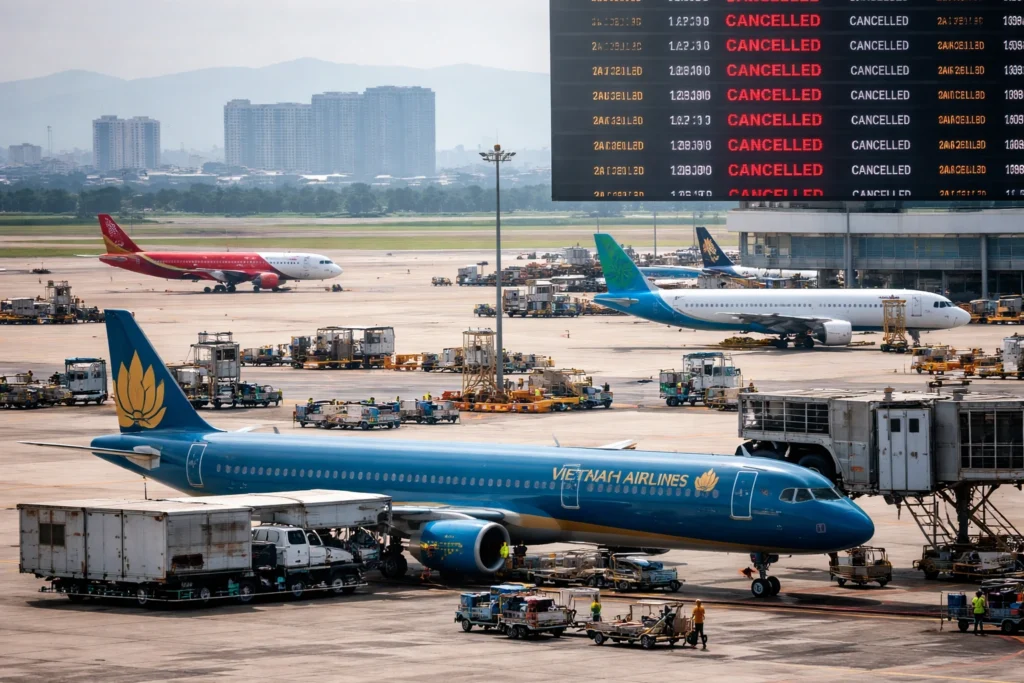
Vietnam’s aviation sector enters a critical phase as fuel shortages disrupt airline operations. Rising global energy costs and limited supply force carriers to rethink their strategies.
Airlines continue operating under current schedules, but major changes will begin soon. Officials confirm that fuel supplies remain stable only until mid-April.
After that point, airlines may need to buy fuel at higher market rates. This situation places additional financial pressure on already strained carriers.
As a result, airlines take early action to protect operations and reduce risk.
Airlines Begin Strategic Route Reductions
Airlines across Vietnam now cut routes to manage rising fuel costs. They focus on removing less profitable or low-demand services first.
Vietnam Airlines leads this shift by suspending several domestic routes. These include connections between Ho Chi Minh City, Cat Bi, and regional destinations.
The airline also prepares for wider schedule reductions in the coming months. Estimates suggest that total flights could drop by up to 20 percent.
Monthly round trips may decline by as many as 1,700 during the second quarter. Domestic routes could fall sharply, while international services also shrink.
These adjustments reflect the urgency of the ongoing fuel crisis.
Budget Airlines Tighten Domestic and International Networks
Low-cost carriers also respond quickly to the fuel crisis. Vietjet reduces flight frequency on several key domestic routes.
Flights between Hanoi and Buon Ma Thuot now operate fewer times each week. Routes connecting Ho Chi Minh City and Tho Xuan also see reduced schedules.
Other routes, including Hanoi to Cam Ranh and Ho Chi Minh City to Cat Bi, face similar cuts.
International routes do not escape these changes. Flights connecting Da Nang to Singapore and Ho Chi Minh City to Bangkok now operate less often.
These reductions highlight how the crisis affects both domestic and international travel networks.
Bamboo Airways Focuses on Core Operations
Bamboo Airways adopts a more focused strategy to manage the crisis. The airline cuts its daily operations nearly in half.
Instead of expanding, it prioritizes routes with consistent demand. These include major trunk routes and services linked to Quy Nhon.
By narrowing its network, Bamboo Airways aims to maintain efficiency. This approach allows the airline to operate sustainably during uncertain conditions.
Such decisions show how airlines must adapt quickly to survive.
Smaller Airlines Maintain Flexible Strategies
Not all airlines respond with aggressive cuts. Some carriers choose a flexible approach while monitoring the situation closely.
Vietravel Airlines continues operating a steady number of daily flights. It plans to expand operations if fuel conditions improve.
Sun PhuQuoc Airways maintains its current schedule for now. Meanwhile, Pacific Airlines reduces flights by up to 30 percent during off-peak periods.
This mix of strategies reflects the broader uncertainty across the aviation sector. Airlines must balance caution with opportunity.
Global Energy Crisis Drives Aviation Challenges
The roots of Vietnam’s aviation crisis extend beyond national borders. Global energy disruptions play a major role in rising fuel costs.
Tensions in key regions affect oil supply chains and increase market volatility. For example, disruptions in major shipping routes impact global fuel distribution.
When supply chains weaken, fuel prices rise quickly. Airlines across the world feel this pressure, including those in Vietnam.
These global factors make it difficult for airlines to secure stable fuel supplies.
Vietnam’s Heavy Dependence on Imported Fuel
Vietnam relies heavily on imported aviation fuel, which increases vulnerability. Only a small portion of fuel comes from domestic production.
Most supplies arrive from countries such as China, Thailand, and Singapore. This dependence creates risk during global supply disruptions.
Local suppliers now search for alternative sources to meet demand. Possible options include Japan and Russia, but agreements remain uncertain.
Until new supply chains stabilize, airlines must operate under tight constraints.
Passengers Face Reduced Options and Delays
Travelers across Vietnam will notice clear changes in flight availability. Airlines reduce frequency on many popular routes.
Passengers may find fewer options when booking flights. Some routes may disappear entirely for a period.
Last-minute schedule changes may also increase as airlines adjust operations. These disruptions can affect both leisure and business travel plans.
Travelers should plan ahead and stay updated on airline schedules. Flexibility will help reduce travel stress during this period.
Aviation Sector Adapts to Ongoing Uncertainty
Vietnam’s aviation industry now operates in survival mode. Airlines focus on efficiency, cost control, and route optimization.
They aim to maintain essential services while cutting non-essential operations. This balance helps keep networks functional during the crisis.
However, uncertainty remains high. The timeline for recovery depends on global fuel markets and supply stability.
Airlines must stay adaptable and ready to adjust strategies quickly.
Conclusion: Airlines Navigate a Challenging Future
Vietnam’s fuel crisis forces airlines to rethink operations across the board. Route cuts, reduced capacity, and schedule changes now define the aviation landscape.
Carriers work to protect key routes while managing rising costs. At the same time, passengers must adjust to fewer options and evolving schedules.
Until fuel supply stabilizes, airlines will continue this careful balancing act. The situation highlights how global energy challenges directly impact travel and tourism.
For more travel news like this, keep reading Global Travel Wire