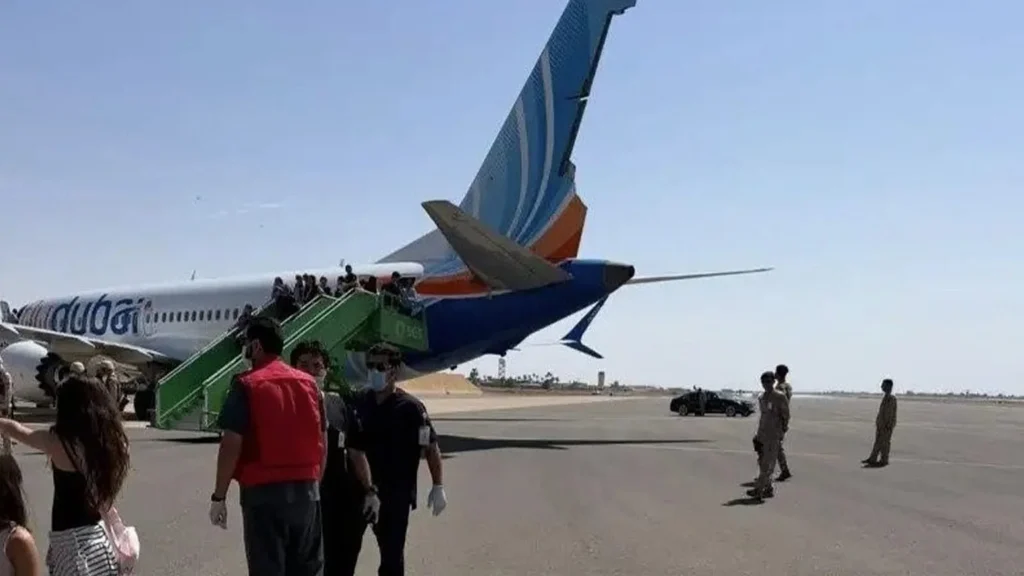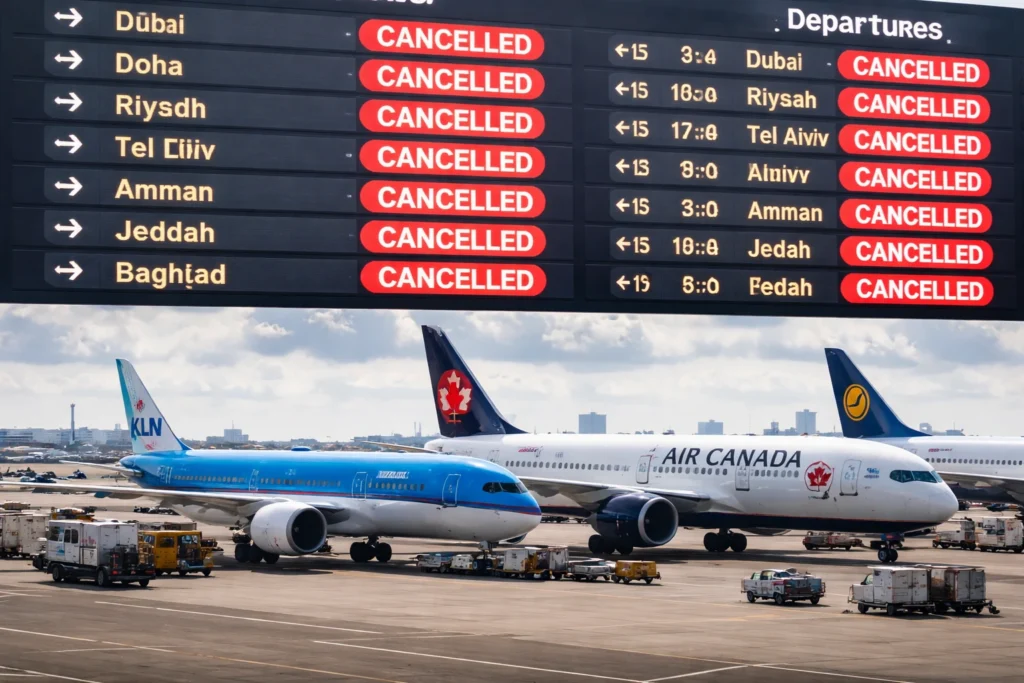
Airlines worldwide have suspended flights to key Middle East destinations. The move follows rising geopolitical tensions and expanding airspace restrictions.
Countries including the UAE, Saudi Arabia, Qatar, Iraq, and Jordan face major disruptions. Airlines now prioritize safety for passengers and crews.
These suspensions affect both regional and long haul travel. Travelers across continents now face cancellations and delays.
Air Canada Leads North American Response
Air Canada has suspended flights to major destinations in the region. Routes to Dubai and Tel Aviv now remain inactive for extended periods.
The airline has adjusted its international network to manage risks. It also focuses on protecting passengers during uncertain conditions.
These changes reflect a broader shift among global carriers. Safety now drives operational decisions across the industry.
European Airlines Expand Flight Suspensions
European carriers have taken similar actions. Airlines across France, Germany, Italy, and the Netherlands have halted several routes.
Flights to cities such as Dubai, Riyadh, Beirut, and Tel Aviv remain suspended. These decisions reflect ongoing airspace challenges.
Airlines must comply with evolving regulations and advisories. This situation continues to affect European travel networks.
Major Routes Across the Middle East Face Disruptions
Airspace closures have disrupted key aviation corridors. Flights connecting Europe, Asia, and Africa now require rerouting or cancellation.
Destinations like Doha, Amman, and Baghdad face reduced connectivity. Travelers must now explore alternative routes.
This disruption affects tourism, business travel, and cargo operations. It also creates uncertainty for future bookings.
Airlines Adjust Operations to Maintain Safety
Airlines continue to adapt to changing conditions. They reroute flights to avoid restricted airspace zones.
Some carriers have suspended operations entirely in high risk regions. Others have reduced flight frequency.
These measures help ensure safe travel operations. However, they also limit available travel options.
Long Haul Travel Faces Significant Impact
Long haul routes experience major disruptions due to closures. Flights between North America, Europe, and Asia often pass through affected regions.
Airlines must now take longer routes, increasing travel time. This change also raises operational costs.
Passengers may face extended journey times and higher fares. The impact spreads across global travel networks.
Asia Pacific Airlines Respond to Growing Uncertainty
Airlines in Asia have also suspended routes to the Middle East. Carriers have paused services to cities like Doha and Dubai.
These decisions reflect ongoing safety concerns and operational challenges. Airlines must balance demand with risk management.
The region’s connectivity continues to decline as restrictions remain in place. Travelers now rely on limited alternatives.
Budget and Regional Airlines Feel the Pressure
Low cost carriers have also suspended multiple routes. Airlines serving Gulf and regional destinations face severe disruption.
These suspensions affect both leisure and business travelers. Many routes remain inactive until further notice.
Budget airlines must adapt quickly to maintain operations. This situation challenges their cost structures and schedules.
Tourism Industry Faces Widespread Impact
Flight suspensions directly affect tourism across the Middle East. Hotels, tour operators, and local businesses face reduced visitor numbers.
Travel demand has dropped due to uncertainty and safety concerns. This decline impacts regional economies.
Global tourism networks also feel the effects. Reduced connectivity limits international travel opportunities.
Travelers Navigate Uncertain Travel Conditions
Travelers now face constant changes in flight schedules. Many must rebook or cancel trips at short notice.
Airlines continue to update policies and provide flexible options. These measures help travelers manage disruptions.
However, uncertainty remains a key challenge. Travelers must stay informed and plan carefully.
Future Outlook Remains Unclear for Global Aviation
The aviation industry continues to monitor the situation closely. Airlines will adjust operations based on developments.
Recovery depends on improved stability and reopening of airspace. Until then, disruptions will likely continue.
The current crisis highlights the importance of resilience in global travel. Airlines and travelers must adapt to ongoing uncertainty.
For more travel news like this, keep reading Global Travel Wire