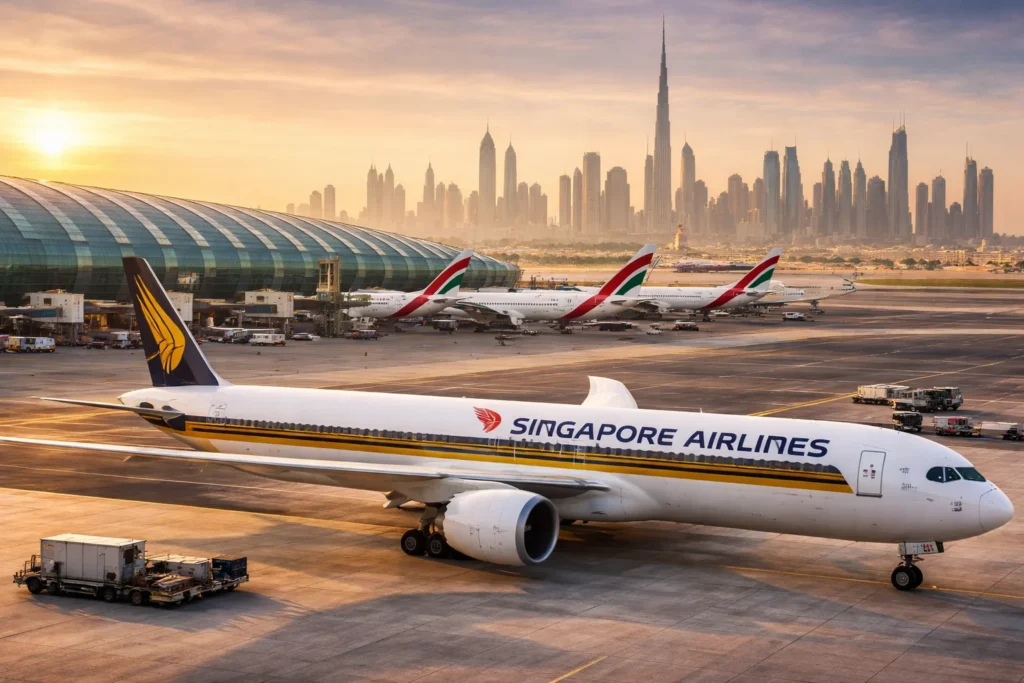
Singapore Airlines has announced an extension of its Dubai flight cancellations until May 31, as ongoing geopolitical tensions continue to disrupt air travel across the Middle East. The decision reflects growing operational challenges for airlines navigating restricted and evolving airspace conditions in the region, impacting both tourism and business travel.
The affected routes include flights SQ494 from Singapore to Dubai and SQ495 from Dubai to Singapore. These services will remain suspended throughout the extended period as the airline prioritizes passenger safety and operational certainty. The move comes amid continued instability in regional airspace, where shifting conditions have forced airlines to reassess routes and schedules.
According to the airline, the situation remains fluid, and additional changes to its network cannot be ruled out. Travelers are being encouraged to regularly check their flight status and stay informed about updates as conditions evolve. This uncertainty has created ripple effects across global travel plans, particularly for passengers connecting through major Middle Eastern hubs.
The extension of cancellations highlights the broader challenges facing the aviation and tourism sectors. Airlines operating routes through or near the Middle East are currently dealing with rerouting requirements, longer flight durations, and increased operational costs. These disruptions are also affecting travel demand, with some tourists reconsidering or postponing trips to affected regions.
Passengers impacted by the cancellations are being offered flexible solutions. Singapore Airlines has confirmed that affected customers can either be rebooked on alternative flights or receive a full refund for the unused portion of their tickets. This approach aims to minimize inconvenience while maintaining customer confidence during a period of uncertainty.
The airline’s decision aligns with safety-first policies widely adopted across the aviation industry. With airspace conditions changing rapidly, airlines must continuously monitor risks and adjust their operations accordingly. For travelers, this means staying prepared for last-minute changes and maintaining flexibility in their travel plans.
The ongoing disruptions are not limited to a single carrier. Several regional and international airlines are currently navigating similar challenges. Major Gulf carriers such as Emirates, Etihad Airways, flydubai, and Air Arabia are operating within adjusted flight paths, often relying on approved safe air corridors. These changes can lead to longer travel times and altered schedules, impacting passenger convenience.
At the same time, Qatar Airways has also faced temporary suspensions on certain routes. However, the airline has indicated a gradual recovery plan, aiming to restore connectivity to over 120 destinations by mid-May. This signals a cautious but steady return to normal operations, depending on how the regional situation develops.
For Dubai, a major global tourism hub, the suspension of flights by a prominent international carrier like Singapore Airlines carries broader implications. The city relies heavily on seamless global connectivity to support its tourism sector. Reduced flight availability can influence visitor numbers, particularly from key Asian markets such as Singapore.
Tourism authorities in Dubai and the wider United Arab Emirates continue to monitor the situation closely. The region has maintained its commitment to ensuring safe travel experiences, with aviation authorities coordinating closely with airlines to manage airspace and maintain essential connectivity. Despite the disruptions, Dubai remains open to tourists, with hospitality services and attractions operating as usual.
For travelers planning trips between Southeast Asia and the Middle East, the current situation underscores the importance of travel planning and awareness. Booking flexible tickets, monitoring airline updates, and considering travel insurance are becoming essential steps in navigating uncertain travel environments.
The extended cancellations also highlight the interconnected nature of global aviation. A regional disruption can have far-reaching consequences, affecting routes, schedules, and travel demand worldwide. As airlines adapt to these challenges, the industry continues to demonstrate resilience, balancing safety with the need to maintain connectivity.
Looking ahead, the timeline for full restoration of normal flight operations remains uncertain. Much will depend on how geopolitical developments unfold and how quickly stable airspace conditions can be reestablished. Airlines, including Singapore Airlines, are expected to continue reviewing their operations and making adjustments as necessary.
For now, passengers affected by the Singapore Airlines Dubai flight cancellations are advised to stay updated through official airline channels and remain flexible with their travel arrangements. While the disruptions present challenges, ongoing coordination between airlines and aviation authorities aims to ensure that travel remains as safe and efficient as possible during this period.
As global tourism continues to recover and evolve, situations like these serve as a reminder of the importance of adaptability in travel planning. Whether for business or leisure, staying informed and prepared is key to navigating the ever-changing landscape of international travel.
For more travel news like this, keep reading Global Travel Wire