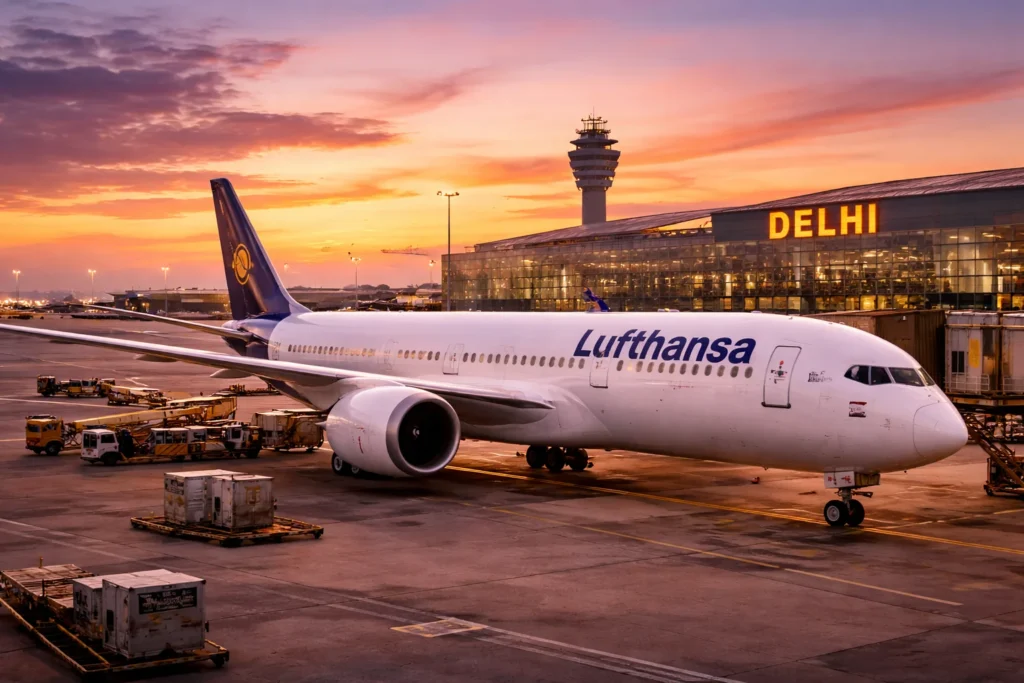
Lufthansa has announced a significant expansion of its flight operations to India for the summer 2026 schedule, responding to strong travel demand and evolving global aviation conditions. The move is expected to enhance connectivity between India and Europe while supporting both tourism and business travel during one of the busiest travel seasons of the year.
The airline will introduce additional passenger services from Frankfurt to key Indian cities, including Chennai, Delhi, and Hyderabad. These routes will see a combined increase of five flights per week, offering travelers greater flexibility and improved access to European destinations. In addition, a new weekly flight from Munich to Bengaluru will further strengthen the airline’s presence in the Indian market.
The expansion comes at a time when global aviation networks are adjusting to capacity constraints in certain regions, particularly across West Asia. These constraints have impacted traditional transit routes, prompting airlines to increase direct services and optimise alternative connections. Lufthansa’s decision to add more flights to India reflects its commitment to maintaining reliable connectivity despite these challenges.
India’s civil aviation sector has been experiencing rapid growth, supported by government initiatives aimed at enhancing airport infrastructure and expanding international connectivity. Authorities have emphasised the importance of increasing flight capacity to accommodate rising passenger demand, particularly during peak travel periods such as the summer season.
The additional flights are expected to benefit both outbound and inbound tourism. Indian travelers seeking European destinations will have more options, while international visitors will find improved access to India’s major cities. Tourism boards in India have consistently highlighted the importance of enhanced air connectivity in driving visitor growth and supporting the broader tourism economy.
Alongside passenger services, Lufthansa is also strengthening its cargo operations. The airline will reintroduce dedicated freighter services to Delhi with a weekly flight, supporting the movement of goods between India and global markets. Air cargo plays a crucial role in facilitating trade and supporting industries linked to tourism, including hospitality and retail.
The expansion of cargo services aligns with broader efforts to improve supply chain efficiency and ensure the smooth flow of goods. Aviation authorities have underscored the importance of cargo connectivity in maintaining economic stability and supporting international trade.
Lufthansa’s group network is also contributing to the increased capacity. Swiss International Air Lines will operate additional flights to Delhi, further enhancing connectivity between India and Europe. This coordinated approach allows the airline group to optimise its network and provide passengers with a wider range of travel options.
The increased focus on India reflects the country’s growing importance in global aviation. With a rapidly expanding middle class and rising demand for international travel, India has become one of the fastest-growing aviation markets in the world. Airlines are increasingly prioritising routes to and from India to capture this demand.
The summer schedule expansion is also part of Lufthansa’s broader strategy to strengthen its presence in Asian markets. The airline has announced increased frequencies on other routes in the region, including trans-Pacific services, highlighting its commitment to expanding global connectivity.
For travelers, the additional flights offer greater convenience and flexibility. More frequent services mean shorter waiting times and improved scheduling options, making it easier to plan both business and leisure trips. This is particularly important during peak travel seasons when demand is high and availability can be limited.
From a tourism perspective, improved connectivity supports the development of travel experiences across multiple destinations. Visitors can explore India’s diverse cultural, historical, and natural attractions, while Indian travelers gain easier access to European cities known for their heritage and lifestyle offerings.
The expansion also reflects the resilience of the aviation industry as it continues to adapt to changing conditions. Airlines are focusing on strategic route development and capacity management to meet demand while navigating operational challenges such as airspace restrictions and fluctuating fuel costs.
Government policies and aviation strategies continue to play a key role in supporting this growth. Investments in airport infrastructure, regulatory frameworks, and international partnerships are helping to create a favourable environment for airlines to expand their operations.
As global travel demand continues to rise, the importance of reliable and efficient air connectivity becomes increasingly evident. Lufthansa’s decision to enhance its India operations demonstrates confidence in the market and its long-term growth potential.
Looking ahead, the additional flights are expected to contribute to increased passenger traffic and stronger tourism flows between India and Europe. By offering more options and improving accessibility, the airline is helping to facilitate travel and support economic activity in both regions.
The expansion of Lufthansa India flights highlights the evolving dynamics of global aviation, where airlines must continuously adapt to meet demand and maintain connectivity. For travelers and the tourism industry alike, these developments represent positive progress toward a more connected and accessible world.