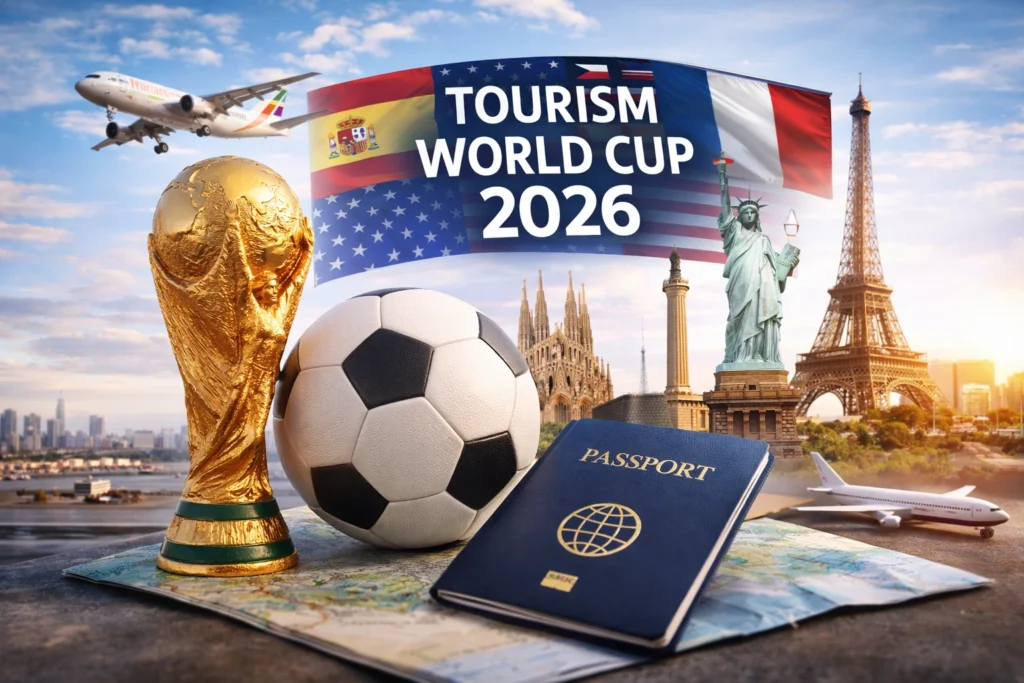
The 2026 FIFA World Cup will feature 48 nations across the United States, Canada, and Mexico. It is not just a football event. It is one of the world’s largest tourism showcases.
Destinations will use the tournament to promote themselves to a global audience. Each team represents both sporting ambition and tourism potential.
Countries will compete not only on the pitch but also in global travel appeal.
Europe Leads in Tourism Power
European nations dominate global tourism rankings. France remains the world’s most visited destination with over 100 million international arrivals.
Spain follows closely and combines strong tourism performance with football strength. It welcomed nearly 94 million visitors in 2024.
Germany, Portugal, and the Netherlands also bring strong tourism credentials. These countries offer culture, connectivity, and well-developed travel infrastructure.
This combination makes them powerful players in both sport and tourism.
Americas Combine Football and Visitor Scale
The United States plays a central role as a host nation. It welcomed over 70 million international visitors in recent data.
Mexico also stands out as a major tourism destination. With around 45 million visitors, it combines strong travel demand with football passion.
Brazil and Argentina add global recognition. While their tourism numbers differ, both destinations have strong brand appeal.
The World Cup offers these countries a chance to strengthen their tourism image further.
Emerging Destinations Gain Global Visibility
Several countries will use the tournament to boost tourism awareness.
Morocco stands out as Africa’s leading tourism destination. Its recent growth reflects rising global interest.
Colombia and Croatia also show strong momentum. Both countries have increased visibility and visitor numbers in recent years.
For smaller destinations, the impact can be even greater. Countries like Senegal and Ecuador can reach new audiences through the tournament.
This exposure can drive long-term tourism growth.
Asia’s Rising Tourism Influence
Asian destinations are gaining importance in global travel.
Japan has emerged as one of the fastest-growing tourism markets. It attracted nearly 37 million visitors in recent figures.
South Korea also shows strong growth, supported by culture and entertainment. Both countries combine modern infrastructure with global appeal.
Saudi Arabia is another key player. Its tourism sector is expanding rapidly through major investments.
The World Cup provides an opportunity to showcase these destinations on a global stage.
Tourism and Football Now Interconnected
The relationship between sports and tourism continues to grow.
Airlines sponsor teams and stadiums. Destinations promote themselves through football partnerships.
This integration creates new marketing opportunities. It also strengthens global travel demand.
The World Cup acts as a platform where sport and tourism meet. It influences travel decisions and destination awareness.
Impact on Airlines, Hotels, and Travel Demand
The tournament will drive significant travel demand across host countries.
Airlines are expected to increase capacity on key routes. Hotels in host cities will see strong occupancy rates.
Travel packages and fan experiences will also grow in popularity. Visitors will combine matches with sightseeing and cultural experiences.
This creates economic benefits for the entire travel ecosystem.
Destination Branding Through Global Exposure
Each participating nation gains visibility during the tournament.
Millions of viewers will watch matches and engage with host cities. This exposure helps shape destination perception.
Countries with strong tourism strategies can convert this attention into future bookings.
For example, smaller destinations can attract new markets. Larger destinations can reinforce their global position.
A New Era of Sports Tourism
Sports tourism continues to expand as a global trend.
Major events like the World Cup attract international travelers. They also encourage repeat visits.
Destinations now plan long-term strategies around such events. They invest in infrastructure, marketing, and partnerships.
This approach ensures lasting benefits beyond the tournament.
Outlook: More Than Just Football
The 2026 FIFA World Cup represents more than a sporting event. It is a global platform for tourism growth.
Spain may lead in football strength, while France leads in visitor numbers. The United States dominates as a host destination.
However, every participating nation brings its own story and appeal.
The tournament will shape travel trends for years to come. It highlights how sport and tourism are now closely linked.
In this “Tourism World Cup,” success will be measured not only in goals but also in global travel influence.
For more travel news like this, keep reading Global Travel Wire