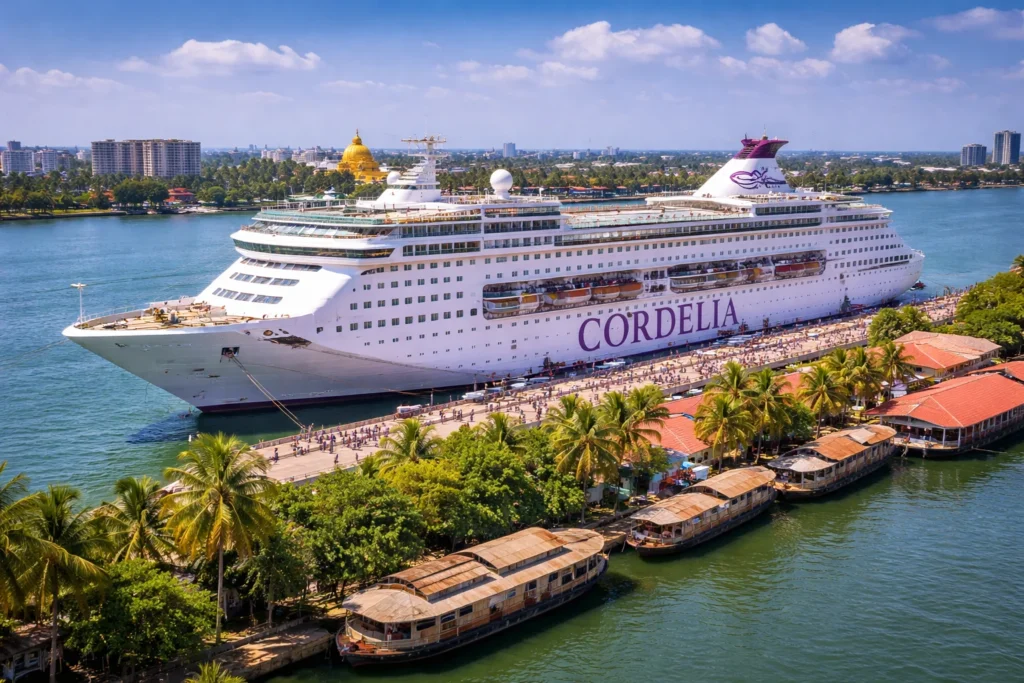
India’s cruise tourism sector is entering a new growth phase as Cordelia Cruises expands its international offerings and strengthens its domestic network. Supported by national tourism development strategies and port infrastructure initiatives, the expansion highlights India’s increasing appeal as a cruise destination for both domestic and international travelers.
According to official tourism policy frameworks and maritime development plans, India has been actively promoting cruise tourism as part of its broader efforts to boost inbound travel and diversify tourism offerings. The expansion by Cordelia Cruises aligns with these objectives, offering new routes that connect Indian ports with key destinations across South Asia and Southeast Asia.
The company is set to grow its fleet from one vessel to three by 2027, significantly increasing its operational capacity. This expansion is expected to enhance connectivity between Indian coastal cities and international cruise destinations, creating new opportunities for tourism growth and regional collaboration.
One of the highlights of the expansion is the introduction of new itineraries from Kochi, a major port supported by India’s maritime infrastructure development programs. These itineraries include voyages to Malé and Colombo, both of which are key tourism hubs in the Indian Ocean region. Tourism authorities in these destinations have emphasized the importance of cruise connectivity in driving visitor arrivals and supporting local economies.
From Chennai, the cruise line will operate routes to Sri Lanka as well as domestic itineraries connecting coastal destinations such as Visakhapatnam and Puducherry. These routes are designed to promote regional tourism and highlight India’s diverse cultural and coastal attractions.
A major development in the expansion plan is the introduction of open-jaw itineraries connecting Chennai and Singapore. These voyages, which allow passengers to start and end their journey in different ports, are expected to attract international travelers seeking flexible and immersive travel experiences. Tourism boards across Southeast Asia have consistently highlighted the value of such itineraries in promoting multi-destination travel.
Looking ahead, Cordelia Cruises plans to further expand its Southeast Asia offerings with additional sailings connecting India to regional hubs. These developments are supported by bilateral tourism agreements and regional cooperation initiatives aimed at enhancing connectivity and promoting cross-border travel.
The addition of new vessels, including larger and more advanced ships, will play a key role in supporting this growth. These ships are designed to accommodate more passengers and offer enhanced onboard amenities, aligning with international standards for cruise tourism. Government maritime authorities have emphasized the importance of modernizing fleets to improve efficiency, safety, and passenger experience.
The expansion also reflects a growing trend among international travelers who are increasingly interested in exploring India through cruise travel. Tourism officials have noted that cruise itineraries offer a convenient way to experience multiple destinations without the complexities of traditional travel. This is particularly appealing to visitors seeking a combination of cultural exploration and leisure.
India’s tourism ministry has identified cruise tourism as a priority sector, with initiatives focused on improving port infrastructure, streamlining regulations, and enhancing passenger services. Investments in port facilities and connectivity are expected to support the growth of cruise operations and attract more international cruise lines to Indian waters.
The development of a multi-homeport network across India is another key aspect of Cordelia’s strategy. By operating from cities such as Mumbai, Kochi, and Chennai, the cruise line aims to create a balanced network that supports both domestic and international travel. This approach is aligned with national tourism strategies that emphasize regional development and improved accessibility.
Tourism authorities have highlighted that such networks can significantly boost local economies by increasing visitor spending and creating employment opportunities. Cruise passengers contribute to a wide range of sectors, including hospitality, transportation, retail, and cultural tourism.
The introduction of longer and more diverse itineraries also supports the goal of positioning India as a gateway to the broader region. By connecting Indian ports with destinations in Southeast Asia and the Indian Ocean, cruise operators can offer travelers a comprehensive and enriching travel experience.
Sustainability and operational reliability remain central to the expansion plans. Maritime authorities and tourism organizations have emphasized the importance of responsible tourism practices, including environmental protection and efficient resource management. Cruise operators are encouraged to adopt sustainable technologies and practices to minimize their impact on marine ecosystems.
For travelers, the expansion of India’s cruise tourism offerings provides greater choice and flexibility. Whether exploring domestic coastal routes or embarking on international journeys, passengers can enjoy a range of experiences that combine cultural discovery with modern amenities.
As global tourism continues to evolve, the growth of India’s cruise sector highlights the country’s potential as a major player in the international travel market. With increased capacity, enhanced connectivity, and a focus on quality experiences, Cordelia Cruises is contributing to the transformation of India into a leading cruise tourism destination.
The expansion signals a strong outlook for the future of India cruise tourism, driven by strategic investments, international collaboration, and rising global interest in diverse and immersive travel experiences.