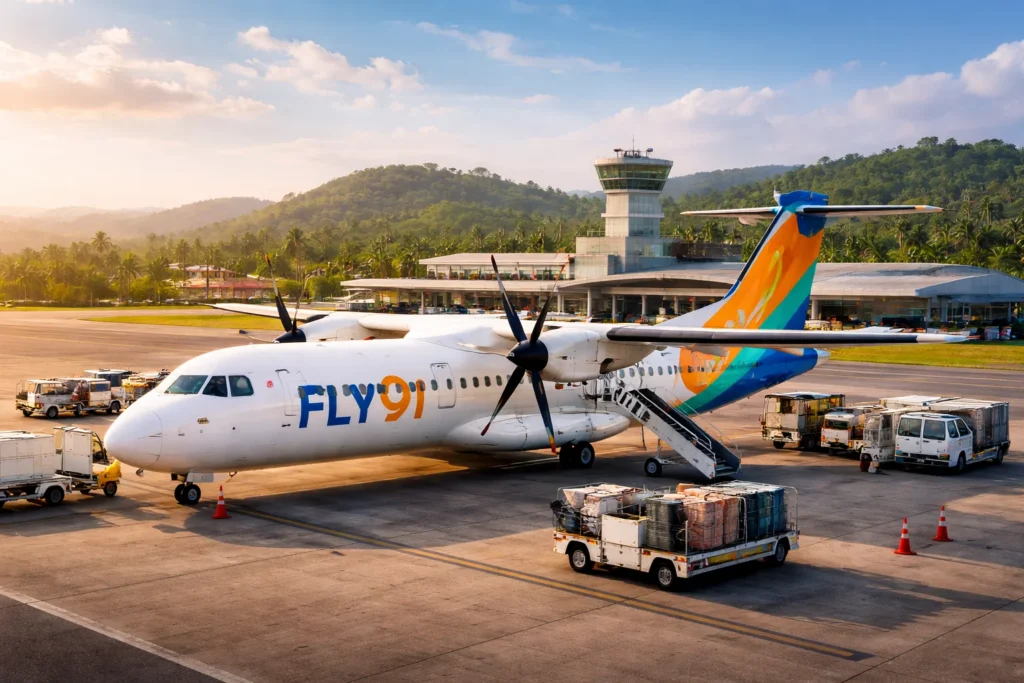
India’s regional aviation sector is witnessing a major boost as Fly91, a Goa-based airline, announces a strategic expansion of its domestic network. The airline’s latest move to connect more cities and increase seat capacity is expected to strengthen tourism flows, enhance accessibility, and support economic growth across emerging destinations.
As part of its expansion plan, Fly91 has introduced new services to Rajahmundry, Vijayawada, and Hubballi, taking its total network footprint to 12 cities. The airline has also launched five additional sectors, further improving connectivity between underserved regions. This development aligns with India’s broader aviation and tourism goals of linking smaller cities to major travel corridors.
According to official aviation and tourism policy frameworks, regional connectivity is a key pillar in driving domestic tourism. The Government of India has consistently emphasized the importance of improving air links to Tier-2 and Tier-3 cities under initiatives aimed at boosting economic activity and travel accessibility. Fly91’s expansion directly supports this vision by enhancing connectivity to destinations that are rapidly gaining importance in the country’s tourism landscape.
In addition to new routes, the airline has announced operational enhancements on existing sectors. It will introduce five weekly flights on the Hyderabad–Solapur route, offering improved travel options for both business and leisure travelers. Furthermore, frequency on the Goa–Solapur sector will increase to six flights per week, strengthening links between a major coastal tourism hub and an emerging inland destination.
The expansion will add approximately 30,000 seats per month, significantly increasing travel capacity across Fly91’s network. This increase is expected to play a crucial role in accommodating rising passenger demand, particularly as domestic tourism continues to grow. Official tourism statistics have shown a steady rise in domestic travel, driven by improved infrastructure, rising disposable incomes, and growing interest in exploring lesser-known destinations.
Rajahmundry and Vijayawada, both located in Andhra Pradesh, are important cultural and economic centers with strong tourism potential. These cities are known for their heritage sites, river tourism, and regional cuisine, attracting both leisure travelers and pilgrims. Improved air connectivity is likely to enhance their visibility and accessibility, encouraging more visitors to explore these destinations.
Hubballi, situated in Karnataka, is another key addition to Fly91’s network. Recognized as a commercial and educational hub, the city also serves as a gateway to several tourist attractions in the region. By connecting Hubballi to more cities, the airline is contributing to the development of tourism circuits that extend beyond traditional hotspots.
The airline’s leadership has highlighted that Tier-2 and Tier-3 cities are becoming significant drivers of economic growth and domestic travel demand. This trend is supported by government data, which indicates that smaller cities are experiencing increased investment, entrepreneurship, and infrastructure development. As a result, these regions are emerging as attractive destinations for both business and leisure travel.
Tourism boards across various states have been actively promoting regional destinations through targeted campaigns and infrastructure upgrades. Enhanced air connectivity plays a critical role in these efforts by reducing travel time and making destinations more accessible to a wider audience. Fly91’s expansion is expected to complement these initiatives by providing reliable and convenient travel options.
The aviation sector in India has been undergoing rapid transformation, with a strong focus on regional connectivity and passenger growth. The Ministry of Civil Aviation has outlined plans to expand airport infrastructure and improve air services in underserved areas. Airlines like Fly91 are contributing to this vision by investing in routes that connect smaller cities to the national aviation network.
For travelers, the expansion means greater convenience and more choices. Increased flight frequencies and new routes will reduce dependency on long road or rail journeys, making travel faster and more efficient. This is particularly beneficial for tourists looking to explore multiple destinations within a limited timeframe.
From a tourism perspective, improved connectivity often leads to increased visitor numbers, higher hotel occupancy rates, and greater economic activity in local communities. Small businesses, including hotels, restaurants, and tour operators, stand to benefit from the influx of travelers brought by enhanced air links.
The addition of 30,000 seats per month also reflects growing confidence in the domestic aviation market. As travel demand continues to rise, airlines are focusing on capacity expansion to meet passenger needs while maintaining operational efficiency. This trend is expected to continue as India moves toward becoming one of the world’s leading aviation markets.
Looking ahead, Fly91’s expansion could pave the way for further network growth and deeper penetration into regional markets. As more cities become connected, the potential for tourism development increases, creating new opportunities for travelers and local economies alike.
Overall, the airline’s strategic move underscores the importance of regional connectivity in shaping the future of India’s tourism industry. By linking emerging destinations with established travel hubs, Fly91 is not only expanding its network but also contributing to the broader goal of inclusive and sustainable tourism growth across the country.