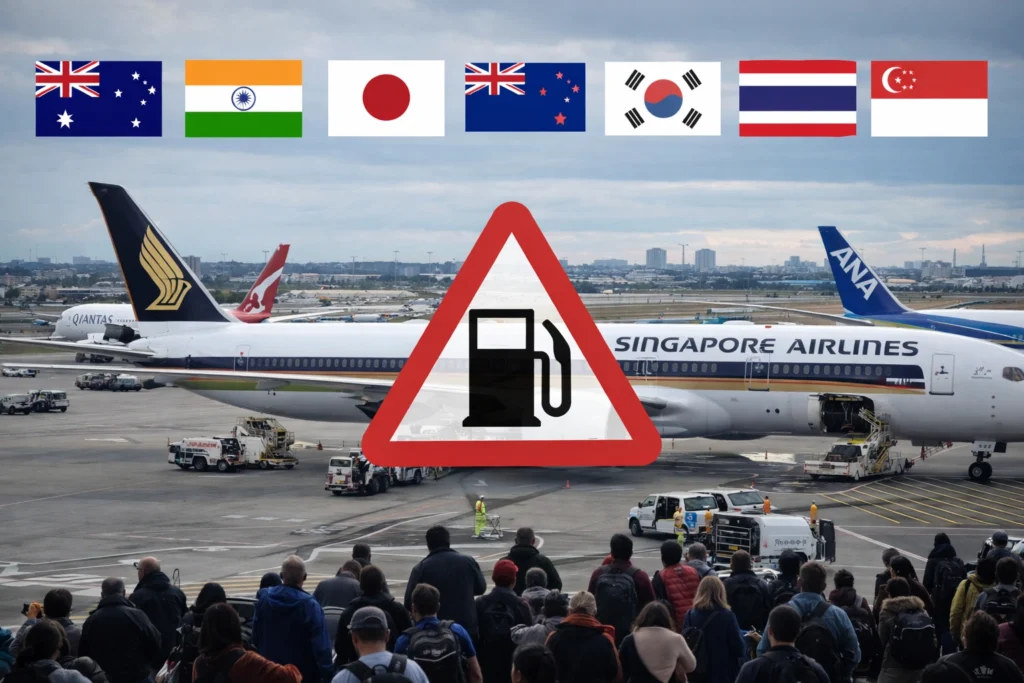
A growing travel crisis is impacting the Asia-Pacific region as multiple countries face fuel shortages and airspace disruptions. Nations including Australia, India, Japan, New Zealand, South Korea, Thailand, and Indonesia are reporting delays, rerouted flights, and rising travel costs.
The situation reflects broader global supply challenges and geopolitical tensions. These disruptions are affecting both domestic and international travel across key tourism and business markets.
Fuel Shortages Disrupt Regional Travel
Fuel shortages have emerged as a major concern across the region. Many countries rely heavily on imports from the Middle East, making them vulnerable to supply disruptions.
Limited fuel availability has increased operational costs for airlines. This has resulted in higher ticket prices and reduced flight schedules.
In several countries, fuel conservation measures have been introduced. Governments are urging travelers to limit consumption and avoid unnecessary travel.
These developments are creating uncertainty for travelers planning trips during peak holiday periods.
Australia Faces Energy and Aviation Pressure
Australia is experiencing fuel shortages and airspace challenges ahead of peak travel periods. Authorities have advised travelers to manage fuel use carefully.
Fuel reserves remain limited, increasing pressure on both road travel and aviation sectors. Rising fuel prices have added to the cost of travel.
Airspace restrictions linked to global tensions are also affecting flight routes. Airlines are adjusting schedules to manage operational challenges.
These disruptions may impact travel to major destinations such as Sydney, Melbourne, and Queensland.
India’s Aviation Sector Under Strain
India’s aviation industry is also facing significant challenges. The country’s reliance on imported fuel has made it vulnerable to global price fluctuations.
Airlines are dealing with rising fuel costs and airspace restrictions. These factors have led to delays, cancellations, and route changes.
Authorities have introduced temporary measures to manage the crisis. These include fuel price controls and adjustments to aviation standards.
Despite these efforts, travel disruptions continue to affect both domestic and international routes.
Japan and New Zealand Adjust to Rising Costs
Japan is experiencing increased fuel prices and airspace limitations. Airlines are working to manage costs while maintaining service levels.
Airspace restrictions in certain regions have caused delays and rerouting. These changes are affecting flights to Southeast Asia and beyond.
New Zealand is also facing fuel shortages, particularly in remote areas. Limited supply has disrupted travel plans and increased operational challenges for airlines.
Airlines are adjusting schedules and routes to manage fuel consumption. These changes may lead to longer travel times for passengers.
South Korea, Thailand, and Indonesia Hit by Disruptions
South Korea is dealing with reduced fuel reserves and higher aviation costs. Airlines are facing delays and cancellations due to both fuel issues and airspace restrictions.
Thailand, a major tourism hub, is experiencing fuel price increases and supply challenges. Airlines have adjusted flight schedules to cope with these conditions.
Indonesia is also affected, particularly in high-demand destinations such as Bali. Fuel shortages and rising prices are impacting both airlines and local transport.
These disruptions are affecting tourism flows and travel planning across Southeast Asia.
Impact on Tourism and Travel Demand
The crisis is affecting millions of travelers across the region. Flight delays, cancellations, and higher costs are creating uncertainty for both leisure and business travel.
Tourism-dependent destinations may experience reduced visitor numbers. Travelers are reconsidering plans or seeking alternative routes.
Airlines are working to manage capacity and maintain service levels. However, ongoing challenges may continue to affect travel demand.
What Travelers Should Expect
Travelers should prepare for possible delays and schedule changes. Monitoring flight updates and booking early can help reduce disruptions.
Flexibility remains essential during this period. Travelers may need to adjust plans or consider alternative transport options.
Authorities recommend staying informed through official channels. This ensures access to the latest travel advisories and updates.
Outlook for Asia-Pacific Travel
The Asia-Pacific travel industry continues to adapt to evolving challenges. Governments and airlines are working to stabilize operations and manage supply constraints.
While disruptions remain, efforts are underway to improve resilience. Investments in alternative fuel sources and route planning may help reduce future risks.
For now, travelers across the region must navigate a complex travel environment. Careful planning and awareness will remain key to ensuring smoother journeys.
As the situation develops, the Asia-Pacific region will continue to play a central role in global travel. The current challenges highlight the importance of adaptability in the modern aviation landscape.
For more travel news like this, keep reading Global Travel Wire