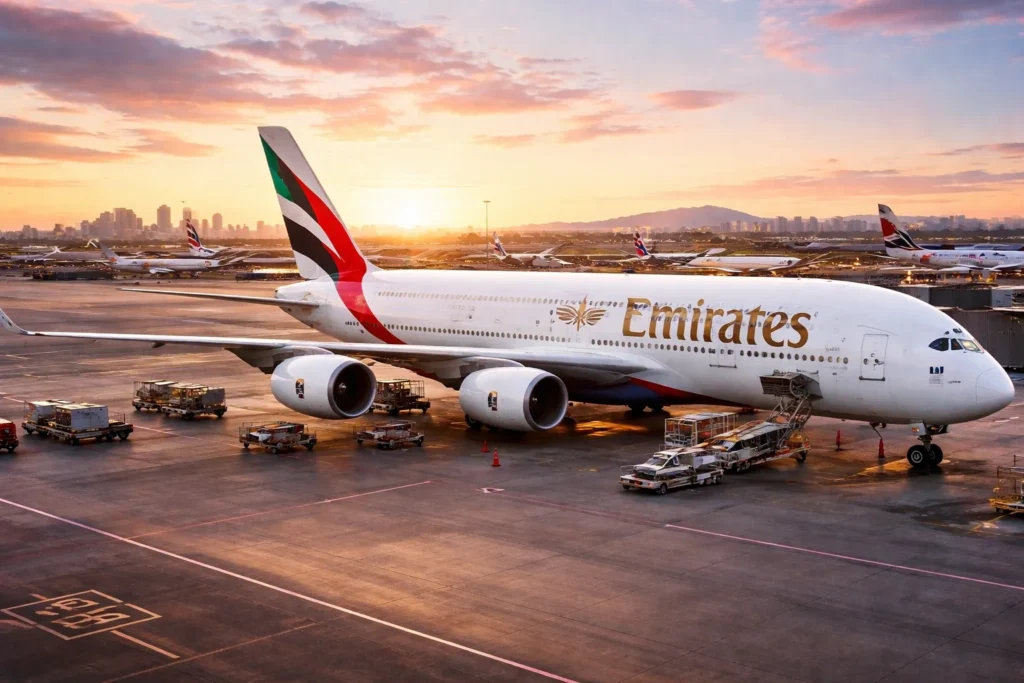
The Airbus A380, widely recognized as the world’s largest passenger aircraft, continues to play a unique and influential role in global tourism in 2026. Although production of the aircraft has officially ended, civil aviation authorities and national tourism boards confirm that several major international airlines still operate the superjumbo on high-demand routes, supporting long-haul travel and international visitor flows.
Manufactured by Airbus, the A380 was designed to carry large volumes of passengers efficiently between major global hubs. Its continued deployment reflects strategic decisions by airlines and governments to maintain strong air connectivity, particularly on routes linking major tourism destinations.
According to official aviation data and airline fleet disclosures, around ten global carriers continue to operate the Airbus A380 in 2026. Among them, Emirates stands out as the largest operator, maintaining a fleet of over 100 aircraft. The airline’s hub at Dubai International Airport remains one of the busiest international transit points, with A380 operations playing a central role in connecting travelers across continents.
Tourism authorities in the United Arab Emirates have highlighted how the A380 has contributed significantly to inbound tourism growth. The aircraft’s high seating capacity enables airlines to transport large numbers of visitors efficiently, supporting government-led initiatives to boost international arrivals and position Dubai as a global tourism hub.
Other airlines continuing A380 operations include Singapore Airlines, Qantas, British Airways, Lufthansa, Qatar Airways, Korean Air, Etihad Airways, All Nippon Airways, and Asiana Airlines, which is expected to phase out the aircraft as part of its fleet modernization plans.
National aviation ministries and tourism boards note that these airlines primarily deploy the A380 on routes with consistently high passenger demand, such as connections between Europe, Asia, the Middle East, and Australia. These routes often link major tourism cities, allowing for efficient movement of travelers during peak seasons.
The aircraft’s role in tourism extends beyond capacity. Official tourism strategies emphasize passenger experience as a key factor in destination competitiveness, and the Airbus A380 is widely associated with enhanced onboard comfort. Features such as wider cabins, quieter interiors, and premium travel offerings align with efforts by tourism authorities to promote high-quality travel experiences.
Singapore’s tourism board, for example, has consistently supported strong aviation partnerships to maintain its status as a leading global travel hub. The use of the A380 by Singapore Airlines on flagship routes reinforces the country’s connectivity strategy, linking Southeast Asia with Europe and North America. Similarly, Australia’s tourism authorities recognize the importance of long-haul capacity provided by Qantas A380 services in sustaining visitor flows from key international markets.
In Europe, aviation regulators and tourism agencies highlight the importance of maintaining high-capacity routes to manage demand at major airports. Airlines like British Airways and Lufthansa utilize the A380 to optimize slot usage at busy hubs, ensuring that large numbers of travelers can be accommodated efficiently without increasing flight frequency.
Despite its advantages, the A380’s future remains shaped by evolving aviation strategies. Several airlines have retired the aircraft in recent years as part of broader fleet restructuring efforts aimed at improving efficiency and reducing operational complexity. However, official industry statements indicate that the aircraft continues to hold value on specific routes where demand justifies its size.
The Middle East remains a stronghold for A380 operations. Airlines such as Emirates and Etihad Airways continue to integrate the aircraft into their long-haul networks, supported by government-backed tourism initiatives that prioritize global connectivity. These strategies align with national visions to diversify economies through tourism and international travel.
In Asia, carriers like All Nippon Airways and Korean Air use the A380 selectively on high-density leisure routes, particularly those connecting popular holiday destinations. Tourism ministries in these countries emphasize the importance of direct, high-capacity flights in attracting international visitors and supporting outbound travel demand.
The Airbus A380 also holds symbolic value within the tourism industry. Its distinctive double-deck design and scale make it an iconic representation of modern air travel. Tourism campaigns and aviation promotions often feature the aircraft as a symbol of global connectivity and innovation.
As global travel demand continues to recover and expand, the role of large-capacity aircraft remains significant. Official tourism statistics indicate steady growth in international arrivals, reinforcing the need for efficient long-haul transport solutions. While newer aircraft models focus on fuel efficiency and flexibility, the A380 continues to serve a niche yet important role in supporting high-volume travel corridors.
Ultimately, the question of a “favorite” Airbus A380 operator varies among travelers, but from a tourism perspective, each airline contributes to a broader global network that facilitates international mobility. Whether through the extensive route network of Emirates, the premium service of Singapore Airlines, or the strategic operations of European and Asian carriers, the A380 remains a vital part of the tourism ecosystem in 2026.
Its continued presence in the skies highlights how aviation infrastructure, airline strategy, and government tourism policies work together to shape the future of global travel.