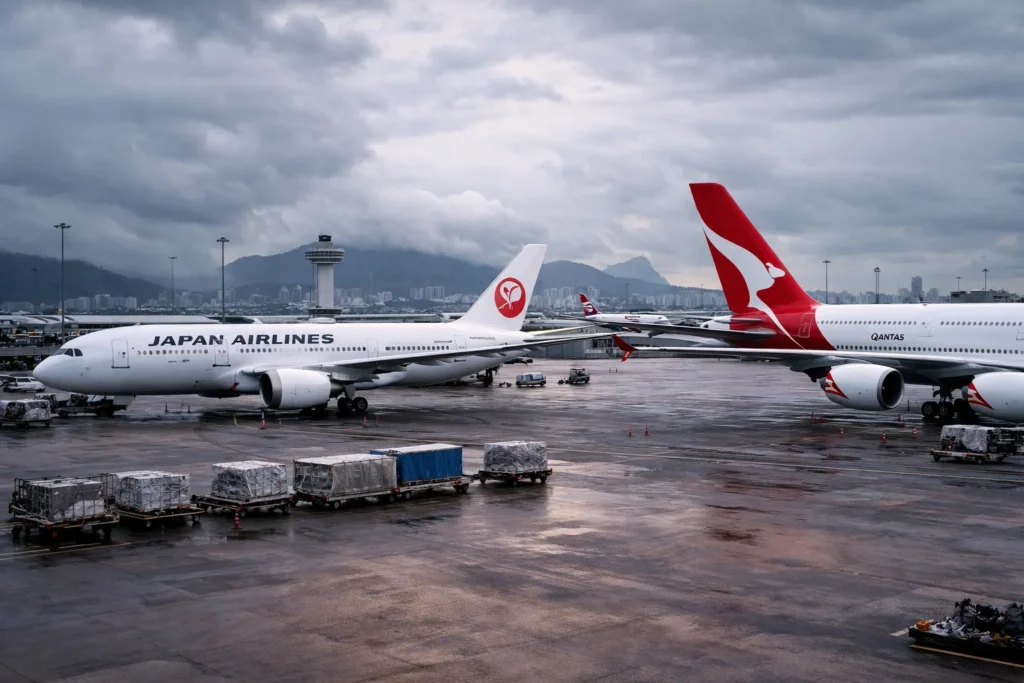
Air travel across the Asia-Pacific region is undergoing significant disruption in 2026 as multiple countries respond to airspace restrictions and aviation fuel supply challenges. According to official statements from civil aviation authorities and transport ministries, nations including India, Australia, Japan, New Zealand, South Korea, Thailand, and Indonesia are actively managing operational challenges that are now affecting tourism flows and passenger travel experiences.
Government aviation agencies have confirmed that the disruptions are not linked to routine weather patterns or technical faults, but rather to broader global developments impacting fuel supply chains and international airspace availability. These challenges are forcing airlines to adjust operations in ways that directly influence travel schedules, route planning, and ticket pricing.
One of the primary issues highlighted by transport ministries is the restriction or closure of certain international airspaces. These changes require airlines to reroute flights, often adding considerable distance to journeys. As a result, aircraft consume more fuel, increasing operational costs and extending travel times. Aviation regulators note that such rerouting is necessary to ensure passenger safety while maintaining compliance with international aviation protocols.
At the same time, several countries have reported constraints in aviation fuel supply. Official energy and transport authorities indicate that fluctuations in fuel availability are affecting airline operations, particularly in regions that rely heavily on imported fuel. This includes Australia and several Southeast Asian nations, where supply chain dependencies have heightened vulnerability to disruptions.
The combined effect of longer routes and limited fuel availability is placing significant pressure on airlines. Civil aviation bodies have acknowledged that carriers are facing increased operating expenses, prompting adjustments to flight schedules and capacity. In some cases, airlines have reduced the frequency of certain routes or temporarily suspended services to manage resources more effectively.
For major aviation hubs such as India and Japan, the impact is especially pronounced. These countries serve as key transit points for international travel, and rerouted flights are contributing to increased congestion at major airports. Aviation authorities in these regions have implemented operational measures to manage traffic flow and maintain efficiency, but delays and scheduling changes remain a challenge.
Tourism ministries across the region have also noted the implications for international travel demand. Longer flight durations and higher ticket prices are influencing traveler behavior, with some tourists reconsidering travel plans or opting for alternative destinations. Despite these challenges, official tourism data indicates that demand remains resilient, particularly for essential travel and peak holiday periods.
In Southeast Asia, countries such as Thailand and Indonesia are working closely with aviation stakeholders to maintain connectivity. Tourism boards have emphasized the importance of ensuring that key routes remain operational, as tourism continues to be a major contributor to national economies. Government initiatives are focused on balancing operational constraints with the need to support visitor arrivals.
For travelers, the effects of the current situation are increasingly visible. Transport authorities advise passengers to expect longer travel times due to rerouted flights, as well as the possibility of schedule adjustments. In some instances, flights that previously operated on direct paths are now taking extended routes, adding hours to overall journey durations.
Airlines have also introduced operational changes in response to rising costs. Aviation regulators confirm that fare adjustments, including fuel-related surcharges, are being implemented in line with international pricing practices. These measures are intended to offset increased expenses while ensuring continued service availability.
Passenger advisory notices issued by aviation ministries recommend that travelers remain flexible when planning journeys. Booking options that allow changes, monitoring flight updates, and allowing additional time for connections are among the key recommendations. These guidelines aim to help passengers navigate the current environment with minimal disruption.
Looking ahead, government and industry stakeholders are closely monitoring the situation. Official statements suggest that long-term adjustments may be required if fuel supply challenges and airspace restrictions persist. Airlines may continue to revise route networks and operational strategies to maintain efficiency under evolving conditions.
Tourism authorities also highlight the potential for structural changes in travel patterns. Increased focus on fuel efficiency, route optimization, and regional connectivity could shape the future of aviation in the Asia-Pacific region. These developments align with broader policy goals aimed at ensuring sustainable and resilient tourism growth.
Despite the current disruptions, officials emphasize that the aviation sector remains adaptable. Collaborative efforts between governments, airlines, and international aviation organizations are ongoing to address challenges and maintain safe, reliable travel services.
In the context of global tourism, the situation underscores the interconnected nature of aviation and travel. Changes in fuel supply and airspace availability can have far-reaching effects on how people move between destinations. As countries across the Asia-Pacific region continue to respond to these challenges, the focus remains on preserving connectivity while adapting to a rapidly changing travel landscape.
For now, travelers and industry stakeholders alike are navigating a period of adjustment. With continued coordination and strategic planning, authorities aim to stabilize operations and support the long-term recovery and growth of tourism across the region.