Travel across the United Kingdom continues to face disruption following the impact of Storm Dave, even as official weather warnings have been lifted earlier than anticipated. Authorities confirm that while conditions have improved, the aftereffects of the storm are still affecting transport systems and tourism activity across several regions.
According to the Met Office, yellow weather warnings that had been issued for parts of northern England, Scotland, and Wales were withdrawn early on Easter Sunday as the storm moved away faster than forecast. However, officials emphasize that improved weather conditions do not immediately restore normal travel operations, as infrastructure and services continue to recover from the storm’s impact.
Storm Dave brought strong winds across multiple regions, with official data recording gusts of up to 93 miles per hour in Capel Curig. Additional high wind speeds were reported in West Yorkshire, Cumbria, and Aberdeenshire. These conditions prompted an earlier amber warning across parts of northern England, north-west Wales, and southern Scotland, highlighting the severity of the storm.
Although the warnings have been lifted, travel disruption remains widespread. Ferry services operated by Caledonian MacBrayne on Scotland’s west coast experienced cancellations and delays due to rough sea conditions. These routes are essential for connecting island communities and supporting tourism, particularly during busy holiday periods such as Easter.
Rail travel has also been affected, with Network Rail implementing speed restrictions across certain lines to ensure passenger safety. In some cases, rail replacement bus services were introduced to maintain connectivity where services could not operate as normal. These measures, while necessary, have contributed to longer journey times and inconvenience for passengers.
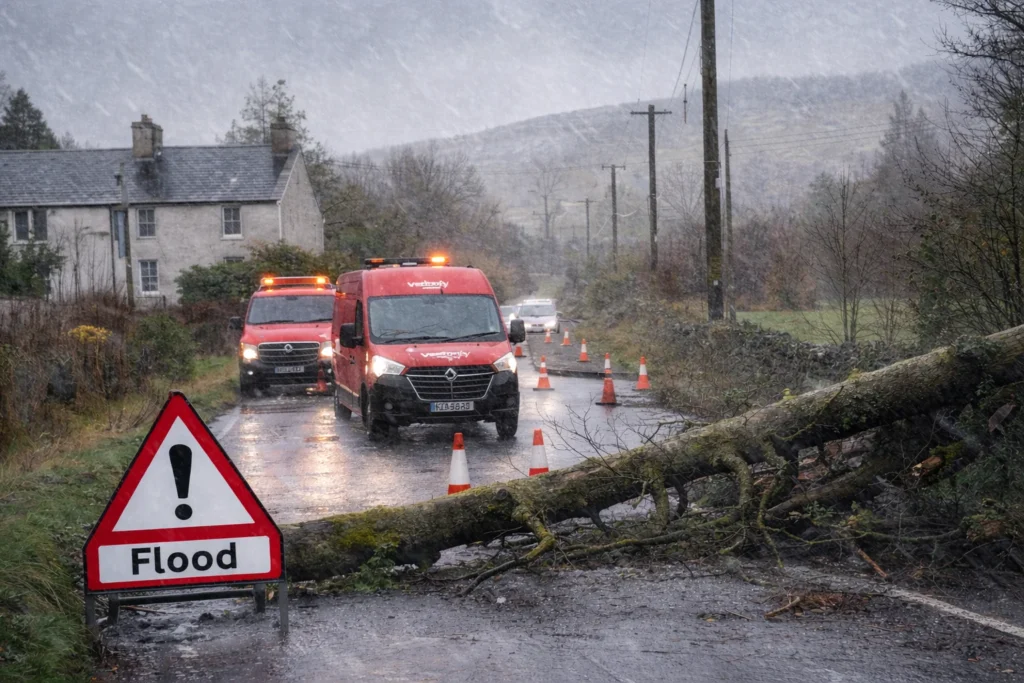
Road transport has faced similar challenges. Fallen trees and debris have blocked several routes, causing delays for motorists and impacting travel to tourist destinations. Authorities have been working to clear affected areas, but disruptions are expected to continue in some regions as recovery efforts progress.
Key infrastructure such as the Humber Bridge was temporarily closed to high-sided vehicles due to strong winds before reopening once conditions improved. Such closures highlight the vulnerability of critical transport links during extreme weather events and their impact on travel continuity.
Flood risks also remain a concern in parts of the UK. Environmental agencies have issued multiple flood warnings and alerts across Scotland, England, and Wales. These warnings indicate potential risks to low-lying areas and underscore the need for continued caution among residents and travelers.
In Scotland, snow was reported in several regions, including parts of the west coast and highland areas. Cities such as Glasgow experienced snowfall during Easter Sunday, adding to travel challenges and affecting local transport conditions. These weather variations further illustrate the complexity of managing travel during transitional weather periods.
The Energy Networks Association has also highlighted the potential impact of the storm on power infrastructure. Officials confirmed that network operators increased staffing levels and positioned additional resources in areas expected to be most affected. These proactive measures aim to reduce the risk of prolonged power outages and ensure rapid response to any disruptions.
For the tourism sector, the timing of Storm Dave has been particularly challenging. The Easter holiday period is traditionally one of the busiest times for domestic travel in the UK, with families and visitors exploring destinations across the country. Disruptions to transport services can therefore have a direct impact on visitor experiences, accommodation plans, and local economies.
Tourism authorities are advising travelers to stay informed through official updates and to allow extra time for journeys. Flexibility in travel plans is strongly recommended, particularly for those visiting regions that have been most affected by the storm. Checking transport schedules and road conditions before departure is also emphasized as an essential precaution.
Despite the disruptions, officials note that the UK’s transport and tourism systems are resilient and capable of recovery. The early lifting of weather warnings indicates that conditions are stabilizing, and efforts are underway to restore normal operations across affected areas.
Looking ahead, the Met Office forecasts a mix of sunshine and scattered showers across the UK, with temperatures expected to remain close to seasonal averages. Northern regions may continue to experience cooler and more unsettled conditions, but overall weather patterns are expected to improve.
The aftermath of Storm Dave highlights the broader challenges posed by extreme weather to travel and tourism. Authorities continue to focus on strengthening infrastructure, improving forecasting systems, and enhancing coordination between agencies to better manage such events in the future.
For travelers, the key message is to remain cautious and informed. While the storm has passed, its effects continue to influence travel conditions across the UK. By following official guidance and planning carefully, travelers can navigate the current situation more effectively.
As recovery efforts continue, the focus remains on ensuring safe and efficient travel while supporting the ongoing growth of tourism across the United Kingdom.