The Dominican Republic continues to strengthen its position as a leading Caribbean destination in 2026, with evolving travel trends reshaping the all-inclusive resort experience. According to official tourism data and ministry statements, the country has recorded sustained growth in visitor arrivals, reflecting strong global demand for its beaches, culture, and hospitality offerings.
Hospitality operators such as Aimbridge Hospitality are adapting to these changes by aligning resort experiences with modern traveler expectations. With a portfolio that includes partnerships with globally recognized brands, the company is focusing on personalization, multi-generational travel, and immersive destination experiences.
Tourism authorities in the Dominican Republic have highlighted that the country welcomed over one million visitors in a single month, marking continued growth in both air and cruise tourism. This increase underscores the destination’s appeal across diverse travel segments, particularly among families and leisure travelers from key markets such as the United States.
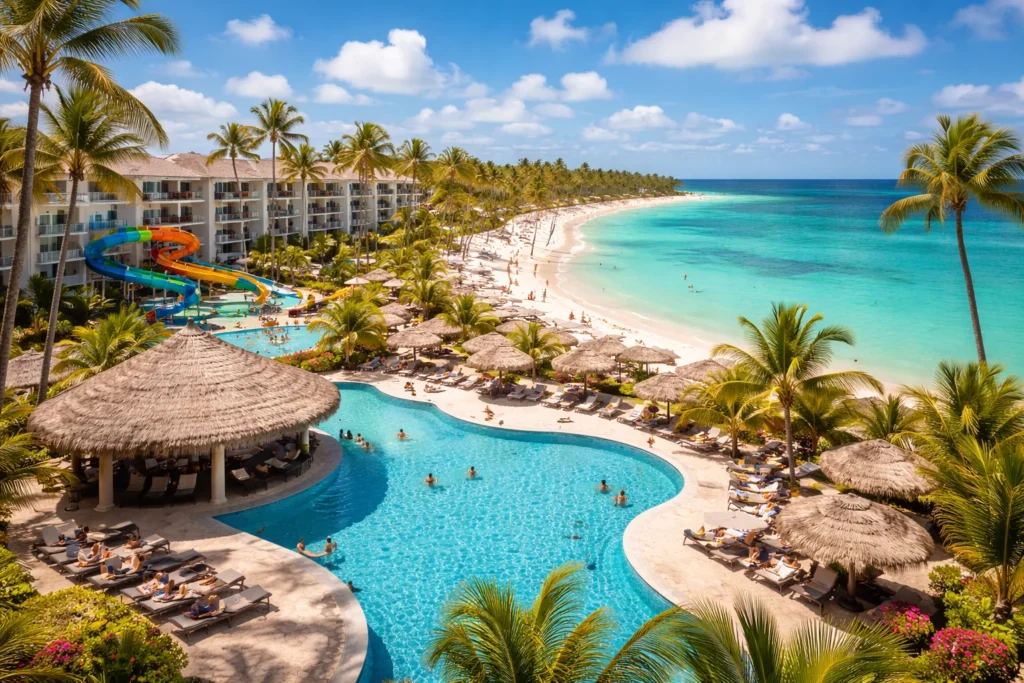
One of the most significant trends shaping tourism in the region is the rise of multi-generational travel. Families are increasingly choosing to travel together, combining different age groups into a single vacation experience. Resorts in destinations like Punta Cana are responding by offering spacious accommodations, flexible dining options, and activities designed for all age groups.
Properties such as Wyndham Alltra Punta Cana have introduced features tailored to family travel, including water parks, interactive entertainment, and large suites that accommodate extended families. Tourism boards note that such offerings encourage longer stays and higher visitor spending, contributing to economic growth.
At the same time, emerging destinations within the country are gaining attention. Regions like Samaná are being promoted as alternatives to traditional resort hubs, offering a more tranquil and nature-focused experience. Government tourism initiatives emphasize the importance of diversifying destinations to distribute visitor traffic and support sustainable development.
Resorts such as Wyndham Alltra Samaná reflect this shift by integrating natural surroundings into the guest experience. Located near pristine beaches and biodiverse landscapes, these properties provide access to eco-tourism activities such as hiking, marine exploration, and wildlife observation. Tourism authorities highlight that such experiences align with global trends toward wellness and environmental awareness.
Nature-based tourism is becoming a key driver of visitor interest. Travelers are increasingly seeking destinations that offer opportunities to disconnect from urban environments and engage with natural landscapes. In the Dominican Republic, this includes exploring national parks, visiting waterfalls, and participating in outdoor activities that promote physical and mental well-being.
The concept of wellness tourism is also influencing resort offerings. Hospitality providers are incorporating features such as yoga sessions, spa treatments, and holistic wellness programs into their services. These initiatives are supported by tourism boards as part of broader strategies to attract health-conscious travelers and promote year-round visitation.
Another important trend is the demand for personalized travel experiences. Modern travelers expect more than standard packages; they seek tailored activities, curated excursions, and unique cultural interactions. Resorts are responding by offering customizable itineraries, local culinary experiences, and immersive cultural programs that reflect the identity of the destination.
Cultural engagement is playing an increasingly important role in tourism development. Activities such as traditional cooking classes, dance workshops, and local excursions allow visitors to connect with the heritage of the Dominican Republic. Tourism authorities emphasize that these experiences enhance visitor satisfaction and encourage repeat travel.
The evolution of the all-inclusive model reflects changing consumer preferences. While convenience remains a key factor, travelers are now looking for a balance between structured services and authentic exploration. This shift is driving innovation within the hospitality sector, as operators seek to create experiences that go beyond traditional resort offerings.
Infrastructure development continues to support these trends. Investments in transportation, accommodation, and tourism services are enabling the country to accommodate growing visitor numbers while maintaining quality standards. Government initiatives focus on improving accessibility and ensuring that tourism growth remains sustainable.
Cruise tourism is also contributing to the country’s success. Ports across the Dominican Republic are experiencing increased activity, bringing additional visitors and expanding the reach of tourism beyond resort areas. This diversification supports local economies and enhances the overall tourism ecosystem.
As the tourism industry evolves, collaboration between government agencies, hospitality providers, and local communities remains essential. By aligning strategies and sharing resources, stakeholders can ensure that growth is inclusive and benefits all sectors of the economy.
Looking ahead, the Dominican Republic is expected to continue its upward trajectory as a leading Caribbean destination. The combination of family-friendly resorts, nature-based experiences, and cultural engagement positions the country as a versatile and attractive option for global travelers.
For visitors, the changing landscape offers a wider range of choices, from vibrant resort hubs to quieter, immersive destinations. Whether seeking relaxation, adventure, or cultural discovery, travelers can find experiences that align with their preferences.
In conclusion, Dominican Republic tourism in 2026 reflects a broader transformation within the global travel industry. By embracing innovation and responding to evolving traveler expectations, the destination continues to strengthen its position as a top choice for international tourism.