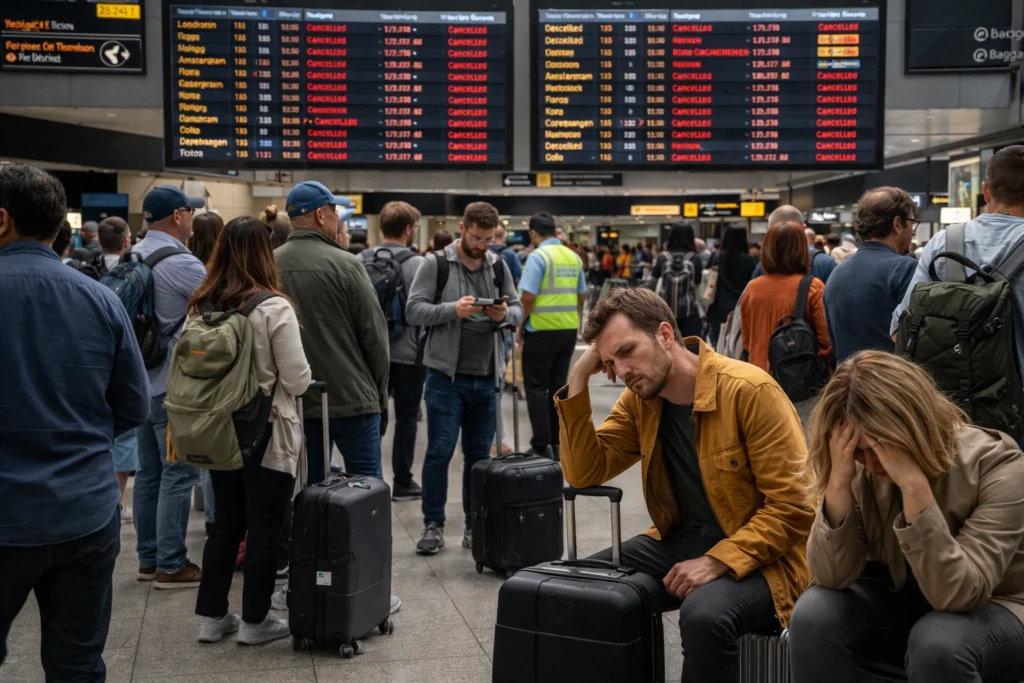
Severe travel disruptions swept across Europe on April 5, 2026. Hundreds of passengers faced delays and cancellations at major airports, including Athens.
Authorities reported 85 flight cancellations and 381 delays across multiple countries. The disruption affected travel across the Netherlands, Denmark, Switzerland, Ireland, Italy, Norway, and more.
Athens Eleftherios Venizelos International Airport experienced delays that added pressure during the busy spring travel season.
Athens Airport Faces Delays During Peak Travel Period
Athens recorded one cancellation and 38 delays during the disruption. Both domestic and international flights experienced delays.
Passengers reported long queues and crowded terminals. Many travellers faced uncertainty regarding connecting flights and rebooking options.
The airport remained operational, but delays caused inconvenience across multiple routes. Airlines worked to manage the situation as conditions evolved.
Travellers connecting through Athens to cities such as London, Oslo, Copenhagen, and Rome faced the most disruption.
Major European Airports Experience Widespread Disruption
The disruption extended far beyond Greece. Several major European hubs reported significant delays and cancellations.
Amsterdam Schiphol recorded 7 cancellations and 143 delays. London Heathrow reported 8 cancellations and 65 delays.
Copenhagen Airport also experienced disruption, with 11 cancellations and 25 delays. Norway faced some of the most severe impacts.
Oslo Gardermoen reported 23 cancellations, while Stavanger saw similar numbers. These disruptions affected airlines and passengers across the region.
Major airlines, including SAS Scandinavian Airlines, KLM, British Airways, and Virgin Atlantic, adjusted operations to manage delays.
Weather and Operational Issues Behind the Disruptions
Severe weather played a major role in the disruptions. Northern and central Europe experienced strong winds, low visibility, and icy conditions.
Airspace restrictions also contributed to the problem. Flights were rerouted, which increased congestion and delayed schedules.
Staff shortages added further strain to airport operations. At the same time, high passenger demand increased pressure on airport systems.
These combined factors created a complex situation for airlines and airport authorities.
Impact on Tourism and Passenger Experience
The disruptions affected tourism across Europe. Travellers faced delays, missed connections, and changes to their travel plans.
Spring is a key travel period for Europe. The delays impacted both leisure and business travellers during this peak season.
Hotels and tour operators also felt the impact. Late arrivals and cancellations disrupted bookings and itineraries.
Athens, a major tourism gateway, experienced increased pressure as travellers waited for updated flight information.
Passenger Guidance and Travel Advice
Passengers affected by delays or cancellations may have rights under EU261 regulations. These include rebooking, compensation, and assistance.
Travellers should check flight status directly with airlines before heading to the airport. This helps avoid unnecessary waiting.
Allowing extra time at airports is essential during disruption periods. Flexibility can reduce stress and improve travel outcomes.
Passengers should keep receipts and travel documents. These may be required for compensation claims.
Gradual Recovery Across European Airports
By April 6, conditions began to improve across many airports. Weather conditions stabilized, and operations started to recover.
Some delays may continue as airlines clear backlogs. However, most airports are working toward normal schedules.
The disruption highlights the vulnerability of the aviation sector. Weather, staffing, and demand can quickly affect travel networks.
For now, travellers are advised to stay informed and flexible. These steps remain essential for navigating Europe’s busy travel season.
For more travel news like this, keep reading Global Travel Wire