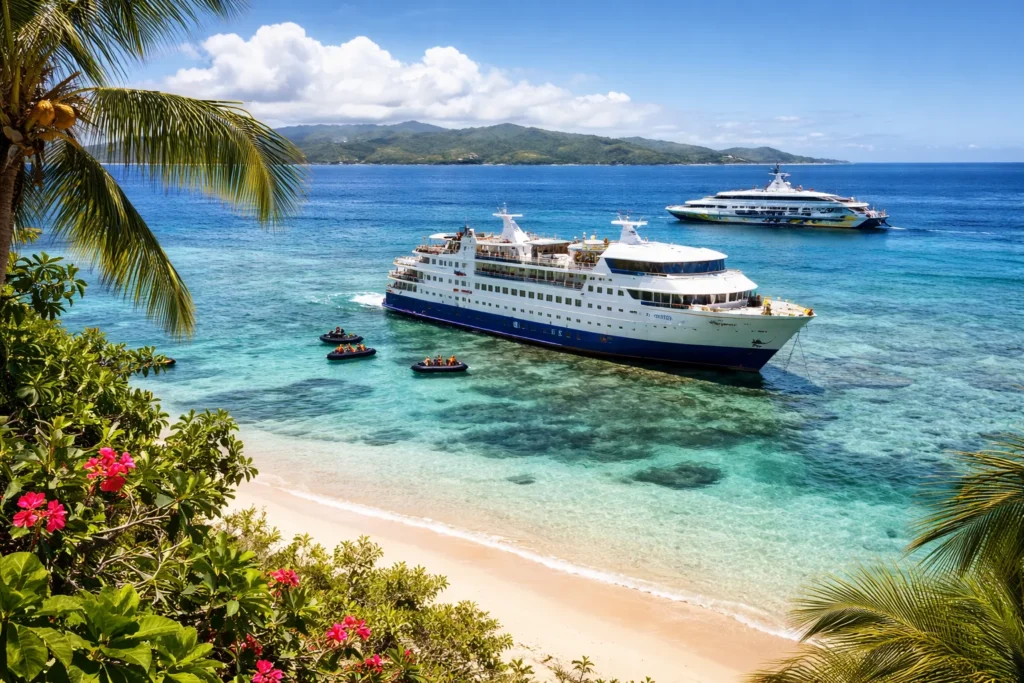
Fiji’s tourism sector, a cornerstone of the island nation’s economy, is closely monitoring developments after an incident involving a cruise vessel in the popular Mamanuca Islands region. Authorities and tourism stakeholders have emphasized that safety protocols and environmental protection measures were promptly implemented following the grounding of the Fiji Princess, operated by Blue Lagoon Cruises.
According to official statements, the vessel became grounded on a finger reef in the northern Mamanuca Islands during the early hours of April 4. The incident occurred while the ship was at anchor, with initial assessments indicating that a sudden and severe weather event caused the anchor to drag, leading the vessel toward the reef.
The region has recently experienced unstable weather patterns, with authorities noting the broader impact of Tropical Cyclone Vaianu across western Fiji. Tourism and maritime officials have reiterated that such weather conditions can create unexpected challenges for vessels operating in coastal and reef-rich environments.
In line with national maritime safety protocols, all passengers and nonessential crew members were safely evacuated from the vessel shortly after the incident. A fast ferry was deployed to transfer approximately 30 passengers and their belongings to Port Denarau, a key tourism gateway in Fiji. Officials confirmed that the evacuation was conducted without injury, reflecting the effectiveness of established safety procedures.
The Maritime Safety Authority of Fiji reported that immediate steps were taken to minimize environmental risks. One of the priority actions included the successful removal of approximately 23,000 litres of fuel from the grounded vessel. This precautionary measure was carried out to prevent potential marine pollution, particularly important given Fiji’s commitment to protecting its coral reef ecosystems, which are vital to both biodiversity and tourism.
Fiji’s Ministry of Tourism and related authorities have consistently highlighted the importance of safeguarding natural resources, especially in areas like the Mamanuca Islands, which are internationally recognized for their pristine beaches and vibrant marine life. The swift fuel removal operation aligns with national environmental protection guidelines and demonstrates the country’s proactive approach to crisis management.
Following the incident, Blue Lagoon Cruises activated its crisis response plan and engaged a specialized marine salvage team from Australia. According to official updates, the recovery experts arrived on site on April 5 and are currently overseeing efforts to refloat the vessel. However, ongoing adverse weather conditions have temporarily delayed further recovery operations.
Authorities have stated that salvage work will proceed only when sea and weather conditions are deemed safe. This cautious approach is in line with international maritime safety standards and Fiji’s own regulatory framework, which prioritizes the safety of personnel and the protection of marine habitats.
Tourism officials have also reassured visitors and industry partners that the incident is being managed in accordance with established protocols and does not pose a broader risk to Fiji’s tourism infrastructure. The country continues to welcome travelers, with most tourism operations functioning as normal across its islands.
Fiji cruise tourism plays a significant role in attracting international visitors, particularly those seeking boutique and small-ship experiences in tropical island settings. The Mamanuca Islands, in particular, are a major draw due to their accessibility from Port Denarau and their reputation for offering high-quality resort and cruise experiences.
Government tourism strategies emphasize resilience and preparedness in the face of natural events, including tropical cyclones and sudden weather changes. This incident has highlighted the effectiveness of these strategies, with coordinated action between cruise operators, maritime authorities, and environmental agencies ensuring a swift and organized response.
The grounding of the Fiji Princess also underscores the importance of ongoing investment in maritime safety and monitoring systems. Fiji’s authorities have been working to enhance navigational safety, weather forecasting, and emergency response capabilities as part of broader efforts to strengthen the tourism sector.
In addition to immediate response measures, officials are expected to conduct a thorough assessment of the incident once recovery operations are complete. Such reviews are standard practice and help inform future safety enhancements and operational guidelines within the cruise tourism sector.
Despite the temporary disruption, Fiji’s tourism outlook remains positive. Official tourism data indicates continued growth in visitor arrivals, supported by the country’s strong reputation for hospitality, natural beauty, and commitment to sustainable tourism practices.
The incident serves as a reminder of the dynamic nature of island tourism environments, where weather conditions can change rapidly. However, it also highlights the robustness of Fiji’s tourism management systems and the industry’s ability to respond effectively to unexpected challenges.
As recovery efforts continue, tourism authorities and stakeholders remain focused on ensuring that Fiji’s marine environments are protected and that visitor experiences remain safe and enjoyable. The coordinated response to the Fiji Princess grounding reflects the country’s dedication to maintaining high standards in both tourism and environmental stewardship.
With safety protocols successfully implemented and environmental risks mitigated, Fiji cruise tourism is expected to continue its steady trajectory, reinforcing the nation’s position as a leading destination for sustainable and experience-driven travel in the Pacific region.