Israel’s tourism and aviation sector is entering a fragile recovery phase following the recent ceasefire, but officials confirm that a full return to normal international connectivity will take time. While travel demand is rapidly increasing, the absence of foreign airlines at Ben Gurion Airport is creating significant challenges for travelers and the broader tourism industry.
According to official updates from transport authorities and tourism agencies, the reopening of air travel has triggered a surge in bookings. Israeli travelers, after weeks of restricted movement and limited flight availability, are rushing to secure seats for upcoming travel, particularly during the summer season. However, the current supply of flights remains constrained, resulting in rising fares and reduced options.
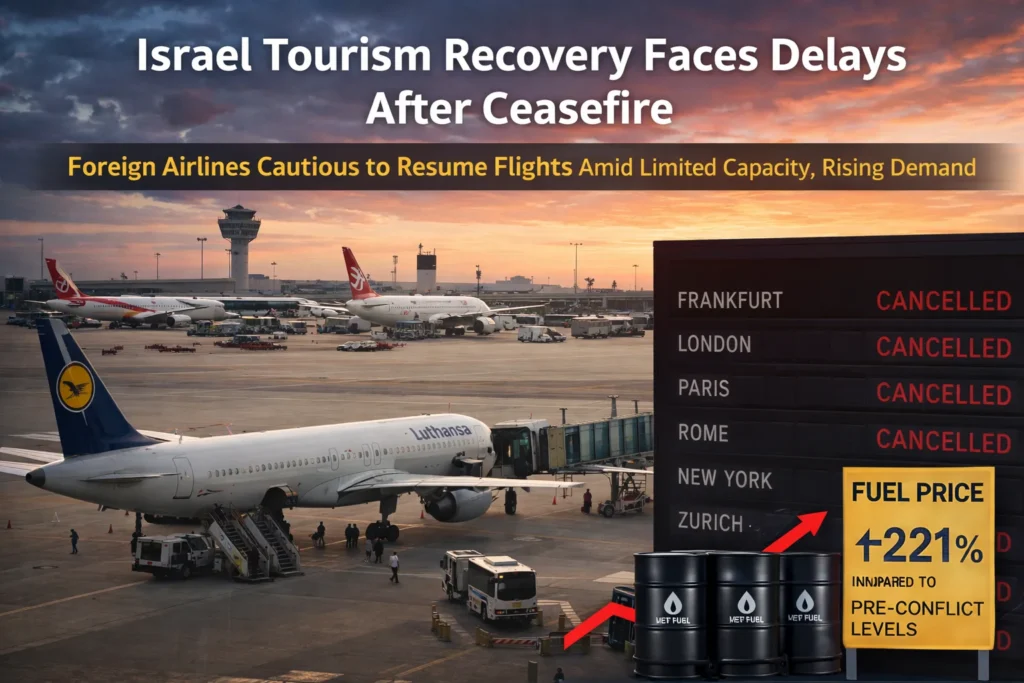
Government aviation officials have emphasized that while domestic carriers have resumed operations, foreign airlines are taking a more cautious approach. Safety assessments, operational planning, and logistical considerations are influencing their timelines for returning to Israel. As a result, the country’s primary international gateway is operating with limited international participation.
Tourism authorities note that the imbalance between demand and supply is having a direct impact on travel affordability. With fewer flights available and fuel costs remaining high, ticket prices are increasing, making budget-friendly travel less accessible. This trend is particularly noticeable during peak travel periods, when demand traditionally surges.
The Ministry of Transport has confirmed that restoring full international connectivity is a priority, but the process depends on multiple factors, including regional stability and airline readiness. Foreign carriers typically require time to reintroduce routes, reposition aircraft, and ensure operational safety before resuming services.
Civil aviation authorities have also highlighted the importance of coordination between governments and airlines to facilitate a smooth recovery. Efforts are underway to provide updated safety information, streamline procedures, and encourage airlines to gradually return to Israeli airspace.
Despite the challenges, there are early signs of recovery in travel demand. Tourism officials report that interest in outbound travel is strong, with many residents eager to resume international journeys. At the same time, inbound tourism is expected to recover more slowly, as international travelers await the return of regular flight schedules and greater stability.
The absence of foreign airlines is particularly significant for Israel’s tourism sector, which relies heavily on international visitors. Official tourism statistics indicate that foreign carriers play a crucial role in bringing tourists from key markets, including Europe, North America, and Asia. Without their full participation, the pace of tourism recovery may remain limited.
Airlines based in Israel are working to fill some of the gaps in connectivity, expanding routes and increasing frequencies where possible. However, industry experts note that domestic carriers alone cannot fully replace the capacity provided by international airlines. This limitation underscores the importance of restoring global airline partnerships.
Another factor influencing the situation is the continued volatility in fuel prices. Aviation authorities confirm that fuel costs remain elevated compared to pre-conflict levels, adding pressure on airline operations. These costs are often reflected in ticket prices, contributing to the overall increase in travel expenses.
Tourism boards are closely monitoring these developments and adapting their strategies accordingly. Promotional campaigns, flexible travel policies, and targeted marketing efforts are being implemented to maintain traveler confidence and encourage bookings despite the challenges.
The summer travel season is expected to be a critical period for the industry. Officials anticipate strong demand, but the limited availability of flights could lead to capacity constraints. Travelers are being advised to plan ahead, book early, and stay informed about changing schedules.
The gradual return of foreign airlines will be a key milestone in Israel’s tourism recovery. Aviation authorities suggest that services are likely to resume in phases, with some routes returning earlier than others based on demand and operational feasibility. This phased approach will allow airlines to assess conditions and adjust their operations accordingly.
In the broader context, the situation highlights the interconnected nature of global aviation. Events in one region can have far-reaching effects on travel patterns, airline strategies, and tourism flows. For Israel, rebuilding its position as a major travel destination will depend on restoring confidence among both airlines and travelers.
Government agencies continue to emphasize safety as the top priority, while also working to support the recovery of the aviation and tourism sectors. Collaboration between public and private stakeholders will be essential in navigating the current challenges and ensuring a sustainable return to growth.
As the industry moves forward, the focus remains on balancing demand with available capacity, stabilizing prices, and restoring international connectivity. While uncertainty persists, the strong demand for travel indicates a resilient market ready to recover once conditions allow.
Israel’s tourism recovery is underway, but the path ahead will require patience and coordinated efforts. The return of foreign airlines will play a decisive role in shaping the pace of this recovery, determining how quickly the country can reconnect with the global travel network and welcome visitors once again.