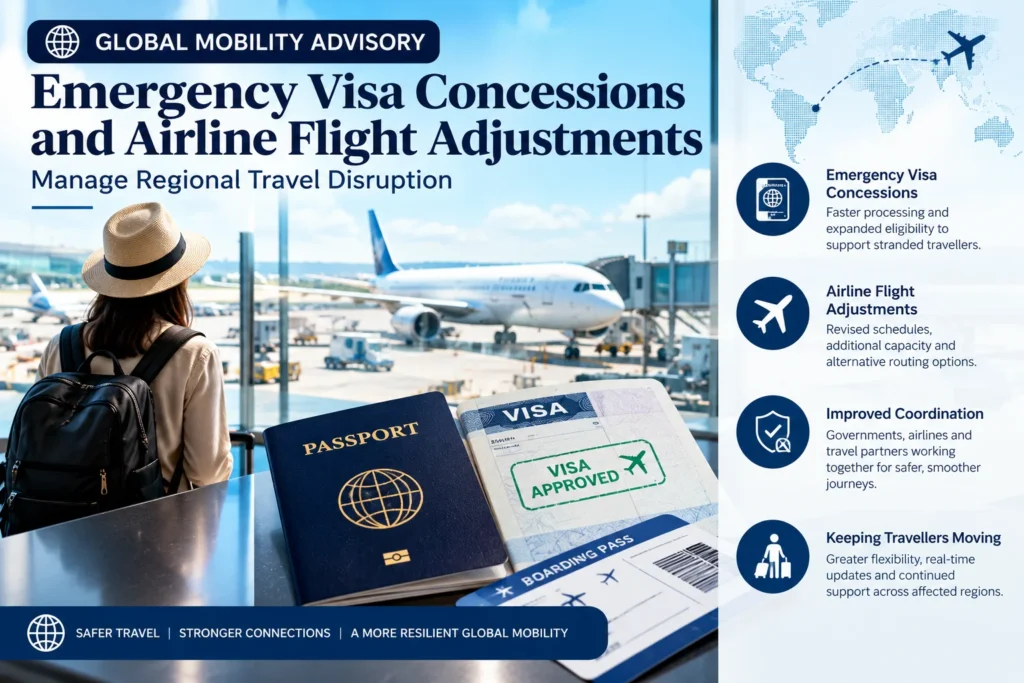
Global travel patterns in 2026 are facing renewed uncertainty as Middle East flights gradually resume following a temporary ceasefire, while the United States Department of State has issued a travel advisory urging caution for travel to Nigeria. These developments are shaping international tourism flows, airline operations, and traveler confidence across key global corridors.
According to official aviation updates and government advisories, the two-week ceasefire between the United States, Israel, and Iran has allowed airlines in the Gulf region to begin restoring limited services. However, the recovery of Middle East flights remains uneven, with many carriers adopting cautious operational strategies due to ongoing airspace restrictions and safety considerations.
Major regional airlines are leading the initial phase of recovery. Emirates has restarted selected routes from Dubai, focusing on key international destinations across Europe, Asia, and Africa. Similarly, Qatar Airways is gradually rebuilding its network from Doha, prioritizing long-haul connections that support global transit passengers.
Authorities at Dubai International Airport confirm that flight activity has increased since the ceasefire, although capacity remains below normal levels. The airport, one of the world’s busiest international hubs, is operating reduced schedules to ensure safe and efficient operations. Aviation officials emphasize that recovery will depend on continued stability in regional airspace.
In Abu Dhabi International Airport, airlines are also resuming limited services, with a focus on maintaining essential connectivity. Meanwhile, Hamad International Airport is transitioning from restricted operations to a more stable schedule, enabling gradual restoration of global routes.
Despite these positive developments, international carriers remain cautious. Several European and Asian airlines have extended flight suspensions, citing ongoing uncertainties in airspace accessibility and operational safety. Aviation authorities note that these decisions are influenced by regulatory guidance, insurance considerations, and risk assessments.
Tourism boards across the Middle East acknowledge that reduced flight capacity is affecting visitor numbers and travel demand. With fewer flights available and longer travel times due to rerouted paths, some travelers are opting for alternative destinations or delaying their plans. This shift highlights the importance of stable connectivity in supporting tourism growth.
At the same time, airlines are facing operational challenges linked to extended flight routes. Detours around restricted airspace are increasing journey times and fuel consumption, adding pressure to airline costs. These factors are contributing to higher ticket prices and limited seat availability, particularly on long-haul routes.
While the Middle East aviation sector works toward recovery, developments in Africa are also influencing global travel decisions. The updated advisory from the United States Department of State regarding Nigeria highlights safety considerations that may affect tourism and business travel to the country. The guidance encourages travelers to carefully assess conditions before planning visits.
Nigeria remains an important destination within Africa, offering diverse cultural experiences and economic opportunities. Tourism authorities in the country continue to promote travel while emphasizing that conditions vary across regions. Efforts to enhance safety and improve infrastructure are ongoing, supported by collaboration with international partners.
The advisory also reflects broader trends in global travel, where safety and security considerations play a key role in shaping tourism demand. Travelers are increasingly seeking reliable information and flexible travel options, particularly in regions experiencing geopolitical or security challenges.
For airlines, the combination of Middle East flight disruptions and travel advisories presents a complex operating environment. Carriers must balance the need to restore connectivity with the requirement to ensure passenger safety and operational reliability. This has led to a phased approach to route resumption, with schedules being adjusted based on real-time conditions.
Travelers planning trips to the Middle East or Nigeria are advised to stay informed and prepare for potential disruptions. Checking flight status regularly, allowing additional time for travel, and considering flexible booking options can help minimize inconvenience. Tourism authorities also recommend monitoring official updates to stay aware of changing conditions.
The current situation underscores the interconnected nature of global aviation. Events in one region can have ripple effects across international travel networks, influencing airline strategies and tourism flows worldwide. For the Middle East, the gradual resumption of flights marks an important step toward recovery, but full normalization may take several months.
Industry experts anticipate that travel demand will remain strong once stability improves, particularly for key hubs that serve as global transit points. The resilience of the aviation sector, combined with ongoing investment in infrastructure and technology, is expected to support long-term growth despite short-term challenges.
As airlines continue to adapt to evolving conditions, collaboration between governments, aviation authorities, and tourism organizations will be essential. By working together, stakeholders can address challenges, support travelers, and promote safe and sustainable travel experiences.
The gradual return of Middle East flights and the impact of global travel advisories highlight the dynamic nature of the tourism industry in 2026. While uncertainties remain, the commitment to safety and connectivity provides a foundation for recovery and future growth in international travel.