NASA’s latest release of high-resolution images from its Artemis II mission is capturing global attention, not only for their scientific value but also for their growing influence on the future of space tourism. The agency’s official mission updates and image galleries reveal a transformative moment in travel—one that is steadily expanding beyond Earth’s atmosphere.
Launched on April 1, 2026, Artemis II marks NASA’s first crewed lunar flyby mission in over 50 years, carrying four astronauts aboard the Orion spacecraft on a 10-day journey around the Moon. According to official NASA mission briefings, the flight is designed to test deep-space systems and pave the way for future human missions, including commercial and tourism-related ventures.
The newly released images, including full-disk photographs of Earth and unprecedented views of the Moon’s far side, have become a powerful symbol of what future travelers could experience. NASA confirmed that these are the first human-captured full-Earth images since 1972, offering a modern perspective comparable to the iconic “Blue Marble” photograph.
Beyond their visual impact, these images are playing a strategic role in shaping global travel aspirations. Tourism boards and space agencies increasingly view such imagery as a catalyst for long-term demand in space travel experiences. The emotional resonance of seeing Earth from deep space—combined with advances in spacecraft technology—signals a shift from exploration to experiential travel.
NASA officials emphasize that Artemis II is not a standalone mission but part of a broader Artemis program aimed at establishing a sustainable human presence on the Moon. This infrastructure is expected to support future commercial partnerships, including private-sector involvement in transporting passengers beyond Earth orbit.
Over the past year, the space tourism sector has seen notable momentum, driven by both government initiatives and private investment. Official data indicates that the global space economy reached approximately $613 billion in 2025, with a significant portion attributed to commercial activities. This rapid expansion reflects increasing interest in space-based services, including tourism, research, and satellite operations.
Airlines and hospitality stakeholders are also closely monitoring developments. While traditional carriers are not yet operating space routes, industry bodies have begun exploring partnerships with aerospace companies. Concepts such as spaceports, pre-flight training facilities, and zero-gravity accommodation experiences are gradually moving from theoretical models to early-stage planning.
From a destination perspective, space tourism is redefining the very concept of travel. Instead of cities or beaches, future itineraries may include lunar orbit flybys, Earth observation journeys, and eventually, stays on orbital platforms or lunar bases. Artemis II’s successful demonstration of human deep-space travel is a crucial step toward making such experiences viable.
Visitor experience is also at the forefront of NASA’s messaging. The agency has highlighted the human element of the mission, showcasing astronauts capturing images using both professional-grade cameras and consumer devices. This blend of technology and accessibility reinforces the idea that space travel could eventually become more relatable—and attainable—for civilians.
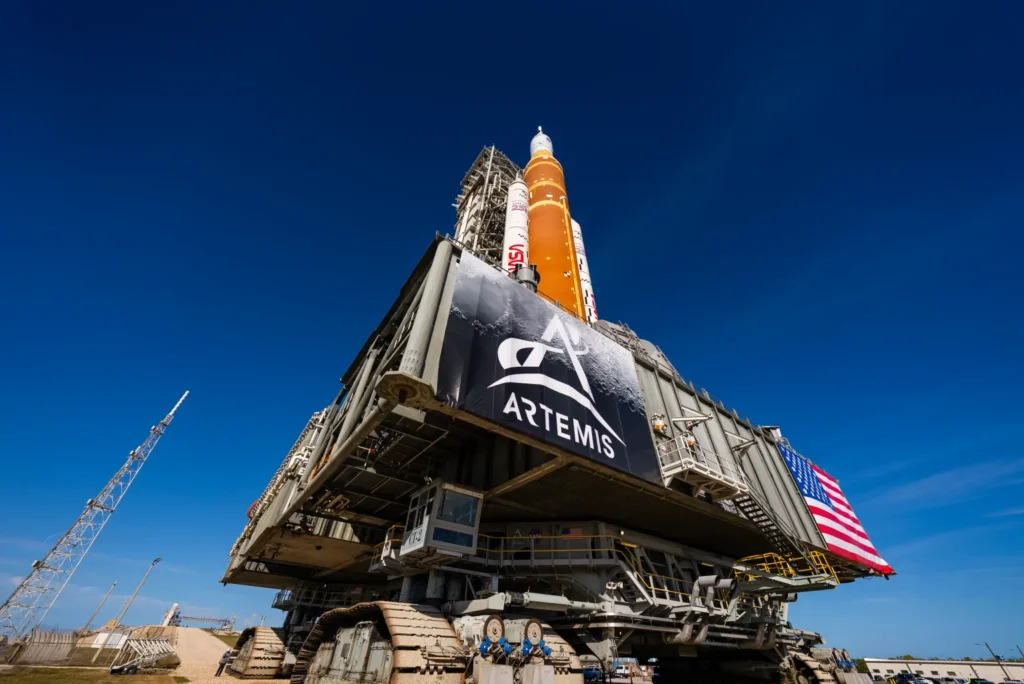
In terms of infrastructure, NASA’s Space Launch System (SLS) and Orion spacecraft are central to enabling long-distance human travel. These systems are designed to carry astronauts farther from Earth than ever before, supporting missions that extend beyond low Earth orbit. Such capabilities are essential for future tourism models that envision multi-day journeys around the Moon or even longer expeditions.
The tourism impact extends beyond space itself. Ground-based tourism linked to space exploration is already experiencing growth. Destinations such as launch sites, space museums, and training centers are attracting increased visitor numbers, driven by heightened public interest in missions like Artemis II. This trend is expected to intensify as more milestones are achieved.
Looking ahead, NASA’s Artemis III mission, which aims to return humans to the lunar surface, is widely anticipated to further accelerate tourism potential. Government statements indicate that long-term plans include establishing a lunar economy, which could involve commercial services ranging from transportation to accommodation.
For now, the Artemis II images serve as both inspiration and evidence of progress. They offer a glimpse into a future where travel is no longer confined to Earth, and where the Moon becomes a destination rather than a distant object in the night sky.
As governments and industry stakeholders continue to invest in space infrastructure, the line between exploration and tourism is becoming increasingly blurred. With each mission, the vision of space tourism moves closer to reality—transforming the travel industry in ways once imagined only in science fiction.
Image courtesy: NASA/Sam Lott