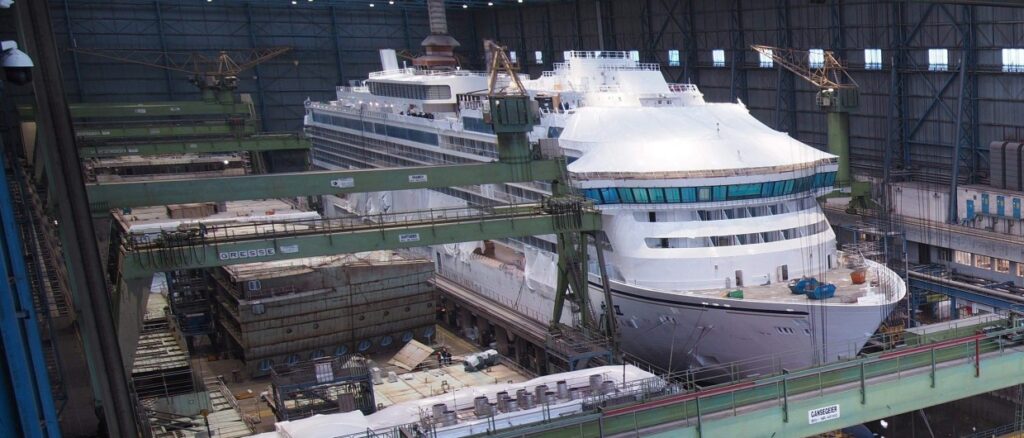
German shipbuilder Meyer Werft has revealed a fully electric cruise ship concept called Vision, presenting one of the boldest sustainability proposals yet for the global cruise industry. Unveiled at Seatrade Cruise Global, the project outlines a future where large-scale cruising could become dramatically cleaner, quieter, and more immersive for travelers.
The concept arrives as environmental regulations tighten and travelers increasingly expect greener holiday options. If developed into an operational vessel, Vision could begin reshaping European cruise travel within the next decade.
For destinations, cruise operators, and passengers, the announcement signals a major step toward low-emission tourism without sacrificing comfort or premium onboard experiences.
A New Era of Silent Luxury at Sea
At the heart of Vision is a battery-powered propulsion system designed in collaboration with Corvus Energy. The technology aims to cut greenhouse gas emissions by up to 95 percent compared with conventional fuel-powered ships.
However, the environmental gains represent only part of the appeal.
Without traditional combustion engines, the ship would also reduce onboard noise and vibration. That creates a quieter atmosphere across cabins, decks, restaurants, and lounges.
For travelers, the result could be a more restful and refined voyage. Ocean views become more immersive, nights become calmer, and the overall journey feels closer to a wellness retreat than a traditional cruise experience.
As luxury travel trends increasingly favor privacy, peace, and wellbeing, silent cruising could become a major selling point.
Why Europe Is the Ideal Launch Market
The Vision concept aligns closely with Europe’s accelerating green transport strategy. Ports across the continent continue to invest in shore power and charging infrastructure, creating a foundation for battery-powered maritime travel.
By the end of the decade, many European ports are expected to offer charging capability suitable for next-generation vessels.
That makes Europe a natural first market for electric cruising.
Short-to-medium itineraries in the Mediterranean, Baltic Sea, and Scandinavian fjords fit battery operations more easily than ultra-long-haul routes. These regions also rank among the world’s most popular cruise destinations.
For travelers, this means some of Europe’s most iconic voyages may eventually become far cleaner and quieter than they are today.
Reimagined Design Changes the Cruise Experience
Electric propulsion also changes how ships can be designed.
Traditional cruise vessels require large engine spaces and exhaust funnels that shape both structure and layout. Vision removes many of those limitations, allowing designers to rethink onboard space.
One of the headline features is a wide open sun deck with uninterrupted panoramic views. Passengers could enjoy closer visual connections with coastlines, islands, and fjords without bulky structures interrupting the skyline.
The concept also includes enclosed glass observation areas and indoor leisure zones, including a weatherproof water park.
That matters because it expands cruising appeal beyond warm climates. Travelers in northern Europe or shoulder seasons could still enjoy vibrant onboard experiences regardless of weather conditions.
Hybrid Flexibility Adds Practical Value
Although Vision centers on full electrification, Meyer Werft has also considered a hybrid version with a smaller auxiliary generator.
This option would support longer sailings where charging infrastructure remains limited, including repositioning routes or transoceanic voyages.
Such flexibility is important for cruise operators balancing sustainability goals with commercial realities. It allows the industry to move forward now while infrastructure networks continue to expand.
For passengers, hybrid capability could preserve itinerary variety while still delivering major environmental improvements.
Large-Scale Electric Cruising Moves Closer
The proposed ship would measure around 275 meters and carry nearly 2,000 passengers, placing it firmly within the mainstream large-ship category.
That scale matters.
Many sustainability concepts remain limited to ferries, yachts, or small expedition vessels. Vision instead suggests that electrification may eventually support large tourism volumes.
If successful, the concept could accelerate investment across the wider cruise sector. Competing shipbuilders and cruise lines may increase research into batteries, charging systems, lighter materials, and cleaner vessel operations.
In effect, one concept could influence an entire generation of cruise design.
What It Means for Travelers and Destinations
The benefits of electric cruising extend beyond the ship itself.
Port cities could experience better local air quality. Sensitive natural areas may face lower emissions and less noise disturbance. Destinations focused on sustainable tourism may welcome cleaner vessels more readily.
Travelers would gain a new type of holiday experience built around quieter journeys, cleaner operations, and stronger connection with nature.
This could be especially powerful in scenic regions such as Norway’s fjords, Greek islands, Adriatic coastlines, and Baltic capitals where the surrounding environment forms a central part of the trip.
Cruise Tourism Reaches a Turning Point
The unveiling of Vision shows how rapidly the cruise conversation has changed. The industry is no longer discussing sustainability only as a future ambition. It is now presenting tangible pathways toward large-scale transformation.
While commercial deployment will depend on investment, regulation, battery progress, and infrastructure rollout, the direction of travel is clear.
Cruising is moving toward cleaner horizons.
For passengers, that future promises journeys defined not only by where they go, but by how responsibly and comfortably they get there. Meyer Werft’s Vision may still be a concept today, but it has already become a symbol of the next chapter in global travel.
For more travel news like this, keep reading Global Travel Wire