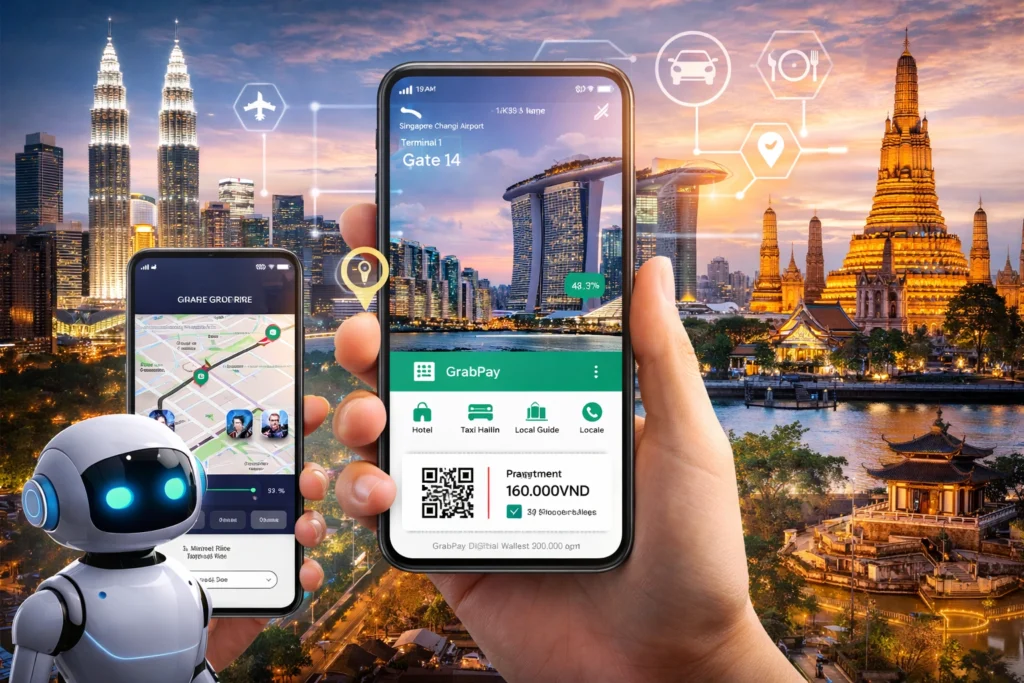
A major transformation is reshaping travel across Southeast Asia as Indonesia joins Singapore, Thailand, Vietnam, Malaysia, and the Philippines in expanding AI-driven tourism ecosystems built around mobility, payments, food discovery, and seamless travel planning.
The shift reflects a broader regional push toward smart tourism, where digital tools reduce friction for visitors while helping destinations manage rising demand. As international arrivals continue to recover across Southeast Asia, integrated travel platforms are becoming increasingly important to the visitor experience.
For modern travelers, the result is simpler journeys from airport arrival to hotel check-in, local transport, dining, and cashless payments—all through connected digital services.
AI Becomes the New Travel Companion
The latest wave of innovation focuses on how travelers actually move through destinations. Instead of using separate apps for rides, food, maps, and payments, users can now access multiple services through one digital ecosystem.
This matters in a region where many visitors move between several countries in one trip. A traveler might land in Singapore, continue to Bangkok, then head to Bali or Ho Chi Minh City. Consistency across services can make those journeys smoother and less stressful.
Artificial intelligence helps power that experience by learning preferences, improving recommendations, and delivering real-time updates based on location, traffic, or travel schedules.
For tourists, that means less time managing logistics and more time enjoying the destination.
Smarter Mobility Across Major Cities
Transport remains one of the biggest pain points for international visitors, especially in large urban centers where traffic, language barriers, and changing fares can create confusion.
New AI-powered mobility tools are designed to solve that problem.
Shared ride options now allow groups to split costs automatically while optimized routing improves efficiency. This can be especially useful in busy destinations such as Jakarta, Bangkok, Manila, and Ho Chi Minh City where congestion often affects travel times.
Enhanced mapping systems also go beyond standard navigation. Travelers can receive predictive destination suggestions, compare transport options, and access real-time journey updates.
For families or friends traveling together, waiting coordination tools can simplify pickups and reduce missed connections.
Airport to Hotel Journeys Become More Seamless
Southeast Asia is home to some of the world’s busiest and fastest-growing aviation hubs. Airports in Singapore, Kuala Lumpur, Bangkok, Jakarta, and Manila handle millions of international passengers each year.
As a result, the airport-to-hotel journey has become a critical part of the travel experience.
New travel dashboards now combine flight updates, gate changes, airport directions, and ride booking tools in one interface. Visitors arriving in unfamiliar airports can receive guided navigation from arrival gates to baggage claim and pickup zones.
That kind of support is particularly valuable for first-time visitors, elderly travelers, and families traveling with children.
Integrated hotel booking features also allow same-day accommodation reservations linked with transport, giving travelers more flexibility during busy seasons or unexpected schedule changes.
Food Tourism Gets an AI Upgrade
Food remains one of the strongest reasons people travel to Southeast Asia. Cities such as Bangkok, Singapore, Kuala Lumpur, Penang, and Ho Chi Minh City attract visitors from around the world through street food, local specialties, and global dining scenes.
AI is now improving how travelers discover those experiences.
Recommendation engines can suggest restaurants based on dietary preferences, traveler interests, and location. Visitors can find hidden local favorites, reserve tables, or arrange deliveries without switching between multiple platforms.
Multi-restaurant ordering features also help groups with different tastes order from several venues in one delivery.
For travelers on short city breaks, that convenience can make a major difference.
Cashless Payments Reduce Travel Friction
Cross-border travel often creates payment challenges, especially in a region with multiple currencies. Digital payment systems are helping remove that barrier.
Travelers can now use stored cards and QR-based payment methods in many urban destinations without constantly exchanging cash or downloading separate local wallets.
This is especially important in markets such as Singapore and Thailand where cashless payments are already widespread. As more countries adopt interoperable digital systems, tourists gain a more consistent experience across borders.
For businesses, easier payments can also increase visitor spending by removing transaction friction.
Benefits for Local Tourism Economies
Smart tourism is not only about visitor convenience. It also supports local merchants, drivers, hotels, and restaurants.
AI tools can help businesses manage demand, improve staffing efficiency, process orders faster, and maintain service quality during peak travel periods.
Drivers benefit from smarter navigation and better demand matching, especially in airport zones and high-traffic districts. Restaurants can handle fluctuating tourist demand more effectively.
That creates a stronger tourism ecosystem where both visitors and local operators gain value.
Why Southeast Asia Leads This Trend
Southeast Asia is uniquely positioned to become a global leader in smart tourism. The region combines fast-growing visitor numbers, mobile-first consumers, dynamic cities, and strong digital adoption.
Governments and private companies continue investing in infrastructure, mobility, and digital payments. At the same time, travelers increasingly expect journeys to feel connected, intuitive, and personalized.
That combination makes the region an ideal testing ground for next-generation travel tools.
The Future of Travel in the Region
The rise of AI-powered tourism ecosystems signals a clear direction for travel across Asia.
Tomorrow’s visitor experience will rely less on separate bookings and fragmented apps. Instead, transport, hotels, dining, payments, and local discovery will work together in one seamless flow.
For travelers exploring Indonesia, Singapore, Thailand, Vietnam, Malaysia, and the Philippines, that future is already taking shape—and it promises journeys that are faster, smarter, and far more connected.
For more travel news like this, keep reading Global Travel Wire