India has taken a major step in promoting its maritime tourism potential by showcasing its cruise ambitions at Seatrade Cruise Global 2026 in Miami. With a coastline stretching over 11,000 kilometers, 12 major ports, growing inland waterways, and a series of government-led reforms, the country is positioning itself as one of the most promising cruise destinations in Asia.
The participation reflects India’s long-term tourism strategy to diversify travel offerings beyond traditional land-based experiences and unlock the economic potential of coastal and river tourism.
Through initiatives such as Cruise Bharat Mission and Maritime India Vision 2030, India is working to modernize infrastructure, attract international cruise operators, and build a stronger presence in the global cruise market.
Why Cruise Tourism Matters for India
Cruise tourism is increasingly seen as a high-value segment of global travel. Cruise passengers spend on accommodation, dining, shopping, transport, shore excursions, and cultural experiences, creating benefits across multiple sectors.
For India, expanding cruise tourism offers an opportunity to generate employment, stimulate coastal economies, and increase international visitor arrivals.
The country’s vast geography provides strong natural advantages. From the Arabian Sea and Bay of Bengal to island destinations and navigable rivers, India has diverse cruise potential that few destinations can match.
Cruise tourism can also help distribute visitors across multiple regions rather than concentrating arrivals in a handful of gateway cities. This supports balanced tourism growth and opens new opportunities for smaller ports and local communities.
Strong Government Vision Driving Growth
India’s latest global push is backed by official policy frameworks aimed at transforming maritime tourism infrastructure.
Cruise Bharat Mission focuses on expanding cruise passenger traffic, improving port readiness, streamlining regulations, and creating stronger domestic and international cruise circuits.
Maritime India Vision 2030 provides a broader roadmap for port modernization, logistics efficiency, sustainability, and greater private sector participation.
These initiatives show that cruise development is not being approached as a standalone project, but as part of a larger economic and tourism strategy.
Improved cruise terminals, easier passenger processing, stronger connectivity, and better visitor services are all essential to attracting leading cruise lines.
High-Level Delegation Promotes Indian Ports
India’s presence at Seatrade Cruise Global 2026 included a high-level delegation nominated by the Ministry of Ports, Shipping and Waterways. Senior officials from Mumbai, Visakhapatnam, Cochin, and Chennai ports were part of the mission, alongside representatives from tourism, customs, immigration, and port sectors.
This multi-agency participation is important because successful cruise tourism depends on coordination across several systems. Ports alone cannot deliver growth without efficient customs procedures, visitor-friendly immigration, tourism experiences, and transport access.
By presenting a united strategy, India signals to cruise operators that it is serious about improving the entire passenger journey from arrival to departure.
The delegation also engaged in discussions with international cruise industry stakeholders to understand market expectations and identify new opportunities.
Global Cruise Operators Explore India Opportunities
During the event, Indian representatives held meetings with leading cruise brands including Norwegian Cruise Line, Royal Caribbean International, Carnival Cruise Line, and MSC Cruises.
Such engagements are significant because itinerary planning by major cruise lines often depends on destination readiness, port efficiency, passenger demand, and shore experience quality.
India is seeking to increase cruise calls at its ports while also encouraging the creation of customized itineraries tailored to regional demand.
Potential future routes could include heritage-focused sailings, beach and wellness itineraries, culinary cruises, island journeys, and short-duration coastal trips.
As Asian demand for cruising grows, India has the opportunity to become both a source market and a destination market for cruise tourism.
Learning from Global Best Practices
The Indian delegation’s program also included interaction with key maritime stakeholders and visits to major cruise hubs such as Port Miami and Port Everglades.
These exchanges are valuable because some of the world’s most efficient cruise operations are built on integrated terminals, smooth passenger flow, advanced logistics, and high-quality visitor services.
Studying successful cruise hubs can help India accelerate its own development plans by adopting proven models for terminal design, operations, safety systems, and customer experience.
For a fast-growing tourism economy, learning from established global leaders can shorten timelines and improve competitiveness.
Coastal and River Cruises Offer Huge Potential
India’s cruise opportunity is not limited to ocean liners alone. River cruise tourism is emerging as another important segment, supported by the country’s extensive inland waterways.
River journeys can offer immersive cultural experiences, heritage access, wildlife tourism, and slower-paced travel through scenic landscapes. They can also help spread tourism revenue into interior regions that do not benefit directly from coastal arrivals.
At the same time, coastal cruises are gaining popularity globally, especially short-duration sailings that appeal to first-time cruisers and domestic travelers.
India is well placed to develop weekend cruises, regional circuits, pilgrimage routes, and island itineraries connecting mainland ports with destinations such as Lakshadweep and the Andaman and Nicobar Islands.
This variety gives the country a broad tourism portfolio that can appeal to different traveler segments.
Asia’s Cruise Boom Creates New Opportunity
Industry discussions at Seatrade Cruise Global 2026 highlighted the rapid rise of cruise tourism in Asia. Rising incomes, expanding middle classes, better air connectivity, and growing interest in experiential travel are all supporting regional demand.
India stands to benefit from this shift. Its large domestic travel market, strategic location, and improving infrastructure make it increasingly relevant in the Asian cruise map.
As more travelers seek shorter cruises and nearby destinations, India can attract both domestic passengers and international visitors looking for new itineraries.
This trend creates opportunities for homeporting, transit calls, and regional cruise partnerships.
What This Means for Indian Tourism
A stronger cruise sector can deliver benefits far beyond ports. Cruise arrivals create demand for tour guides, transport providers, hotels, restaurants, handicrafts, and cultural attractions.
They also help showcase destinations to travelers who may later return for longer land holidays.
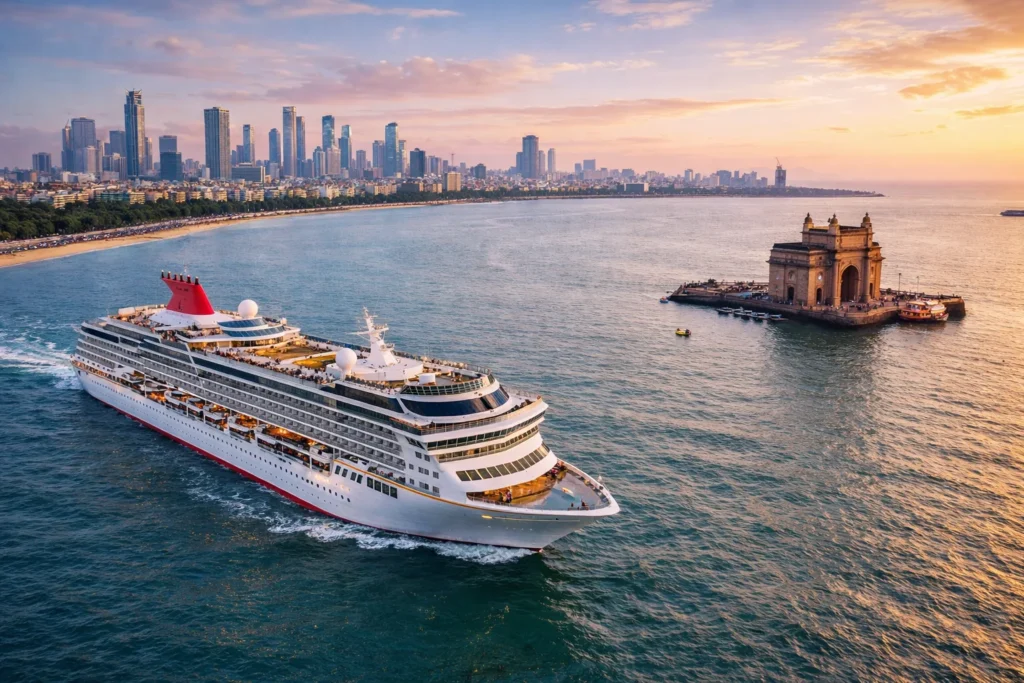
For cities such as Mumbai, Kochi, Chennai, Goa, Visakhapatnam, and emerging ports, cruise tourism can become a major source of economic activity and global visibility.
Strong Outlook for the Future
India’s active participation at Seatrade Cruise Global 2026 sends a clear message: the country is ready to compete in the global cruise market.
With policy support, growing infrastructure, strategic partnerships, and unmatched geographic diversity, India cruise tourism is entering a new era.
For travelers, cruise lines, and investors, India is no longer just a stop on the map. It is becoming a destination with the scale, ambition, and experiences to shape the future of cruising in Asia.