A major wave of aviation disruption has swept across Asia after Capital Airlines, Garuda Indonesia, China Eastern Airlines and Pakistan International Airlines collectively cancelled 23 flights and delayed 481 more, creating widespread congestion at airports including Shanghai, Jakarta and Islamabad. The largest share of disruption came from China Eastern Airlines, which recorded 12 cancellations and 382 delays centered heavily around Shanghai Pudong International Airport, one of the region’s busiest air gateways.
The scale of the delays has stranded thousands of travelers, disrupted onward connections and placed heavy pressure on airport operations across multiple countries. While cancellations immediately removed capacity from the market, the far greater number of delays has triggered rolling disruption throughout the day as aircraft, crews and passenger itineraries fell out of sync. For airlines and airports, restoring normal operations may take longer than the initial event itself.
Shanghai Emerges as Main Disruption Hotspot
Shanghai Pudong has become the epicenter of the travel chaos due to the concentration of China Eastern delays and cancellations. As one of Asia’s most important hubs for domestic and international traffic, any slowdown in Shanghai can quickly affect networks far beyond eastern China.
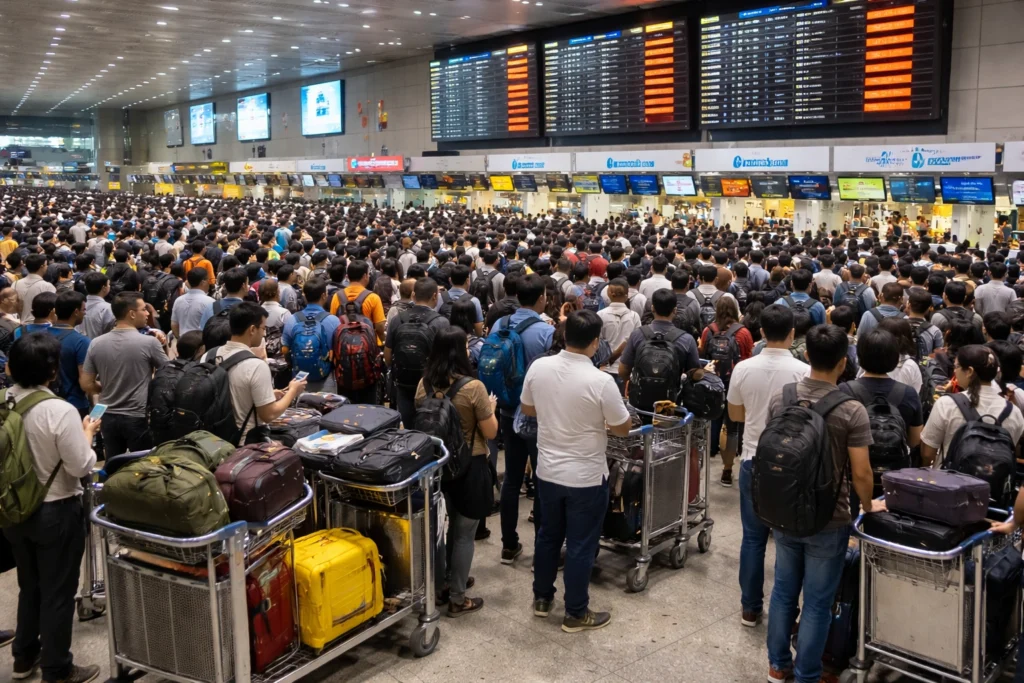
Passengers at the airport have faced long queues, crowded departure halls and frequent gate or schedule changes. For transit travelers, missed onward flights have added another layer of stress, forcing rebookings and unexpected overnight stays. Because Shanghai links key business and leisure markets across Asia and beyond, the impact has extended across multiple route networks.
Jakarta and Islamabad Also Feel Pressure
Jakarta Soekarno-Hatta International Airport has also experienced operational strain after Garuda Indonesia reported cancellations and delays. Indonesia’s main gateway is a crucial hub for domestic travel and Southeast Asian connections, meaning disruption there can affect both holidaymakers and business passengers.
In Pakistan, Islamabad International Airport has seen passenger build-up following Pakistan International Airlines cancellations and delays. Although smaller in scale than the disruption in China, the impact has still been significant for travelers relying on connecting services or limited alternative options. Rebooking pressure and longer waits have added to the passenger burden.
Regional Airports Caught in the Ripple Effect
The disruption has not remained confined to the largest hubs. Airports in Beijing, Kunming, Chengdu, Shijiazhuang, Jieyang and Yinchuan have all felt spillover effects as delayed inbound aircraft and rescheduled departures disrupted local operations.
Kunming and Chengdu are especially important for tourism flows, serving travelers heading to scenic and cultural destinations across western and southwestern China. Delays at these airports can affect tour schedules, hotel check-ins and regional transport links, demonstrating how aviation issues quickly spill into the wider visitor economy.
Tourism and Hospitality Face Immediate Impact
The broader tourism sector is also feeling the consequences. Flight delays often translate into missed tours, late arrivals, reduced spending time at destinations and last-minute accommodation changes. Hotels may receive delayed check-ins, transport providers may need to reschedule pickups and attractions can lose same-day visitors.
During periods of strong travel demand, such disruptions can weaken traveler confidence and alter booking behavior. Passengers may begin favoring longer connection times, more flexible tickets or alternate airports when reliability becomes a concern. For destinations dependent on smooth access, aviation disruption is more than a transport issue—it becomes an economic one.
Why Delays Matter More Than Cancellations
The imbalance between 23 cancellations and 481 delays reveals a system under strain rather than one in total shutdown. Flights are still operating, but at reduced efficiency. That often creates a more complex recovery challenge because the entire schedule continues moving in an unstable state.
As aircraft arrive late, the next departure is pushed back. Crews may reach duty-time limits, gates remain occupied longer and connecting passengers require assistance. Even minor operational issues can multiply rapidly across tightly scheduled aviation systems, especially at major hubs handling hundreds of daily movements.
Advice for Travelers Across Asia
Passengers traveling through affected airports are being urged to monitor airline notifications, check flight status before leaving for the airport and allow additional time for check-in and security procedures. Keeping flexible itineraries and understanding rebooking policies can also reduce stress during large-scale disruptions.
Travel insurance, refundable hotel bookings and mobile app alerts are increasingly valuable tools when airport conditions change quickly. In a highly interconnected travel market, preparedness has become part of the journey itself.
Outlook Remains Fluid
With hundreds of delays still affecting schedules, the situation remains dynamic. Airlines and airport authorities continue working to reposition aircraft, support passengers and restore normal traffic flow while maintaining safety standards.
For now, Asia’s latest disruption serves as a reminder of how quickly operational pressure at a few key hubs can escalate into region-wide travel chaos. Until schedules stabilize, passengers across the continent may continue to feel the effects in terminals, on connections and throughout their travel plans.
For more travel news like this, keep reading Global Travel Wire