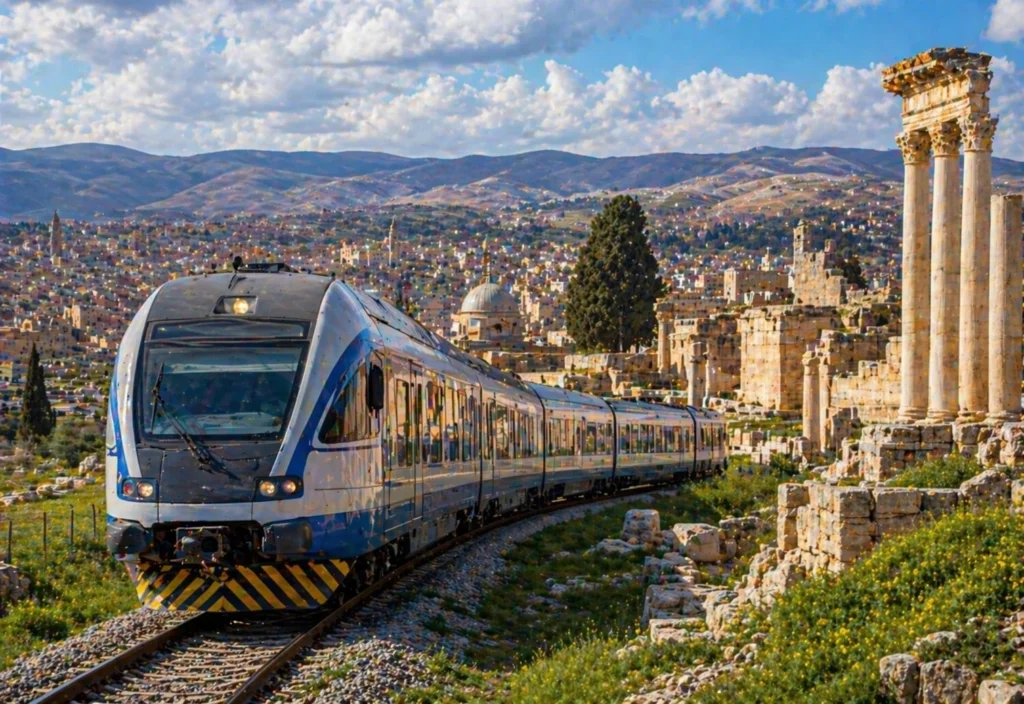
Syria is preparing for a major transport revival after the Ministry of Transport announced a $200 million railway upgrade plan aimed at rebuilding infrastructure, modernizing fleets, and restoring key national and regional connections. The investment is expected to support economic recovery while creating new long-term opportunities for tourism, trade, and domestic mobility.
The funding, backed through international development support, will focus on repairing damaged rail assets, purchasing locomotives, improving tracks, and strengthening workforce training. For the travel sector, this signals the early stages of a broader recovery in connectivity that could eventually make travel across Syria and neighboring regions more efficient and accessible.
As rail systems return, tourism planners and transport observers are watching closely to see how improved mobility can help unlock cultural heritage travel, domestic tourism, and regional visitor movement.
Rail Investment Marks a New Recovery Phase
Transport infrastructure often plays a central role in national recovery, and railways are among the most valuable long-term assets for rebuilding economic confidence. By investing in rail modernization, Syria is laying the groundwork for better movement of people, goods, and services across the country.
Rail systems help reduce transport costs, improve access between cities, and create reliable alternatives to road congestion. They also support balanced regional development by connecting inland communities with ports, commercial zones, and urban centers.
For tourism, better transport links can help visitors explore more destinations beyond gateway cities.
The new investment plan reflects a strategic shift toward rebuilding core infrastructure with long-term benefits for multiple sectors.
Tourism Could Benefit from Better Domestic Connectivity
One of the biggest barriers to tourism growth is limited transport access. Even destinations with rich history and cultural significance can struggle to attract visitors if journeys are difficult or unreliable.
Improved railway services can help solve that challenge by connecting cities, archaeological sites, coastal areas, and inland regions through dependable travel options.
Future tourism benefits may include:
- Easier travel between major cities
- Better access to heritage attractions
- Growth in domestic tourism
- Lower-cost regional travel options
- New cultural itineraries
- Expanded business and conference travel
As transport networks improve, tourism businesses such as hotels, guides, restaurants, and local operators may also benefit from stronger visitor flows.
Fleet Modernization to Improve Reliability
Part of the new funding will be used to procure locomotives and repair existing rolling stock. Reliable trains are essential for maintaining schedules, increasing service frequency, and improving passenger confidence.
Modern fleets can offer better comfort, stronger operational performance, and lower maintenance costs. For travelers, this can lead to smoother journeys and more predictable travel planning.
Fleet upgrades are especially important in markets rebuilding transport systems after long disruptions. Visible improvements in service quality often help restore confidence among both residents and future visitors.
A dependable railway system can become a strong symbol of wider national progress.
Staff Training Supports Service Standards
The investment plan also includes workforce development and staff training. Skilled railway employees are critical for safe operations, customer service, maintenance quality, and long-term system sustainability.
For tourism, professional service standards matter greatly. Friendly staff, efficient station operations, clear passenger information, and reliable scheduling all shape traveler experiences.
Training programs can help build the expertise needed for future passenger growth while creating employment opportunities in transport and related industries.
Human capital development is often as important as infrastructure spending in successful tourism recovery.
Key Routes Could Reconnect the Region
Studies are underway to reactivate strategic lines linking Syria with Türkiye to the north and Iraq to the east. These routes have major significance for both trade and future tourism.
Cross-border rail services can encourage multi-country travel, regional business movement, and stronger economic integration. For tourists, seamless rail links may eventually open new itineraries that combine history, culture, and regional exploration.
Potential long-term travel opportunities could include:
- Multi-country heritage journeys
- Overland Middle East travel routes
- Religious and cultural tourism circuits
- Cross-border business travel
- Regional backpacking and adventure tourism
While such developments may take time, restoring strategic corridors creates important future potential.
Mediterranean Port Connections Add Value
Officials have indicated that lines linking Mediterranean ports with inland freight terminals will be prioritized. Port-to-inland connectivity is essential for logistics, but it can also support tourism development.
Coastal gateways often become natural entry points for visitors, cruise travelers, and regional tourists. Strong transport links between ports and inland destinations can increase the appeal of coastal cities while helping visitors travel deeper into the country.
Better access between seaside areas and historic inland destinations can encourage longer stays and more diverse travel experiences.
This creates broader tourism value than isolated destination development alone.
Freight Growth Signals Rising Confidence
Syrian Railways reported an 81 percent increase in freight traffic in the first quarter of 2026 compared with the same period last year, carrying more than 232,000 tonnes.
Freight recovery matters for tourism because it often signals improving infrastructure use, stronger operational capacity, and growing business confidence. Transport systems that can handle rising cargo volumes are often better positioned to support future passenger services as well.
Economic activity and tourism growth frequently move together. As supply chains strengthen, hospitality investment and visitor services can follow.
The freight increase suggests that rail recovery is already delivering measurable results.
Challenges Remain but Momentum Is Building
Rebuilding rail networks after years of damage is a complex process. Infrastructure rehabilitation, financing, technical planning, safety systems, and international coordination all require time.
Tourism recovery will also depend on wider factors such as visitor confidence, accommodation growth, destination readiness, and travel facilitation.
However, major transport investment is an essential first step. It sends a message that long-term rebuilding is underway and that future connectivity is being prioritized.
For destinations seeking renewed relevance in regional tourism, infrastructure momentum can be a powerful signal.
What Travelers May Watch Next
As Syria’s rail recovery progresses, tourism observers will likely monitor:
- Restoration of passenger services
- Reopening of strategic rail lines
- Station modernization projects
- Cross-border travel developments
- Heritage tourism initiatives
- Domestic travel campaigns
Each of these steps can contribute to a stronger tourism ecosystem over time.
A New Chapter for Syria Tourism
The $200 million railway upgrade plan represents more than a transport announcement. It is a foundation for future movement, opportunity, and reconnection.
For travelers, improved railways may one day make it easier to experience Syria’s cultural heritage, historic cities, and diverse landscapes. For the tourism industry, it offers a credible sign that infrastructure recovery is beginning to support broader growth ambitions.
While the journey ahead will take time, Syria tourism now has a stronger platform from which to rebuild.