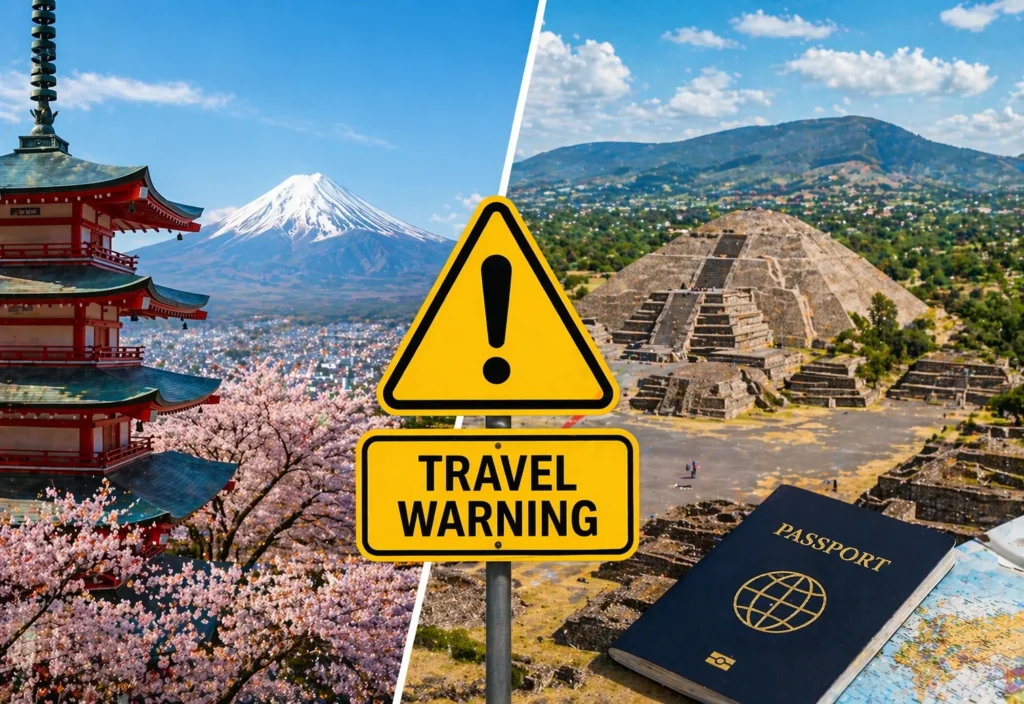
British travelers planning overseas holidays are being urged to review the latest official guidance after updated travel advice was issued for two popular destinations: Japan and Mexico. The updated notices come after separate serious incidents involving natural disaster risk in Japan and a security incident in Mexico.
Official travel advisories are an important part of tourism planning because they help visitors understand current conditions, local risks, and practical safety steps before departure. For families, solo travelers, and group holidaymakers, staying informed can make travel smoother and more secure.
Although both countries continue to welcome international visitors, the latest updates highlight why travelers should monitor official information closely and remain flexible with plans.
Why Travel Advice Matters for Tourists
Travel guidance is designed to help visitors make informed decisions before and during trips abroad. It can include information about:
- Weather risks
- Natural disasters
- Security concerns
- Health issues
- Entry procedures
- Transport disruption
- Local laws and emergency contacts
Tourism demand often remains strong even after incidents, but informed travelers are better prepared to adjust itineraries, choose safer routes, and respond quickly if conditions change.
For destinations with high visitor numbers, clear communication helps maintain traveler confidence.
Japan Update After Major Earthquake Alert
The latest guidance for Japan follows a powerful earthquake affecting northern parts of the country. Authorities have also issued precautionary alerts about the possibility of additional seismic activity in the coming days.
Travelers in northern and northeastern areas are being advised to remain alert, follow instructions from local authorities, and stay aware of changing conditions.
Regions that may require extra caution include areas such as:
- Hokkaido
- Aomori
- Iwate
- Miyagi
- Fukushima
- Ibaraki
- Chiba
Japan is globally respected for its disaster preparedness systems, advanced infrastructure, and rapid emergency response capabilities. However, visitors should still take official alerts seriously and understand local procedures.
Is It Still Safe to Visit Japan?
Japan remains one of the world’s leading travel destinations, attracting visitors for its culture, food, cities, mountains, wellness experiences, and seasonal landscapes.
Popular destinations such as Tokyo, Kyoto, Osaka, and Hokkaido continue to draw tourists year-round.
For travelers visiting during periods of seismic activity, smart preparation is key:
- Know evacuation routes
- Enable emergency alerts on your phone
- Keep essential documents accessible
- Follow hotel safety instructions
- Monitor transport updates
With proper awareness, many trips can continue smoothly.
Mexico Update After Tourist Site Incident
The second update concerns Mexico following a violent incident at the Teotihuacán pyramids in Estado de México, one of the country’s most iconic archaeological attractions.
Authorities have stated that the situation is under control, but travelers in the area are being advised to follow local guidance and stay updated through official channels.
Teotihuacán is a UNESCO-recognized heritage destination visited by large numbers of international tourists each year. Known for its monumental pyramids and ancient history, it remains one of Mexico’s most important tourism landmarks.
What This Means for Mexico Tourism
Mexico continues to be a major global tourism destination with strong demand for beach resorts, heritage cities, food tourism, cultural experiences, and archaeological sites.
Popular visitor destinations include:
- Mexico City
- Cancun
- Tulum
- Guadalajara
- Riviera Maya regions
While isolated incidents can affect traveler confidence temporarily, tourism often remains resilient when authorities respond quickly and maintain visitor services.
Travelers should use reputable transport, remain aware of surroundings, and follow local safety advice.
Broader Lesson for Holiday Planning in 2026
The latest travel warnings underline a wider trend: successful travel today depends on preparation as much as destination choice.
Before any international trip, travelers should check:
- Official travel advisories
- Local weather conditions
- Entry and border rules
- Insurance coverage
- Transport schedules
- Emergency contact details
This is especially important during busy travel seasons when unexpected events can affect flights, tours, and accommodation plans.
Smart Travel Tips for Japan and Mexico
Whether heading to Asia or North America, a few simple habits can improve safety and reduce stress.
Recommended Traveler Advice
- Register for airline and hotel alerts
- Keep copies of passports and bookings
- Buy comprehensive travel insurance
- Monitor official local updates daily
- Avoid rumors on social media
- Save embassy or consular contacts
- Build flexibility into your itinerary
Prepared travelers usually recover faster from disruption than unprepared ones.
Frequently Asked Questions
Are Japan and Mexico closed to tourists?
No. Both countries continue to welcome visitors, though official advisories should be reviewed before travel.
Should I cancel my holiday?
That depends on your location, itinerary, and comfort level. Travelers should assess official guidance and provider policies.
Is Teotihuacán open?
Travelers should check current local authority updates and tour operator information before visiting.
How can I stay safe in Japan during earthquake alerts?
Follow local instructions, monitor alerts, and understand emergency procedures at your accommodation.
Final Takeaway
The latest holiday travel warning for Japan and Mexico is a reminder that informed planning is essential in 2026. While both destinations remain globally popular and open to visitors, changing conditions mean travelers should stay alert, flexible, and updated. With smart preparation, tourists can still enjoy safe and memorable experiences in two of the world’s most exciting destinations.