GetYourGuide has introduced new artificial intelligence features designed to help travelers move more quickly from trip planning to confirmed bookings. The latest update focuses on one of the biggest challenges in modern tourism: converting travel inspiration and research into actual purchases.
Many travelers enjoy browsing attractions, comparing tours, and building wish lists, but often delay decisions when faced with too many choices. This hesitation can lead to missed opportunities, sold-out activities, or abandoned bookings. GetYourGuide’s new AI-powered tools aim to remove that friction by offering smarter recommendations, easier comparisons, and more personalized planning support.
The move reflects a wider trend across the tourism sector as travel brands invest in digital solutions that simplify customer journeys and improve booking confidence.
Why the Planning Stage Matters in Tourism
Travel planning has become more detailed and time-consuming in the digital era. Visitors now compare dozens of tours, read reviews, check schedules, monitor prices, and search for unique experiences before making a decision.
While this access to information benefits consumers, it can also create decision fatigue. Too many similar options often leave travelers uncertain about what to choose. In the experiences market, where tours and attractions are often time-sensitive, hesitation can reduce conversion rates for booking platforms.
GetYourGuide’s strategy recognizes that the period between research and payment is one of the most valuable moments in the customer journey. By improving decision-making during this stage, the company hopes to increase completed bookings while helping travelers feel more confident about their choices.
Smarter Recommendations Through AI
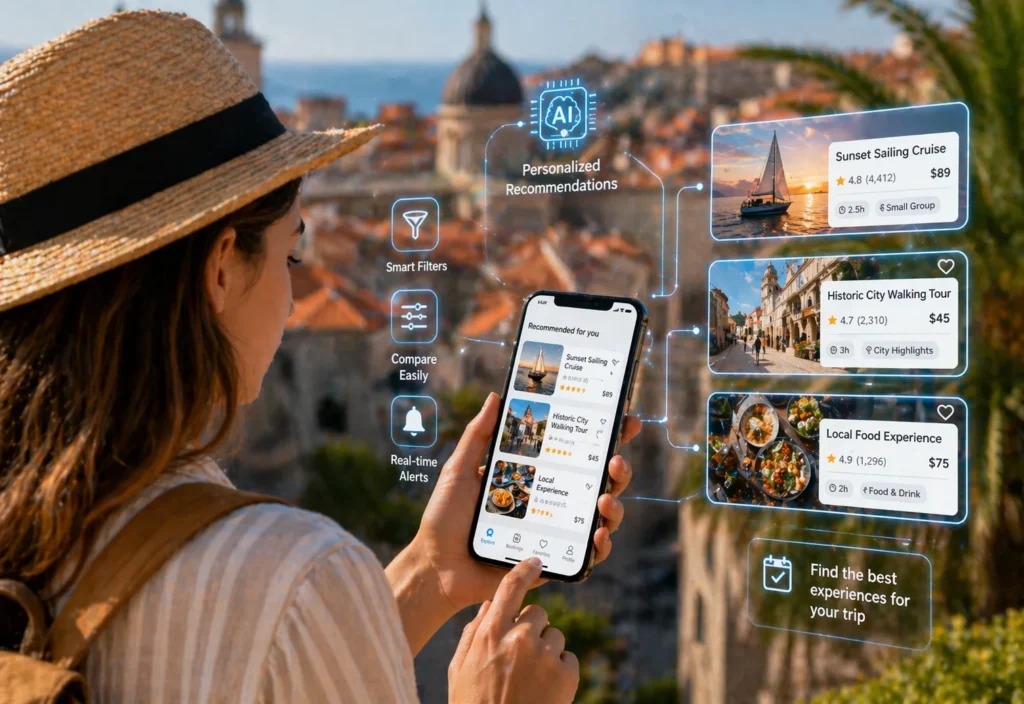
The new features use artificial intelligence to personalize recommendations based on user behavior, preferences, and travel interests. Instead of showing the same results to every visitor, the platform can tailor suggestions to match what each traveler is most likely to enjoy.
For example, a traveler who frequently books cultural walking tours may receive more heritage-focused recommendations in future destinations. Someone who prefers adventure experiences may see outdoor activities and action-based tours prioritized in search results.
This level of personalization reduces the time spent browsing irrelevant options and makes trip planning more efficient.
AI tools can also improve relevance by considering factors such as travel season, weather conditions, group type, and available time. A family visiting a city for one day may receive different suggestions than a solo traveler staying for a week.
Easier Comparisons and Faster Decisions
One of the most useful additions is the ability to compare experiences more effectively. Travelers often weigh several factors before booking, including price, timing, reviews, duration, accessibility, and type of experience.
AI-supported comparison tools can simplify this process by presenting the most relevant information clearly and quickly. Instead of opening multiple pages and manually comparing details, users can receive a more direct overview of which option best matches their priorities.
Real-time alerts for limited availability can also help travelers act before popular tours sell out. This is especially valuable during peak travel seasons, festivals, and holidays when demand for attractions rises sharply.
By reducing uncertainty and saving time, these tools can encourage faster booking decisions.
Benefits for Modern Travelers and Digital Nomads
The update is particularly relevant for travelers who move frequently or plan multiple trips each year. Digital nomads, remote workers, and long-stay travelers often book activities across several destinations while balancing work commitments.
For these users, efficient planning tools can make a major difference. AI systems that learn preferences over time can create a smoother experience from one city to the next.
Someone who enjoys food tours, local workshops, or wellness activities may receive relevant ideas automatically when arriving in a new destination. Travelers with fixed work hours can also benefit from suggestions that fit available free time.
This kind of smart planning support reflects changing tourism habits, where flexible travel lifestyles are becoming more common.
Stronger Growth in the Experiences Market
Tours, attractions, and local experiences are among the fastest-growing segments of global tourism. Travelers increasingly want memorable activities rather than only transport and accommodation.
From cooking classes and museum tickets to boat cruises and adventure excursions, experiences now play a central role in holiday planning. As demand grows, booking platforms are competing to make discovery and reservations easier.
GetYourGuide’s AI investment highlights how technology is becoming essential in this market. Companies that reduce booking friction, improve personalization, and help users choose faster may gain a stronger share of future travel demand.
The tourism industry is moving beyond simple search engines toward intelligent platforms that guide decisions from start to finish.
Why This Matters for Destinations
Better booking technology can also support destinations, attractions, and local operators. When travelers can discover and reserve activities more easily, destinations may benefit from higher participation rates and increased visitor spending.
Local businesses offering guided tours, workshops, transport services, and cultural events can gain more visibility through smarter recommendation systems. This helps distribute tourism spending beyond major landmarks and encourages travelers to explore wider communities.
For destinations focused on sustainable growth, digital tools can also help manage demand by promoting alternative attractions, off-peak experiences, or lesser-known neighborhoods.
In this way, AI booking systems can support both visitor satisfaction and destination management goals.
The Future of Travel Booking
GetYourGuide’s latest update signals where tourism technology is heading. Travelers no longer want to spend hours navigating endless lists of options. They expect fast, personalized, and trustworthy guidance that helps them book with confidence.
Artificial intelligence is increasingly becoming the bridge between inspiration and action. Rather than replacing human curiosity, it helps organize choices and reduce stress during trip planning.
As competition grows in the travel experiences sector, the brands that combine smart technology with quality experiences are likely to lead the next phase of tourism growth.
For travelers, the result could be simpler planning, better choices, and more memorable journeys with less time spent searching and more time enjoying the destination.