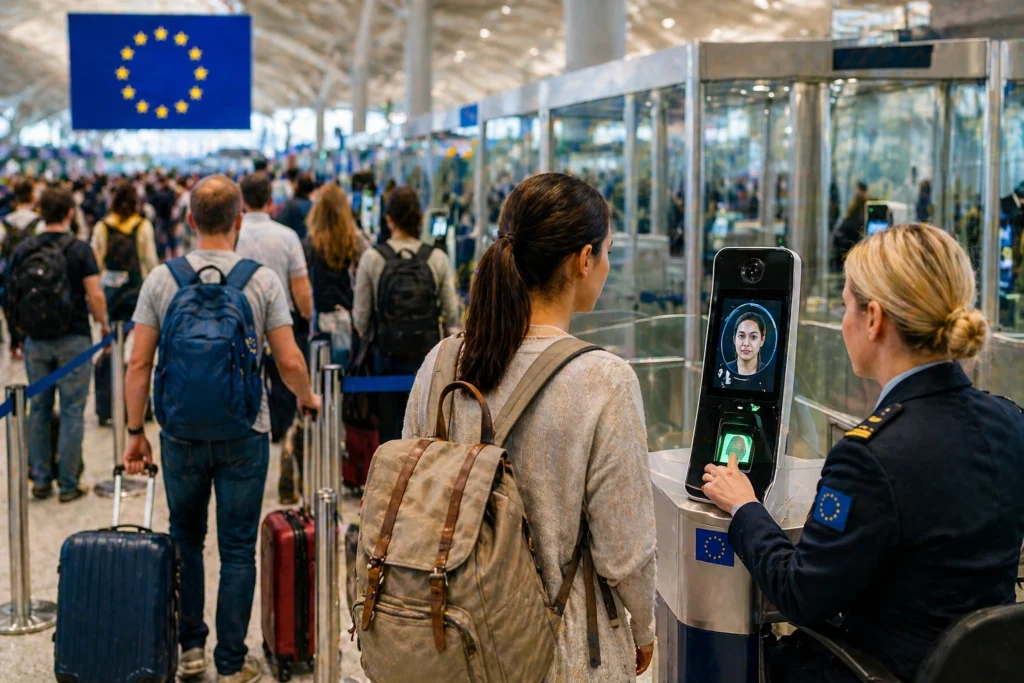
Spain is rolling out emergency measures to reduce long airport queues after the European Union’s new Entry/Exit System triggered major border control delays for non-EU travelers, particularly UK tourists. Introduced in April 2026, the system requires biometric checks including fingerprints and photographs, leading to extended processing times at some of Spain’s busiest airports during peak travel periods.
The disruption has affected passenger flows at major gateways including Madrid-Barajas, Barcelona-El Prat, Málaga, and Palma, where some travelers reportedly faced waits of up to three hours. Missed flights, delayed arrivals, and added travel stress have raised concerns ahead of the busy summer tourism season in one of Europe’s most visited destinations.
For Spain’s tourism economy, keeping border processes efficient is critical as millions of international visitors rely on smooth airport arrivals each year.
Why the New EU System Is Causing Delays
The Entry/Exit System, known as EES, was introduced to modernize border management across the Schengen Area and strengthen security for non-EU arrivals. Instead of traditional passport stamping alone, first-time or updated entries now require biometric registration.
While the long-term goal is a more secure and digital border process, the early rollout has created operational pressure at airports handling high passenger volumes. Additional processing steps, unfamiliar procedures, and surges of arriving flights have all contributed to longer queues.
Spain has felt the impact strongly because of its popularity with British holidaymakers, who represent one of the country’s most important inbound tourism markets.
Spain Responds at Major Airports
Spain’s airport authority, AENA, has begun implementing immediate actions across 24 major airports to improve passenger flow and shorten waits. Measures include redirecting families and travelers with reduced mobility to manual passport control lanes when biometric lines exceed 25 minutes.
Airport teams are also adjusting queue management systems, reallocating staff, and refining passenger routing to reduce bottlenecks. At Málaga Airport, staggered flight arrival strategies have been trialed to spread demand more evenly across border checkpoints.
If successful, similar approaches may be extended to other airports facing persistent congestion.
These rapid interventions are intended to stabilize operations while authorities continue adapting to the new border system.
Airlines Change Procedures to Help Passengers
Airlines are also adjusting their operations in response to the delays. Ryanair has introduced earlier check-in expectations, asking passengers to complete check-in 20 minutes sooner than previous guidance to allow extra time for immigration procedures.
easyJet has been coordinating with airport teams and providing passengers with updated guidance on navigating longer passport control waits. The aim is to reduce the risk of missed departures and improve readiness for travelers arriving at busy terminals.
For passengers, these airline changes mean earlier airport arrivals may now be essential rather than optional.
Tourism Industry Watches Closely
The timing of the disruption is particularly sensitive for Spain’s visitor economy. The country depends heavily on international tourism, and smooth airport experiences can strongly influence traveler satisfaction, repeat bookings, and destination reputation.
Long queues at arrival or departure points can affect the overall holiday experience before a trip even begins. For families, older travelers, and short-break visitors, hours spent waiting in line can create frustration and reduce confidence in future travel plans.
Hotels, resorts, tour operators, car rental firms, and local attractions all benefit when visitor journeys run smoothly from the airport onward.
Because British travelers remain a major source market, maintaining efficient access from the UK is especially important.
What Travelers Should Do Now
Passengers heading to Spain or other Schengen destinations are being advised to plan ahead. Travelers should arrive at airports earlier than usual, especially during weekends, school holidays, and peak seasonal periods.
They should also ensure travel documents are valid and be prepared for biometric capture during entry procedures. Once data has been successfully registered, future crossings may become faster depending on system rules and travel history.
Allowing extra time for both departure and arrival formalities can help reduce stress and protect onward plans such as transfers, hotel check-ins, and connecting flights.
Long-Term Outlook for European Travel
Despite the difficult start, authorities expect the Entry/Exit System to become more efficient as staffing, passenger familiarity, and airport processes improve. Digital border systems are increasingly viewed as the future of international travel, combining automation with stronger identity checks.
For Spain, the immediate challenge is balancing security requirements with the seamless visitor experience that supports its tourism success.
With new mitigation measures already underway, the focus is now on restoring confidence before summer demand accelerates.
If the adjustments work, Spain could turn an early operational setback into a stronger and more resilient airport arrival system for millions of future travelers.
For more travel news like this, keep reading Global Travel Wire