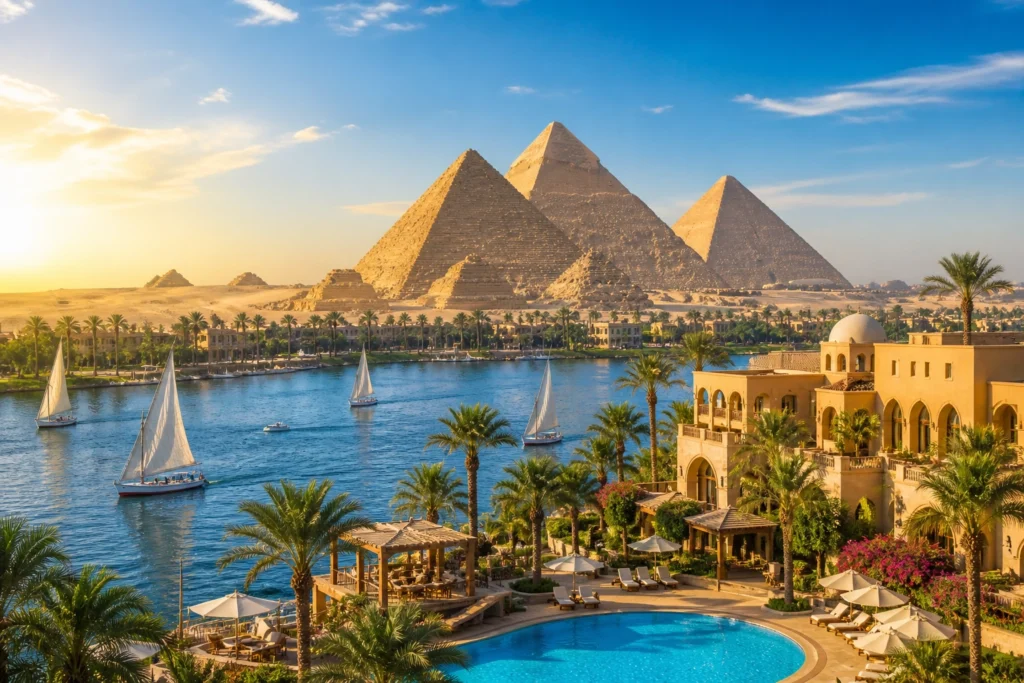
Egypt has emerged as Africa’s leading nation for hotel development in 2026, surpassing major tourism markets including Morocco, Nigeria, Kenya, Ethiopia, Tanzania, and South Africa, according to the latest industry pipeline data. With an impressive 185 hotels and 45,984 rooms currently under development, the country is setting the pace for hospitality growth across the continent.
This expansion reflects Egypt’s strategic focus on tourism infrastructure, strong government support, and increasing foreign investment, positioning the country as a dominant force in Africa’s travel and hospitality sector.
Egypt’s Dominance Driven by Investment and Infrastructure
Egypt’s leadership in hotel development is underpinned by extensive investments in airports, transportation networks, and resort destinations. These improvements have enhanced accessibility and elevated the country’s appeal to international travelers.
Key destinations such as Cairo, Alexandria, and the Red Sea coast are at the center of this growth, attracting global hotel brands seeking to capitalize on rising demand. The country’s rich cultural heritage, combined with modern infrastructure, continues to draw both leisure and business tourists.
Government initiatives aimed at promoting tourism and creating a favorable investment climate have further accelerated development, enabling Egypt to build one of the largest hospitality pipelines in Africa.
Morocco Secures Strong Second Position
While Egypt leads the continent, Morocco has established itself as a significant player in Africa’s hotel development landscape. The country currently has a pipeline of 75 hotels and more than 10,000 rooms, reflecting steady growth and increasing investor confidence.
Morocco’s expansion is spread across multiple cities and resort areas, highlighting a diversified approach to tourism development. The country’s proximity to Europe, combined with its cultural appeal and improving infrastructure, continues to attract international visitors.
This growth positions Morocco as a key competitor in North Africa’s hospitality sector, with strong potential for further expansion in the coming years.
Competitive Landscape Across Africa
Beyond Egypt and Morocco, several African nations are actively expanding their hotel sectors. Nigeria ranks third with over 8,000 rooms in development, followed by Kenya and Ethiopia, both of which are experiencing steady growth in hospitality investments.
Other countries, including Tanzania, South Africa, Ghana, and Tunisia, are also contributing to the continent’s dynamic hotel development market. While these markets are smaller in scale compared to Egypt, they highlight the increasing demand for accommodation across diverse destinations.
The competitive landscape underscores Africa’s growing importance in global tourism, as investors and hotel brands seek opportunities in emerging markets.
Casablanca Leads Morocco’s Development Push
In Morocco, Casablanca stands out as the primary hub for hotel development. The city accounts for a significant portion of the country’s pipeline, driven by its status as an economic and business center.
Casablanca’s strategic location on the Atlantic coast, combined with ongoing infrastructure upgrades, makes it an attractive destination for both corporate and leisure travelers. International hotel chains are increasingly targeting the city as a gateway to the broader Moroccan market.
This concentration of development reinforces Casablanca’s role as a key driver of tourism and hospitality growth in North Africa.
Strong Growth Forecast for Morocco
Morocco’s hotel sector is expected to see a surge in openings over the next two years, with a majority of planned projects scheduled for completion by 2026 and 2027. This pipeline reflects confidence in the country’s tourism potential and its ability to attract sustained investment.
The anticipated increase in hotel capacity will support rising visitor numbers and enhance Morocco’s position as a leading destination for international travel.
As new properties come online, the country is expected to strengthen its competitiveness within the African tourism market.
Tourism and Economic Impact
The rapid expansion of hotel development across Africa is closely tied to broader economic growth. Increased accommodation capacity supports tourism by improving access to destinations and enhancing the overall travel experience.
In Egypt, the scale of development is expected to drive significant economic benefits, including job creation, increased visitor spending, and stronger international connectivity. The ripple effects extend to related sectors such as aviation, transportation, and retail.
Similarly, Morocco’s growth contributes to regional development, supporting local businesses and boosting the country’s tourism economy.
A Strategic Race for Hospitality Leadership
Egypt’s commanding lead in hotel development highlights the country’s strategic approach to tourism and investment. By combining infrastructure improvements with targeted policies, it has created an environment that attracts global hotel brands and investors.
At the same time, Morocco’s steady growth demonstrates the increasing competitiveness of Africa’s hospitality sector, with multiple countries vying for a larger share of the global tourism market.
Outlook for Africa’s Hotel Industry
Looking ahead, Africa’s hotel development pipeline is expected to remain robust, driven by rising travel demand and continued investment in tourism infrastructure. Countries across the continent are focusing on expanding their offerings to cater to diverse traveler segments, from luxury to mid-range accommodations.
Egypt is well-positioned to maintain its leadership, while Morocco and other emerging markets continue to build momentum. Together, these developments are reshaping Africa’s tourism landscape and strengthening its role in global travel.
A New Era for African Tourism
The surge in hotel development across Africa marks a new era of growth and opportunity for the continent’s tourism industry. Egypt’s leading position reflects its ability to leverage investment, infrastructure, and cultural appeal to attract global attention.
As the hospitality sector continues to evolve, the competition among African destinations will drive innovation and enhance the overall travel experience for visitors.
With strong pipelines and ambitious development plans, Africa is poised to become an increasingly important destination in the global tourism market, led by Egypt’s remarkable expansion and supported by Morocco’s rising influence.
For more travel news like this, keep reading Global Travel Wire