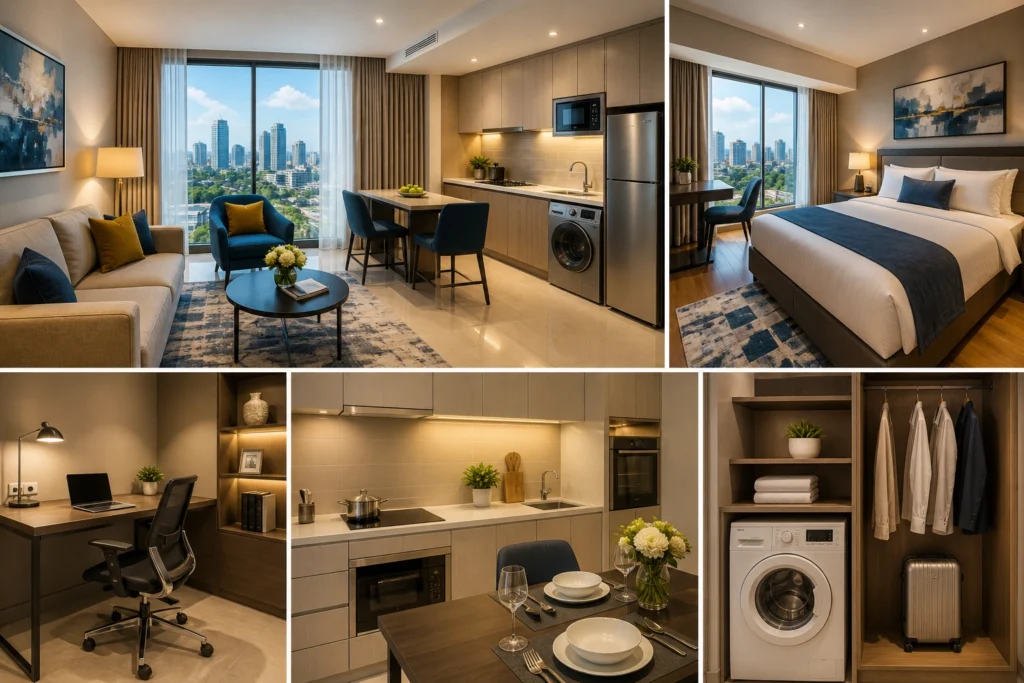
Serviced residences are rapidly transforming the hospitality landscape across Asia, emerging as a preferred accommodation choice for travelers seeking flexibility, comfort, and extended-stay convenience. Driven by the rise of remote work, evolving family travel needs, and the growing demand for “bleisure” experiences, these home-style accommodations are reshaping how visitors experience both business and leisure travel.
Major urban hubs such as Mumbai, Bengaluru, and Delhi are witnessing a surge in demand, reflecting a broader shift in traveler expectations and accommodation preferences across the region.
A New Standard for Modern Travel
Unlike traditional hotels, serviced residences offer a blend of hotel services and residential comfort, providing guests with fully equipped kitchens, spacious living areas, and dedicated workspaces. This model caters to travelers who require more than short-term stays, enabling them to live, work, and relax in a single environment.
The shift toward longer stays has been accelerated by hybrid work models, where professionals combine remote work with travel. These accommodations provide the infrastructure needed for productivity while maintaining the comfort of a home-like setting.
Remote Work and Bleisure Travel Drive Demand
The global adoption of remote work has significantly boosted the popularity of serviced residences. Travelers are increasingly choosing destinations where they can extend their stays, balancing professional responsibilities with leisure activities.
This trend has given rise to “bleisure” travel, where business trips are extended into leisure experiences. Serviced residences support this model by offering flexible booking options and amenities that accommodate both work and relaxation.
Travel professionals note that the ability to stay longer in a destination without sacrificing comfort or convenience is a key factor driving this growth.
Family Travel Preferences Evolve
Families are also contributing to the rise of serviced residences, favoring larger living spaces over traditional hotel rooms. Multi-bedroom units allow families to stay together comfortably, while kitchen facilities enable cost-effective meal preparation.
For parents, the ability to maintain routines in a familiar environment is a significant advantage. Children benefit from additional space to play and relax, creating a more enjoyable travel experience.
This shift is influencing how hospitality providers design and market their offerings, with a growing emphasis on family-friendly accommodations.
Expanding Services and Amenities
To meet changing traveler needs, serviced residences are expanding their range of services. Features such as grocery delivery, in-house laundry, and concierge assistance are becoming standard, enhancing convenience for long-term guests.
High-speed internet and dedicated workspaces are now essential, particularly for digital nomads and business travelers. Flexible check-in and check-out policies further add to the appeal, allowing guests to customize their stay according to their schedules.
These amenities position serviced residences as a versatile option that bridges the gap between hotels and private rentals.
India Emerges as a Key Growth Market
India is playing a pivotal role in the expansion of serviced residences across Asia. Its major cities, driven by strong business activity and increasing international travel, are seeing a significant rise in demand for extended-stay accommodations.
The country’s growing appeal to expatriates, corporate travelers, and long-term visitors has fueled investment in this segment. Government initiatives supporting business travel and flexible work arrangements are further contributing to the sector’s growth.
As India continues to attract global talent and tourism, serviced residences are becoming an integral part of its hospitality infrastructure.
Hospitality Sector Adapts to Changing Trends
The rise of serviced residences reflects a broader transformation within the hospitality industry. Travelers are increasingly prioritizing flexibility, value, and personalized experiences over traditional hotel offerings.
Hospitality brands are responding by diversifying their portfolios to include serviced apartments and extended-stay properties. This shift allows them to capture a wider range of travelers, from short-term visitors to long-term residents.
The trend also highlights the growing importance of adaptability in a competitive market, where consumer preferences are rapidly evolving.
Economic and Tourism Impact
The expansion of serviced residences is contributing to the growth of local economies by attracting longer-staying visitors who spend more on services and experiences. Extended stays often lead to increased spending on dining, transportation, and leisure activities, benefiting local businesses.
For destinations, this trend supports sustainable tourism by spreading visitor demand over longer periods, reducing pressure on peak travel seasons.
The model also enhances destination appeal by offering diverse accommodation options that cater to different traveler segments.
The Future of Flexible Travel Stays
As travel continues to evolve, serviced residences are expected to play an increasingly central role in the global hospitality sector. Their ability to combine comfort, flexibility, and functionality makes them well-suited to meet the needs of modern travelers.
Industry experts anticipate continued growth in this segment, particularly in urban centers and emerging travel destinations across Asia.
A Shift Toward Home-Like Travel Experiences
The rise of serviced residences signals a fundamental change in how people approach travel. With a focus on comfort, convenience, and adaptability, these accommodations are redefining the travel experience for business and leisure alike.
As more travelers seek personalized and flexible stays, serviced residences are poised to become a mainstream choice, shaping the future of hospitality across Asia and beyond.
For more travel news like this, keep reading Global Travel Wire