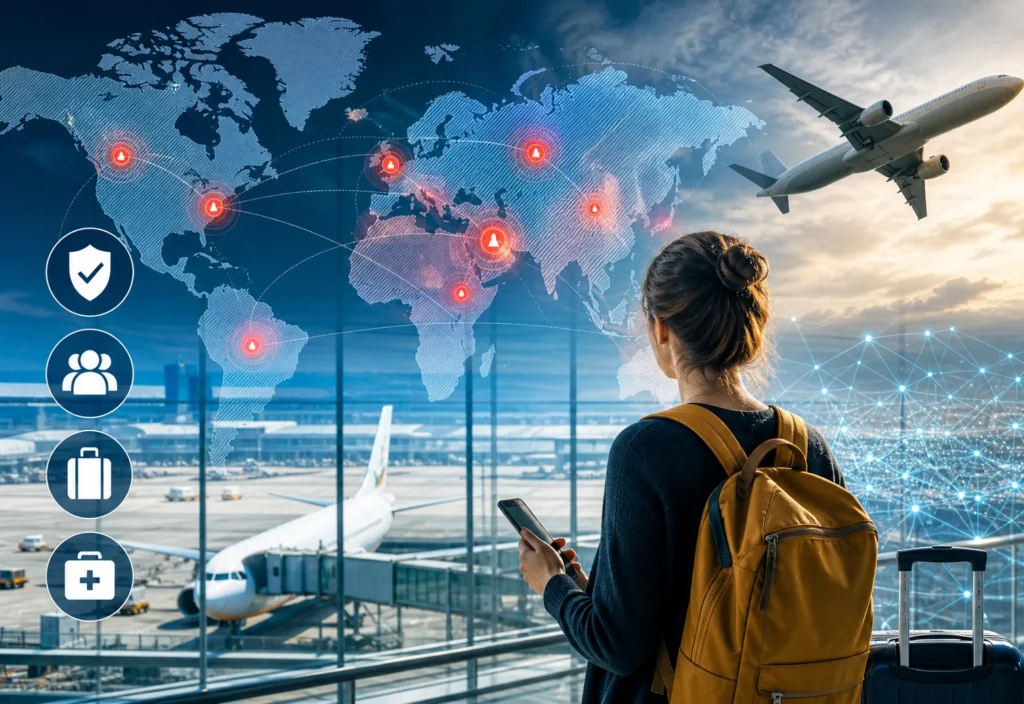
International travel in 2026 is undergoing a profound transformation as geopolitical developments and regional uncertainties influence how tourists plan their journeys. Governments, tourism boards, and aviation authorities across the world are emphasizing the importance of preparedness, awareness, and reliable information, as travelers navigate an increasingly complex global landscape.
Official tourism and travel advisories issued by governments remain a primary source of guidance for international travelers. These advisories, regularly updated by foreign ministries and national travel departments, highlight risks related to political developments, security concerns, and natural events. Authorities stress that such information is essential for ensuring safe and informed travel decisions, particularly in regions experiencing rapid change.
Tourism ministries worldwide have noted that global travel demand remains resilient despite these challenges. Official statistics from multiple national tourism bodies indicate that international travel continues to grow, supported by improved aviation connectivity and strong demand for cross-border experiences. However, travelers are now approaching trips with greater caution and strategic planning.
One of the most significant changes in 2026 is the shift in traveler behavior. According to official tourism insights and government-backed travel surveys, a large proportion of travelers now consider safety and real-time updates as key factors when choosing destinations. This marks a departure from traditional travel planning, where cost and convenience were often the primary considerations.
Government tourism departments emphasize that risks are rarely uniform across entire countries. Instead, they are often localized to specific regions or cities. This nuanced understanding is reflected in official advisories, which increasingly provide region-specific guidance rather than broad national assessments. Such updates help travelers make more precise decisions about where to go and which areas to avoid.
Airspace management and aviation authorities also play a critical role in ensuring safe travel. In response to geopolitical developments, civil aviation bodies frequently adjust flight routes, issue notices to airlines, and coordinate with international agencies to maintain passenger safety. These measures ensure that travelers can continue to move between destinations while minimizing exposure to potential disruptions.
Real-time information has become a cornerstone of modern travel planning. Many government agencies now provide digital platforms and mobile alerts that deliver updates on changing conditions, including transportation disruptions, security alerts, and health advisories. These tools enable travelers to respond quickly to evolving situations, ensuring safer and more flexible journeys.
Tourism boards are also adapting their strategies to address traveler concerns. By promoting destinations with stable environments and well-developed infrastructure, they aim to build confidence among international visitors. Campaigns often highlight safety measures, accessibility, and the availability of support services, reinforcing the message that travel remains both possible and rewarding.
The aviation industry continues to support these efforts by maintaining operational flexibility. Airlines are working closely with regulators to adjust schedules, reroute flights, and provide timely information to passengers. This collaboration ensures that travel disruptions are managed effectively, minimizing inconvenience and maintaining connectivity.
Security-focused travel preparation is becoming increasingly common. Government tourism advisories recommend that travelers stay informed about local conditions, register with official travel programs where available, and maintain access to emergency contacts. These measures are designed to enhance personal safety and provide support in case of unexpected developments.
Despite the evolving risk landscape, tourism authorities emphasize that international travel is not declining but rather adapting. Travelers are choosing destinations more carefully, planning itineraries with greater attention to detail, and relying on verified information sources. This shift reflects a more informed and proactive approach to travel.
Economic data from tourism ministries indicates that the sector continues to contribute significantly to global economies. Increased awareness and improved safety measures are helping sustain travel demand, even in the face of uncertainty. By addressing concerns and providing reliable information, governments are supporting the continued growth of tourism.
Another important trend is the integration of technology into travel planning. Official platforms offering real-time updates, digital travel documentation, and emergency communication tools are becoming standard. These innovations enhance traveler confidence and ensure that individuals remain connected throughout their journeys.
Tourism authorities also highlight the importance of collaboration between countries. International agreements on aviation safety, border management, and information sharing help create a more secure travel environment. Such cooperation ensures that travelers can move across borders with greater confidence and clarity.
The concept of global travel safety in 2026 is therefore defined by adaptability rather than avoidance. Travelers are not abandoning international journeys; instead, they are embracing a more strategic approach. By combining official guidance, real-time updates, and careful planning, they can navigate the complexities of modern travel effectively.
Looking ahead, governments and tourism organizations are expected to continue enhancing safety frameworks and communication systems. Investments in infrastructure, technology, and traveler support services will play a key role in shaping the future of international tourism.
As global travel safety becomes a central focus, the industry is evolving to meet new expectations. Travelers are better informed, more prepared, and increasingly aware of the dynamic nature of international travel. This shift not only ensures safer journeys but also strengthens the resilience of the global tourism sector.
In 2026, international travel remains a vital part of global connectivity and cultural exchange. With the right preparation and access to official information, travelers can continue to explore the world confidently, even in an environment shaped by change and uncertainty.