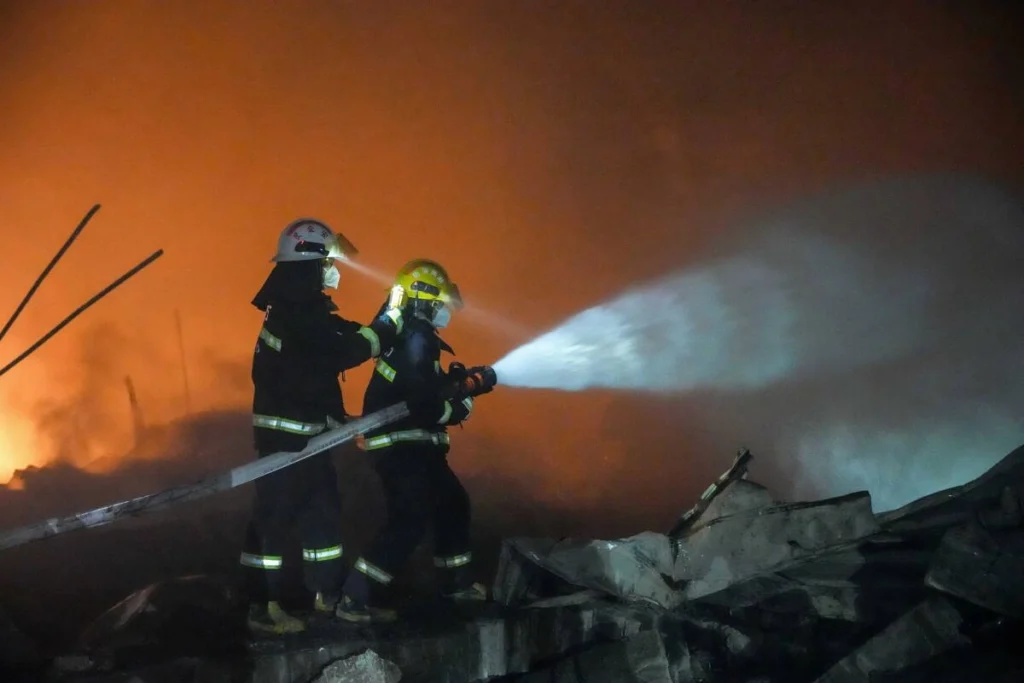
A devastating explosion in Liuyang, China’s historic fireworks manufacturing hub, has left at least 21 people dead and 61 injured, triggering a nationwide response and urgent safety review across industrial sectors. The blast, which occurred on May 4, 2026, at the Huasheng Fireworks Manufacturing and Display Company in Hunan province, has sent shockwaves through the region and raised concerns about industrial safety in one of China’s most culturally significant production centers.
Authorities confirmed that the explosion caused widespread destruction, leveling buildings and scattering debris across a large area. Thick smoke plumes were visible for kilometers, while emergency services rushed to contain the situation and rescue survivors.
Massive Emergency Response Deployed
Rescue operations were launched immediately, with more than 1,500 personnel—including firefighters, medical teams, and police—mobilized to the scene. Teams worked through unstable debris and hazardous zones, particularly around black powder storage facilities that posed ongoing risks of secondary explosions.
Robotic units were deployed alongside ground crews to navigate dangerous areas, while evacuation orders were issued for residents within a multi-kilometer radius. Hospitals in Liuyang and nearby Changsha were overwhelmed with injured victims, many suffering from severe burns and trauma.
The scale of the response highlights the seriousness of the incident and the challenges faced by authorities in managing such high-risk industrial environments.
President Xi Orders Full Investigation
Chinese President Xi Jinping has called for a comprehensive investigation into the cause of the explosion, emphasizing strict accountability for those responsible. He also directed authorities to prioritize rescue efforts and ensure the best possible medical care for victims.
The directive includes a broader push to strengthen safety protocols across key industries, reflecting ongoing government efforts to prevent similar disasters. National agencies are expected to intensify inspections and enforce stricter compliance measures in hazardous sectors.
Arrests and Accountability Measures Begin
Local authorities have already detained the factory manager and other individuals linked to the facility as part of the investigation. Safety inspectors and public security officials are conducting forensic examinations to determine whether regulatory violations or operational failures contributed to the blast.
Officials in Changsha have expressed condolences to the victims’ families and pledged transparency in the investigation process. The outcome is expected to influence future regulatory policies for high-risk industries across China.
Liuyang’s Fireworks Industry Under Scrutiny
Liuyang has long been recognized as China’s fireworks capital, with a history spanning more than a thousand years. The industry is deeply embedded in the local economy, supplying products to both domestic and international markets.
However, the reliance on volatile materials such as gunpowder presents ongoing safety challenges. Incidents like this highlight the need for rigorous safety management and continuous monitoring of industrial practices.
For tourism, Liuyang’s reputation as a cultural destination tied to fireworks production may face short-term setbacks as safety concerns come into focus. Visitors drawn to cultural festivals and manufacturing tours could see changes in access and operations as authorities reassess safety standards.
Community Grief and National Reflection
The explosion has left the local community in mourning, with families grieving the loss of loved ones and many residents displaced. Survivors have described chaotic scenes as they fled collapsing structures and attempted to assist injured colleagues.
Community support efforts are underway, with local organizations providing shelter, food, and assistance to affected families. The tragedy has also sparked nationwide discussions about workplace safety and the human cost of industrial accidents.
Broader Impact on Industry and Safety Policies
The Liuyang disaster is expected to prompt a comprehensive review of safety practices across China’s fireworks and chemical industries. Authorities are likely to implement stricter regulations, enhanced inspections, and improved risk management systems.
For the global tourism sector, the incident underscores the importance of safety in destinations associated with industrial heritage. Travelers increasingly prioritize secure environments, and incidents of this scale can influence destination perception and visitor confidence.
A Turning Point for Industrial Safety
As investigations continue, the Liuyang explosion stands as a stark reminder of the risks inherent in high-hazard industries. The combination of economic importance and safety challenges requires a balanced approach to regulation and innovation.
China’s response, including high-level directives and rapid emergency action, signals a commitment to addressing these challenges. The lessons learned from this tragedy are expected to shape future policies and safety standards, not only in Liuyang but across the country’s industrial landscape.
In the aftermath of the disaster, the focus remains on recovery, accountability, and prevention—ensuring that such a devastating event does not repeat in one of the nation’s most iconic industrial regions.