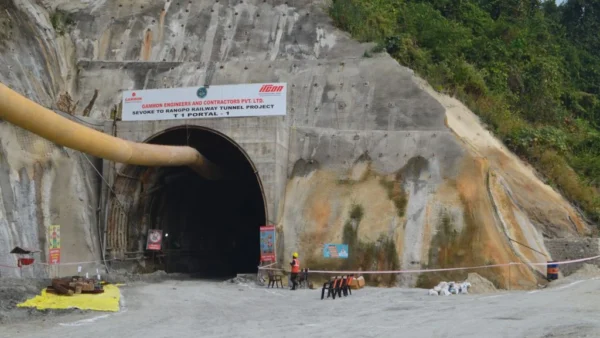
Sikkim is on the brink of a transformative tourism and infrastructure breakthrough as the Sevoke–Rangpo railway project advances toward its 2027 completion, promising to redefine access to one of India’s most scenic Himalayan destinations. Backed by investments exceeding INR 4,000 crore and strong policy support, the initiative is expected to significantly boost tourism, streamline logistics, and integrate the state more closely with the national transport network.
The railway project, combined with road and expressway developments, marks a major shift in how travelers reach the mountainous state, historically known for its challenging accessibility.
Rail Connectivity to Revolutionize Himalayan Travel
The 44.96-kilometer Sevoke–Rangpo railway line is set to become Sikkim’s first rail connection, offering a faster and more reliable alternative to road travel. The route, currently under construction, navigates complex terrain through a network of tunnels and bridges designed to overcome steep gradients and fragile ecological zones.
A key milestone has already been achieved with the successful breakthrough of one of the major tunnels, signaling steady progress despite engineering challenges. Once operational, the railway is expected to reduce travel time significantly and improve overall passenger comfort.
For tourists, this development will open up seamless access to Sikkim’s high-altitude landscapes, monasteries, and adventure destinations, making the region more attractive to both domestic and international visitors.
Road and Expressway Projects Enhance Accessibility
Alongside rail development, Sikkim is undergoing a comprehensive upgrade of its road infrastructure. A proposed expressway linking Bagdogra in West Bengal to Gangtok aims to create a high-speed travel corridor, improving connectivity for travelers arriving via nearby airports.
These improvements are expected to reduce transit times and enhance last-mile connectivity to remote villages and tourist sites. For the hospitality sector, better road access means more efficient supply chains, improved service delivery, and increased capacity to accommodate growing visitor numbers.
Tourism Sector Set for Significant Growth
The enhanced connectivity is anticipated to unlock Sikkim’s full tourism potential. Known for its biodiversity, cultural heritage, and adventure tourism offerings, the state has long been limited by difficult access routes.
With the railway and road projects in place, visitor numbers are expected to rise steadily. Improved access will encourage longer stays, repeat visits, and increased spending across the tourism ecosystem.
Hotels, homestays, tour operators, and local businesses stand to benefit from the influx of travelers, contributing to job creation and regional economic development.
Sustainable Tourism and Regional Distribution
A key focus of the infrastructure push is sustainable tourism. By improving access to lesser-known destinations, authorities aim to distribute visitor traffic more evenly across the state.
This approach helps reduce pressure on popular sites such as Gangtok and Tsomgo Lake while promoting rural tourism and community-based experiences. It also ensures that economic benefits are shared across different regions, supporting inclusive growth.
For travelers, this means discovering new destinations and experiencing Sikkim beyond its traditional hotspots.
Future Expansion Toward Nathu La
Plans are already underway to extend the railway network beyond Rangpo toward Gangtok and further to Nathu La, a strategic high-altitude border region. Surveys for this extension are in progress, involving detailed geological and environmental assessments.
If realized, this expansion would further enhance accessibility to some of the most remote and iconic locations in the Himalayas, positioning Sikkim as one of the most accessible high-altitude destinations globally.
Economic and Strategic Integration
The Sevoke–Rangpo railway is part of a broader national strategy to integrate Northeast India with the rest of the country. Improved connectivity is expected to facilitate not only tourism but also trade and logistics, reducing transportation costs and boosting local industries.
For the tourism sector, this integration means better coordination with national travel networks, increased airline connectivity to nearby hubs, and enhanced visibility in global travel markets.
A New Era for Sikkim Tourism
As Sikkim celebrates 50 years of statehood, the ongoing infrastructure developments signal a new era of accessibility and growth. The combination of rail, road, and air connectivity is set to transform the travel experience, making the region more reachable, efficient, and appealing to a wider audience.
The Sevoke–Rangpo railway project, in particular, stands as a landmark achievement that will reshape how travelers experience the Himalayas. By 2027, the journey to Sikkim is expected to become faster, safer, and more convenient, opening new opportunities for tourism and economic expansion.
Transforming Travel in the Northeast
The shift from a road-dependent system to a multimodal transport network represents a historic turning point for Sikkim. As infrastructure barriers are overcome, the state is poised to emerge as a leading destination in India’s tourism landscape.
For travelers, the promise is clear: easier access to breathtaking landscapes, richer cultural experiences, and a more connected journey into the heart of the Himalayas.
For more travel news like this, keep reading Global Travel Wire