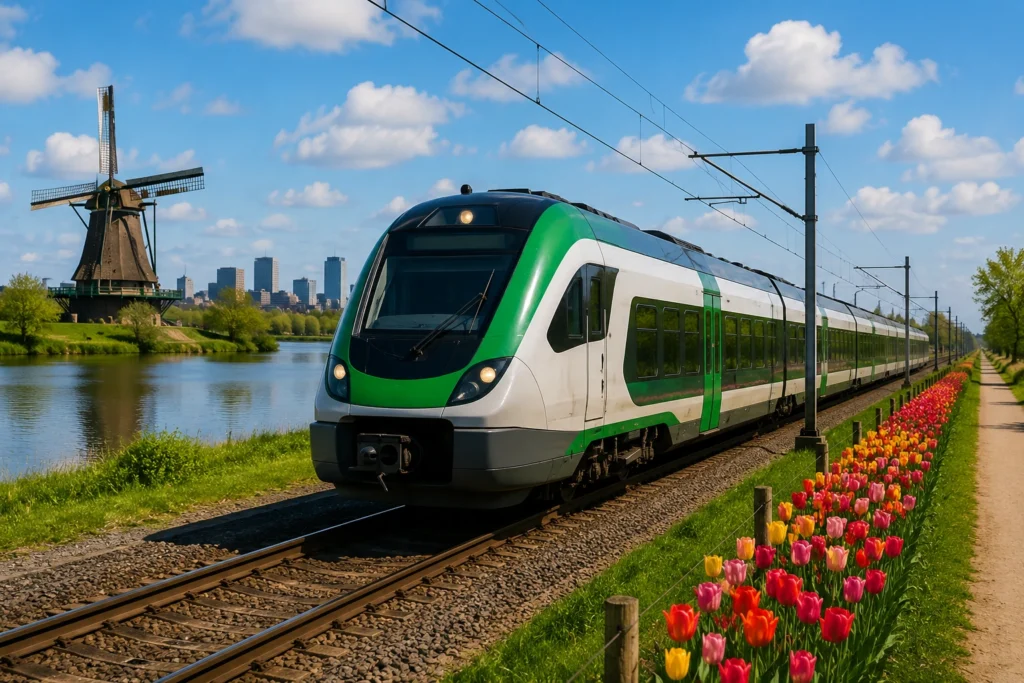
The Netherlands’ international rail landscape is undergoing a major transformation as Dutch open-access rail operator GoVolta officially phases out its daytime Amsterdam–Hamburg service while significantly expanding operations on its increasingly popular Amsterdam–Berlin route.
The strategic adjustment, announced for implementation at the end of May 2026, reflects shifting passenger demand patterns and growing interest in sustainable rail travel between the Netherlands and Germany’s capital region.
Industry observers say the move highlights the evolving dynamics of Europe’s competitive cross-border rail market, where operators are increasingly adapting routes and frequencies based on commercial performance and traveler demand.
GoVolta plans to increase Amsterdam–Berlin services from three weekly departures to as many as six weekly operations by July 2026, positioning the route as the company’s core international rail corridor.
Amsterdam–Hamburg Service Ends Following Lower Passenger Demand
GoVolta originally launched its Amsterdam–Berlin and Amsterdam–Hamburg daytime routes in March 2026 as part of a broader effort to strengthen direct rail connectivity between the Netherlands and Germany.
The services operated on alternating schedules using refurbished rolling stock designed to meet European interoperability standards for international rail travel.
However, after approximately two months of operation, the Amsterdam–Hamburg corridor failed to generate the same passenger demand levels seen on the Berlin route.
Company officials cited lower occupancy rates and insufficient commercial performance as key reasons behind the decision to discontinue the Hamburg service.
Earlier operational adjustments had already reduced service frequency before the company confirmed a full withdrawal of the route by the end of May. Replacement transportation options, including bus services, were arranged for travelers holding reservations beyond the final rail departure date.
Transportation analysts note that open-access rail operators face strong financial pressure to maintain commercially viable occupancy levels due to the absence of public subsidies typically available to state-operated railway systems.
Amsterdam–Berlin Corridor Emerges as Key Rail Growth Market
While Hamburg services are ending, GoVolta is aggressively expanding its Amsterdam–Berlin operations in response to stronger and more consistent ridership demand.
The Amsterdam–Berlin route has rapidly emerged as one of Europe’s increasingly important cross-border rail corridors as travelers seek sustainable alternatives to short-haul flights and long-distance car travel.
The service connects Amsterdam with key Dutch rail hubs including Amersfoort, Deventer, and Hengelo before continuing into Germany and linking with broader regional and long-distance rail networks.
Tourism experts say Berlin continues attracting strong demand from Dutch travelers due to its cultural tourism, nightlife, business travel, historical attractions, and affordability compared to several other major European capitals.
The increased train frequency is expected to improve flexibility for both leisure and corporate travelers while supporting the broader expansion of rail tourism between the Netherlands and Germany.
Open-Access Rail Competition Continues Reshaping European Travel
GoVolta operates under an open-access rail model, meaning the company runs services commercially without direct government subsidies while independently securing rolling stock, track access, and infrastructure rights across national rail systems.
The rise of open-access rail operators is becoming increasingly significant across Europe as European Union transport policies encourage competition, sustainability, and greater international rail integration.
Unlike traditional state-run rail companies, open-access operators can adapt routes more rapidly in response to market demand, passenger behavior, and operational profitability.
Industry experts say GoVolta’s decision to prioritize Berlin demonstrates how flexible service deployment is becoming a defining characteristic of Europe’s liberalized rail market.
The company’s use of refurbished carriages also reflects growing industry efforts to reduce operational costs while supporting more environmentally sustainable rail expansion strategies.
Sustainable Travel Trends Boost International Rail Demand
The growing popularity of Amsterdam–Berlin rail travel aligns with wider European tourism and transportation trends emphasizing sustainability and low-emission mobility.
Rail travel continues gaining momentum among environmentally conscious travelers seeking alternatives to short-haul aviation within Europe.
Governments and tourism authorities across the European Union are increasingly supporting rail-based tourism through infrastructure investments, international route coordination, and climate-focused transportation policies.
The Netherlands remains one of Europe’s most interconnected rail markets, with Amsterdam serving as a major gateway for international rail services linking travelers to destinations across Germany, Belgium, France, and beyond.
Transportation analysts say rail operators that successfully align routes with high-demand tourism and business corridors are likely to benefit most from Europe’s accelerating shift toward sustainable mobility.
Berlin Strengthens Position as a Leading European Rail Destination
Berlin’s growing popularity within European rail tourism is helping strengthen the city’s role as one of the continent’s most accessible and attractive urban destinations.
The German capital continues attracting millions of visitors annually through its combination of history, culture, arts, nightlife, startup economy, and international business activity.
Direct rail connectivity between Amsterdam and Berlin also supports broader multi-city tourism itineraries increasingly favored by European and international travelers exploring the region by train.
Tourism operators say improved rail frequency can encourage longer stays, increased visitor spending, and stronger tourism exchanges between the Netherlands and Germany.
The expansion of Amsterdam–Berlin services may also support demand from younger travelers and digital nomads who increasingly prefer rail travel for convenience, sustainability, and city-center connectivity.
GoVolta Eyes Broader European Expansion Beyond Germany
Despite the withdrawal of the Hamburg route, GoVolta continues signaling broader ambitions for future European rail expansion.
The company has outlined potential plans for additional direct international services, including Amsterdam–Paris connections, although future growth remains dependent on securing infrastructure access rights and maintaining commercial viability.
Transportation experts say the early operational adjustments demonstrate the realities of Europe’s competitive rail market, where operators must continuously balance expansion goals with passenger demand and operational efficiency.
As international rail travel continues evolving across Europe, GoVolta’s network strategy reflects the increasing importance of adaptable service models focused on sustainable transportation, major urban corridors, and high-frequency international connectivity.
The Netherlands’ rail sector is likely to remain at the center of this transformation as demand for fast, environmentally friendly cross-border travel continues growing across Europe.
For more travel news like this, keep reading Global Travel Wire