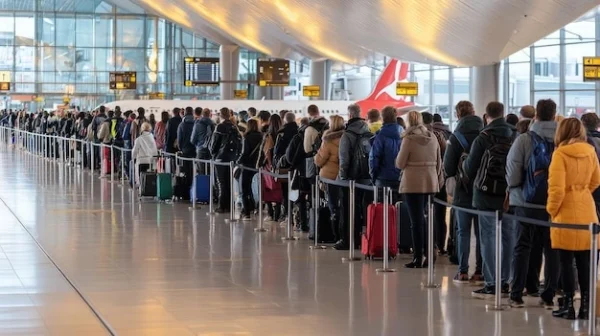
A new wave of flight cancellations at Cairo International Airport has triggered fresh travel disruptions across the Middle East and Northeast Africa after Royal Jordanian Airlines and EgyptAir suspended multiple scheduled departures affecting Amman, Kuwait City, and Port Sudan routes. The cancellations are placing additional pressure on one of the region’s busiest aviation hubs while creating uncertainty for passengers traveling across several major regional corridors.
The affected services included both evening and overnight departures, disrupting key short-haul and regional connections frequently used by business travelers, transit passengers, migrant workers, and tourists. Aviation analysts say the latest operational disruptions highlight the mounting pressure airlines continue facing amid fluctuating travel demand, aircraft scheduling challenges, and broader regional operational constraints.
Four Major Cairo Flights Cancelled
Airport departure schedules confirmed the cancellation of four outbound services from Cairo International Airport involving both Royal Jordanian and EgyptAir operations.
The affected flights included:
- Royal Jordanian flight RJA62 operated by an Airbus A321 from Cairo to Queen Alia International Airport in Amman
- Royal Jordanian flight RJA504 operated by an Embraer E295 on the Cairo-Amman corridor
- EgyptAir flight MSR865 operated by a Boeing 737-800 from Cairo to Port Sudan New International Airport
- EgyptAir flight MSR612 operated by an Airbus A320neo from Cairo to Kuwait International Airport
The suspended operations disrupted several highly traveled regional sectors linking Egypt with Jordan, Sudan, and Gulf markets. Travelers affected by the cancellations now face possible delays, rebooking complications, and missed onward connections across wider international airline networks.
Cairo-Amman Corridor Faces Increasing Pressure
The cancellation of multiple Royal Jordanian flights between Cairo and Amman has raised concerns because the route remains one of the busiest and most strategically important short-haul aviation corridors in the Middle East.
The Cairo-Amman sector supports substantial business travel, tourism flows, diplomatic movement, and international transit connectivity through Jordan’s Queen Alia International Airport.
Repeated service disruptions on this route could increase pressure on remaining flights operating between Egypt and Jordan, particularly during high-demand travel periods when seat availability is already limited.
Aviation experts note that airlines across the region continue adjusting schedules and aircraft rotations as they manage operational efficiency, fleet utilization, and fluctuating passenger demand.
EgyptAir Disruptions Affect Gulf and African Connectivity
The cancellation of EgyptAir services to Kuwait City and Port Sudan also underscores Cairo’s critical role as a regional transit hub connecting Africa, the Middle East, and global long-haul destinations.
Kuwait remains an important route for labor mobility, business travel, and family connections between Egypt and Gulf states. Meanwhile, Port Sudan flights support commercial, humanitarian, and regional connectivity into Northeast Africa.
Passengers impacted by the suspended services may encounter:
- Rebooking delays
- Limited alternate flight availability
- Extended travel times
- Missed international connections
- Unexpected accommodation expenses
- Schedule uncertainty across onward itineraries
Because several of the cancelled flights were scheduled during overnight operational windows, ripple effects could extend into subsequent aircraft rotations and crew scheduling across broader airline operations.
Cairo International Airport Faces Ongoing Operational Strain
The latest disruptions arrive as Cairo International Airport continues handling growing regional passenger traffic while airlines navigate evolving operational challenges.
As one of Africa’s busiest international gateways, Cairo plays a central role within regional aviation networks. Even limited disruptions can create wider operational complications due to the airport’s importance for connecting passengers and transit traffic.
Industry observers say tighter aircraft availability, changing demand patterns, operational optimization strategies, and regional aviation pressures are all contributing to a more unpredictable environment for airlines operating throughout the Middle East and Africa.
Although carriers do not always publicly disclose the exact reasons behind individual flight cancellations, multiple disruptions affecting separate routes often suggest broader operational adjustments within airline scheduling systems.
Travelers Urged to Monitor Flight Status Closely
Passengers traveling through Cairo are being advised to remain flexible and monitor airline updates carefully before arriving at the airport.
Travel experts recommend that travelers:
- Confirm flight status before departure
- Monitor airline notifications regularly
- Review refund and rebooking policies
- Allow additional time for connections
- Stay updated on gate or schedule changes
The latest cancellations once again demonstrate how quickly airline schedules can shift across highly interconnected regional aviation markets.
For transit passengers especially, disruptions at major hubs such as Cairo can create cascading delays affecting flights throughout the Middle East, Gulf region, and Africa.
Regional Aviation Networks Continue Facing Volatility
The newest operational disruptions involving Royal Jordanian and EgyptAir reflect the broader challenges facing regional aviation systems as airlines balance operational stability with strong passenger demand recovery.
Middle Eastern and African carriers continue expanding capacity across several high-demand travel corridors, but operational unpredictability remains a significant challenge amid fleet management pressures and changing market conditions.
With Cairo International Airport positioned at the center of several key regional routes, any scheduling disruptions are likely to impact thousands of travelers moving between Africa, the Middle East, Europe, and Asia.
The latest cancellations affecting Amman, Kuwait City, and Port Sudan underline the continued fragility of regional airline operations and the importance of maintaining flexibility when traveling through some of the world’s busiest aviation corridors.
For more travel news like this, keep reading Global Travel Wire