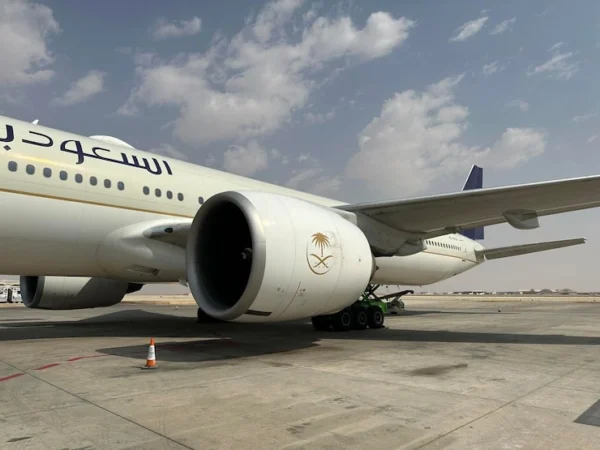
Saudi Arabia’s aviation sector is facing renewed operational disruption after nearly a dozen flights were cancelled across major airports in Jeddah, Riyadh and Medina, affecting domestic and international travel routes connecting the kingdom with Europe, Africa, Asia and neighboring Middle Eastern markets.
The cancellations involved airlines including Saudia, Air France, Kam Air and Nesma Airlines-linked operations, impacting passenger travel, cargo movement and regional aviation connectivity during an increasingly busy travel period.
The affected routes linked Saudi Arabia with destinations including Paris, Amsterdam, Cairo, Hong Kong, Kano and Kandahar, while multiple domestic services connecting Saudi cities were also suspended.
The latest disruptions underline the operational pressures airlines continue facing as the kingdom rapidly expands its aviation network under Vision 2030 while managing rising passenger volumes and complex international schedules.
Jeddah Airport Hit by Domestic and International Cancellations
At King Abdulaziz International Airport in Jeddah, four scheduled departures were cancelled, affecting both domestic passengers and long-haul international operations.
Saudia suspended domestic Airbus A320 flights from Jeddah to Al Bahah and Jazan, disrupting regional travel demand within the kingdom.
The airline also cancelled its Boeing 777-300 passenger service from Jeddah to Kano, Nigeria, impacting international passenger movement between Saudi Arabia and West Africa.
In addition, a Saudia Boeing 747 freighter service to Amsterdam was removed from the operating schedule, temporarily affecting cargo flows between Saudi Arabia and Europe.
The cancellation of both passenger and freight services highlighted how operational disruptions are increasingly affecting broader supply chains alongside traveler itineraries.
Riyadh Faces Pressure on European and Asian Routes
King Khalid International Airport in Riyadh also experienced significant disruption after four additional departures were cancelled.
Among the affected services was Air France flight AFR685 from Riyadh to Paris Charles de Gaulle operated by the Airbus A350, impacting European connectivity between Saudi Arabia and France.
Saudia additionally suspended a Boeing 777 freighter service to Hong Kong, creating temporary pressure on trade and cargo operations linking Saudi Arabia with East Asia.
Domestic services were also affected, including Saudia’s Airbus A330 route from Riyadh to Jeddah and an Airbus A321 service to Rafha.
The disruptions added pressure to Riyadh’s expanding aviation operations as the airport continues growing into a major regional and international transit hub.
Medina Routes to Cairo and Kandahar Suspended
At Prince Mohammad Bin Abdulaziz Airport in Medina, three more flights were cancelled, affecting regional passenger flows tied to religious travel, family visitation and international mobility.
Kam Air suspended its Airbus A340 service from Medina to Kandahar, while Saudia cancelled an Airbus A321 flight to Cairo.
A separate Nesma Airlines-linked Airbus A320neo service between Medina and Cairo was also cancelled, creating additional disruption on one of the region’s busiest travel corridors.
The Medina-Cairo route remains especially important for religious tourism, family travel and business connectivity between Saudi Arabia and Egypt.
Passengers traveling on the affected flights were forced to seek alternative routing and rebooking arrangements amid the sudden schedule changes.
Cargo and Logistics Networks Also Affected
The disruptions extended beyond passenger travel into freight and logistics operations.
Cancelled cargo services to Amsterdam and Hong Kong highlighted the increasing importance of Saudi Arabia’s growing cargo aviation sector and the vulnerability of global supply chains to operational interruptions.
Saudi Arabia has been aggressively expanding cargo and logistics capabilities as part of broader economic diversification goals under Vision 2030, positioning airports such as Riyadh and Jeddah as strategic freight hubs linking Europe, Asia and Africa.
Even temporary disruptions can create scheduling complications for exporters, importers and logistics providers dependent on time-sensitive air freight services.
Travelers Advised to Monitor Airline Updates
Airlines and airport authorities are urging passengers traveling through Saudi Arabia to closely monitor operational updates and confirm flight schedules before heading to airports.
Travelers are being advised to:
Check airline notifications regularly
Review rebooking and refund options
Allow additional time for transfers and connecting flights
Monitor airport operational alerts
Verify departure status before arriving at terminals
Industry observers note that flight disruptions can create cascading delays across airline networks, particularly at high-volume airports managing both domestic and international traffic.
Saudi Arabia’s Aviation Growth Continues Amid Operational Challenges
The latest cancellations come as Saudi Arabia continues investing heavily in aviation infrastructure, tourism development and international connectivity as part of its long-term Vision 2030 strategy.
The kingdom is positioning itself as a major global aviation and tourism hub through airport expansion projects, airline growth initiatives and increasing international route development.
Passenger traffic through Riyadh, Jeddah and Medina continues rising sharply as religious tourism, business travel and international leisure demand expand across the region.
However, the latest disruptions demonstrate the operational complexity associated with rapidly scaling aviation networks while balancing aircraft availability, staffing requirements, maintenance scheduling and fluctuating travel demand.
Middle East Airlines Navigate Growing Pressure
Across the Middle East, airlines are continuing to adapt to rising operational pressure tied to expanding schedules, fleet management and evolving passenger demand patterns.
The region’s aviation industry remains one of the fastest-growing globally, but increasing network complexity is creating additional operational risks for carriers managing large-scale international and domestic operations simultaneously.
For travelers, the latest Saudi Arabia flight cancellations serve as another reminder of the importance of flexibility and real-time travel monitoring in today’s rapidly changing aviation environment.
For the aviation sector, maintaining operational reliability while supporting ambitious expansion plans remains one of the industry’s most significant ongoing challenges.
For more travel news like this, keep reading Global Travel Wire