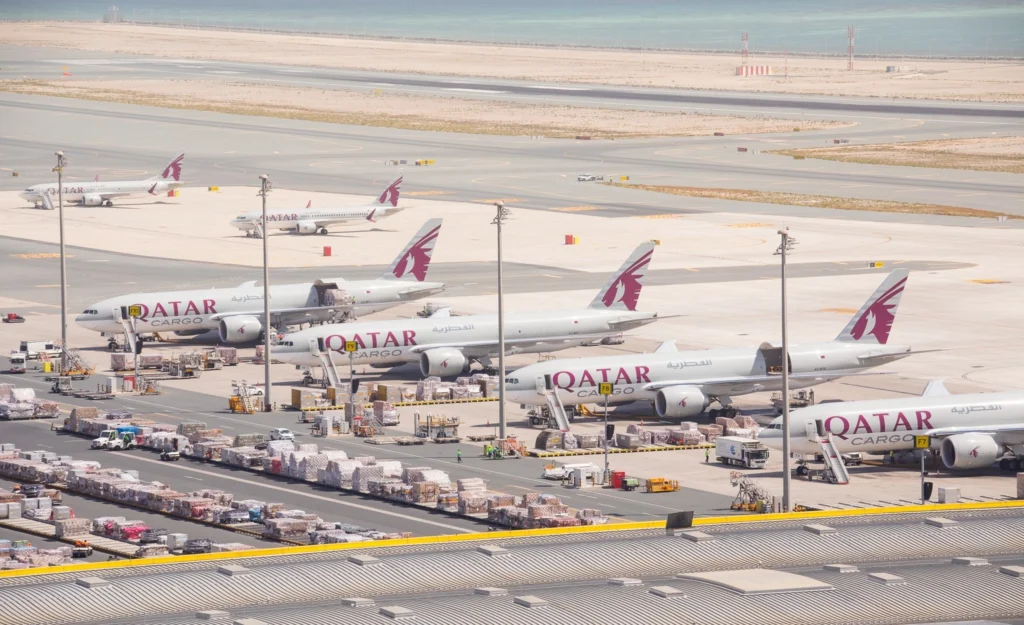
Qatar Airways has triggered fresh travel disruption in the Middle East after cancelling two key international departures from Hamad International Airport in Doha, affecting passenger movement between Qatar, Germany and the United Arab Emirates during a busy period for global aviation networks.
The cancellations impacted scheduled services to Berlin Brandenburg Airport and Dubai International Airport, disrupting both long-haul European connectivity and one of the Gulf region’s busiest regional travel corridors.
Passengers traveling for tourism, business and onward international connections through Doha faced delays, itinerary changes and potential missed transfers as the airline adjusted operations at its primary global hub.
The latest disruption once again highlights how operational changes at major transit airports can rapidly affect international aviation networks and connecting passenger flows across multiple continents.
Qatar Airways Cancels Berlin and Dubai Flights
The affected services included Qatar Airways flight QTR79 from Doha to Berlin and flight QTR1014 from Doha to Dubai.
The Berlin service was scheduled to operate using a Boeing 787-8 Dreamliner, while the Dubai route was planned with a Boeing 777-300ER aircraft.
Both aircraft types are central to Qatar Airways’ international operations and typically transport large passenger volumes across long-haul and high-demand regional markets.
The cancellations affected travelers heading directly to Germany and the UAE as well as passengers connecting onward through Berlin and Dubai to broader European and Middle Eastern destinations.
Berlin Route Disruption Impacts European Connectivity
The cancellation of the Doha-Berlin service disrupted an important aviation corridor linking the Gulf region with Germany’s capital.
Berlin remains a key destination for both tourism and business travel, attracting passengers from across the Middle East, Asia and Africa through Doha’s extensive transit network.
Qatar Airways uses Hamad International Airport as a major transfer hub connecting Europe with Asia-Pacific, Africa and the Indian subcontinent. As a result, even a single long-haul cancellation can create significant downstream scheduling complications for connecting passengers.
Travelers booked on the cancelled Berlin flight may now face delayed arrivals, revised itineraries and limited alternative routing options during a period of strong international travel demand.
The Boeing 787-8 Dreamliner, originally scheduled for the service, is one of the airline’s primary long-haul aircraft and supports many of Qatar Airways’ intercontinental operations.
Dubai Route Disruption Affects Busy Gulf Corridor
The cancellation of the Doha-Dubai flight also disrupted one of the busiest short-haul aviation markets in the Gulf region.
The route supports heavy demand from corporate travelers, tourists and transit passengers moving between Qatar and the UAE.
Dubai International Airport remains one of the world’s busiest international airports and serves as a major hub for both regional and global connectivity.
Because of the frequency of passenger movement between Doha and Dubai, operational disruptions on the corridor can quickly affect meetings, tourism schedules, onward connections and same-day business travel.
The Boeing 777-300ER assigned to the route typically handles high-capacity passenger loads, meaning the cancellation likely affected a substantial number of travelers.
Hamad International Airport Faces Operational Pressure
Hamad International Airport continues to rank among the world’s most important international transit hubs, processing millions of passengers annually through highly coordinated connecting flight systems.
The airport serves as the operational center of Qatar Airways’ global network linking Europe, Asia, Africa, North America and the Middle East.
Even limited flight disruptions can create broader operational pressure involving:
Aircraft rotations
Crew scheduling
Passenger rebooking
Gate management
Connecting flight coordination
Baggage transfer systems
Industry analysts note that hub airports operating dense international schedules remain particularly sensitive to operational interruptions because flights are heavily interconnected throughout the day.
Passengers Advised to Monitor Travel Updates
Travelers affected by the cancellations are being advised to regularly check airline notifications and confirm revised schedules before heading to the airport.
Passengers with onward international connections may also need to review alternative routing options, hotel arrangements and transfer schedules if delays extend into additional sectors.
Airlines typically prioritize rebooking passengers onto the next available flights, though capacity constraints can complicate recovery during busy travel periods.
Travel experts are also advising passengers to allow additional flexibility when connecting through major global hubs during peak international travel demand.
Global Airline Networks Remain Highly Interconnected
The latest Qatar Airways cancellations demonstrate how closely linked modern aviation systems have become.
Doha’s strategic role as a transit gateway means disruptions affecting only a small number of flights can still produce ripple effects across broader international networks.
Operational changes involving long-haul aircraft such as the Boeing 787 and Boeing 777 often impact scheduling efficiency because those aircraft rotate across multiple international routes throughout the day.
Airlines worldwide continue balancing fleet utilization, operational reliability and growing passenger demand as international travel volumes continue strengthening.
Doha Continues Expanding as Global Aviation Hub
Despite the disruption, Qatar Airways and Hamad International Airport remain central players within global aviation and tourism growth.
Doha continues expanding its position as a major international transit hub supported by Qatar’s broader tourism, aviation and economic development strategy.
The airport’s extensive international route network has made Qatar one of the most important aviation gateways connecting East and West.
However, the latest cancellations highlight the operational complexity involved in managing one of the world’s largest and most interconnected airline networks.
For travelers, the disruption serves as another reminder of the importance of flexibility and real-time travel monitoring when flying through major global transit hubs during periods of elevated international travel activity.
For more travel news like this, keep reading Global Travel Wire