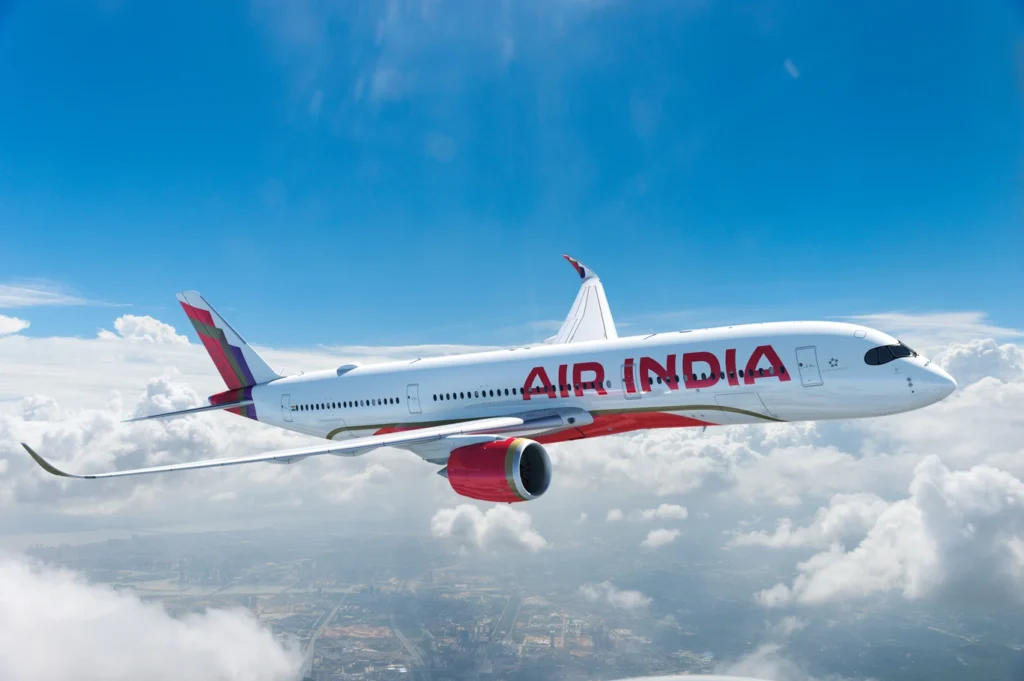
Air India is significantly reducing its international operations between June and August as escalating geopolitical tensions, prolonged airspace restrictions, and surging aviation fuel prices place mounting pressure on the airline’s global network. The Tata Group-owned carrier plans to operate approximately 37% fewer international flights compared with April levels, marking one of the airline’s largest recent capacity reductions on overseas routes.
The airline’s scheduled international departures are expected to fall to around 1,240 monthly flights during the three-month period, sharply down from 1,987 departures recorded in April. Current schedules for May remain higher at approximately 2,072 international departures, but the summer reduction reflects growing operational and financial challenges facing India’s flag carrier.
Air India confirmed that route rationalisation measures are being implemented because of continued airspace restrictions across multiple regions and record-high aviation turbine fuel costs affecting long-haul international operations. The airline stated that the extraordinary operating environment has significantly impacted the commercial viability of several planned services.
Despite the reductions, Air India said it would continue operating more than 1,200 international flights monthly throughout the June-August travel season and would restore full capacity once conditions improve.
Global Airspace Restrictions Disrupt International Routes
The airline’s international network has been under sustained pressure since the closure of Pakistani airspace in April 2025, which forced Air India aircraft to take longer alternative routes to West Asia and Europe. These detours have increased flight durations, fuel consumption, crew costs, and operational complexity across several key international sectors.
The impact intensified further following the US-Iran conflict, which triggered additional airspace restrictions across parts of the Middle East and surrounding regions. Airlines globally have been rerouting flights to avoid restricted zones, resulting in longer travel times and increased operational expenses.
For Air India, these disruptions have heavily affected profitability on long-haul routes connecting India with North America, Europe, and Australia. Rising aviation turbine fuel prices in India have added further pressure, with international operating costs reportedly nearly doubling in recent months.
The airline has already approached the Indian government seeking relief on jet fuel pricing for international operations, although no support measures have yet been announced.
North America and Europe Routes Face Major Reductions
The operational restructuring will impact four of the airline’s five international regions, with North America and Europe experiencing some of the deepest cuts.
Air India has temporarily suspended Delhi flights to Chicago and Newark, along with Mumbai-New York services. Frequencies on routes to San Francisco, Toronto, and Vancouver will also be reduced by 30% to 50%.
However, the airline plans to increase Mumbai-Newark operations, signalling continued demand on select transatlantic corridors despite broader reductions.
In Europe, Air India is scaling back flights to Paris, Copenhagen, Milan, Vienna, Zurich, and Rome by roughly one-third during the peak summer travel period.
For Australia-bound travellers, services to Melbourne and Sydney will be reduced by approximately 43%, affecting both tourism and business connectivity between India and Australia.
The route adjustments are expected to influence travel demand, airline ticket availability, and international tourism flows during one of the busiest global travel seasons of the year.
Asia-Pacific Network Also Hit by Service Suspensions
Air India’s Asian operations are also undergoing significant changes as part of the network rationalisation strategy.
The airline has suspended several regional routes, including Delhi services to China and Maldives, Mumbai-Bangladesh flights, and Chennai-Singapore operations.
Additional reductions are planned for flights connecting Delhi with Singapore, Kuala Lumpur, Kathmandu, Ho Chi Minh City, Colombo, and Bangkok. Frequencies on these routes are expected to decline by approximately 35% to 36% over the summer period.
The service reductions could impact tourism flows across Asia-Pacific, particularly among Indian outbound travellers heading to Southeast Asian holiday destinations during peak vacation months.
Travel agencies and tour operators may also face challenges adjusting itineraries as airlines continue adapting schedules in response to geopolitical instability and operational cost pressures.
Operational Challenges Continue for Air India
The latest network cuts come during a difficult period for Air India as the airline continues addressing broader operational and financial challenges.
In June 2025, a London-bound Air India flight crash that claimed 260 lives placed the carrier under increased regulatory scrutiny and forced operational adjustments across parts of its international network.
The airline is also navigating a leadership transition after chief executive Campbell Wilson resigned earlier this year. A successor has not yet been announced.
Financially, Air India remains under pressure after reporting a consolidated net loss exceeding ₹10,000 crore for FY25. Industry analysts suggest that while route reductions may help contain immediate operational losses, restoring profitability could take significantly longer.
Aviation experts note that several suspended international routes had struggled financially for years, even before the current airspace and fuel cost disruptions intensified.
Tourism and Passenger Impact Expected Worldwide
The reduction in international flights is likely to affect travellers across multiple regions, especially passengers connecting through India to North America, Europe, Southeast Asia, and Australia.
Reduced frequencies could lead to higher fares, limited seat availability, and longer connection times during the busy summer tourism season. Business travellers and international tourists may also face fewer direct route options as airlines continue responding to geopolitical instability and volatile operating costs.
For the global tourism industry, Air India’s decision highlights how geopolitical tensions and fuel market volatility continue reshaping international aviation networks worldwide.
As airlines increasingly adjust schedules to maintain profitability and operational stability, travellers are expected to encounter continued disruptions across major long-haul travel corridors throughout the remainder of the year.
For more travel news like this, keep reading Global Travel Wire