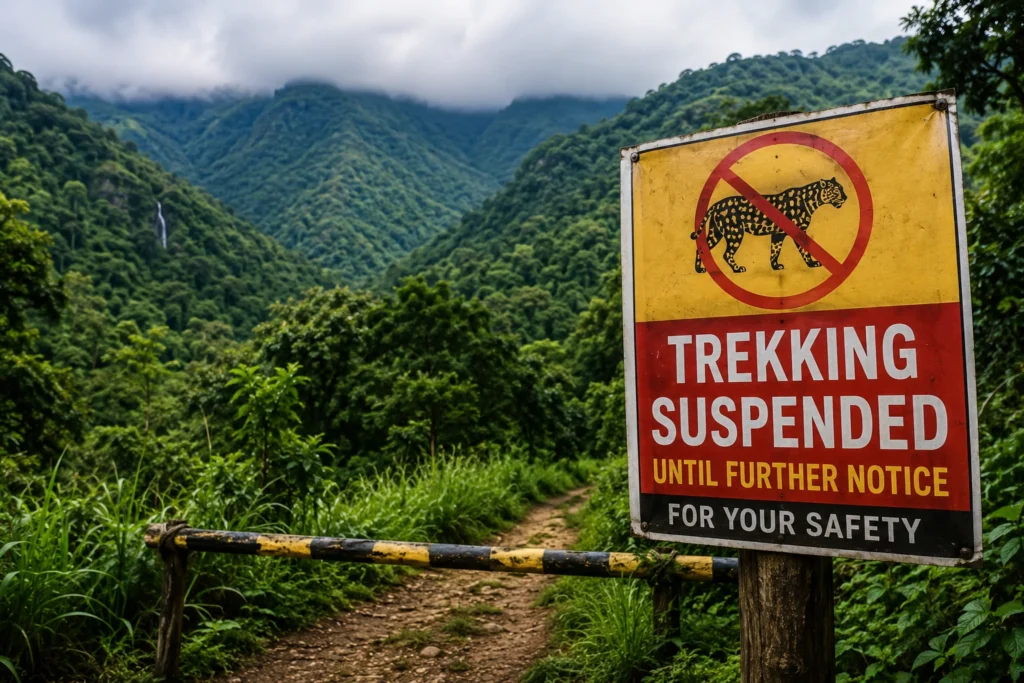
Karnataka has indefinitely suspended trekking and public movement across multiple wildlife-sensitive forest trails following a fatal leopard attack that claimed the life of a 10-year-old boy. The emergency order, issued by state forest authorities, has immediately halted eco-tourism activities across several protected forest zones and trekking corridors known for active wildlife movement, significantly impacting adventure tourism across southern India.
The suspension affects both guided and independent trekking activities throughout forest regions where populations of leopards, tigers, elephants, and sloth bears remain active. Authorities stated that all trekking operations will remain closed until comprehensive wildlife safety reviews, route inspections, and updated protection protocols are completed.
The decision marks one of Karnataka’s most significant tourism safety interventions in recent years and is expected to disrupt thousands of travel plans during a peak trekking and eco-tourism period.
Forest officials confirmed that designated trekking trails across the Western Ghats and several wildlife-sensitive districts have been shut immediately as precautionary measures.
Tour operators, adventure tourism companies, local guides, and hospitality providers have already begun cancelling scheduled trekking expeditions and notifying affected travellers.
Wildlife Safety Concerns Trigger Immediate Action
According to forest department officials, the suspension was implemented after authorities determined that additional safety assessments were urgently required across trekking routes intersecting wildlife habitats and animal movement corridors.
The tragic leopard attack has intensified concerns about increasing human-wildlife interaction in ecologically sensitive tourism zones where trekking activity has expanded significantly in recent years.
Forest authorities said the ongoing review will examine wildlife movement patterns, recent conflict incidents, trail infrastructure, and emergency response systems before any reopening decisions are made.
The assessment process includes collaboration between regional forest departments, wildlife experts, conservation specialists, and safety consultants.
Officials are also evaluating whether existing trekking regulations and monitoring systems remain adequate for areas with high predator activity.
Several routes passing through dense forest regions and protected ecosystems are expected to remain closed for extended periods while wildlife movement and habitat behaviour are studied.
Adventure Tourism Industry Faces Major Disruption
The indefinite suspension is already creating significant disruption for Karnataka’s eco-tourism and adventure travel sectors, which attract thousands of domestic and international travellers annually.
Popular trekking destinations in the Western Ghats, known for mountain trails, rainforest landscapes, waterfalls, and biodiversity tourism, are among the areas affected.
Travel agencies across India have started cancelling Karnataka trekking packages while accommodation providers in trekking base towns report rising booking cancellations and reduced tourist arrivals.
The closure also affects local employment tied to trekking tourism, including licensed guides, porters, transport operators, equipment rental businesses, homestays, and hospitality services.
Industry experts warn that uncertainty surrounding reopening timelines could impact tourism revenue throughout the upcoming travel season.
However, conservation groups and wildlife safety advocates support the temporary shutdown, arguing that visitor safety and wildlife protection must remain the highest priority in ecologically sensitive areas.
Authorities Develop New Safety Protocols
Forest officials stated that upgraded safety measures and operational standards are now being developed for future trekking operations.
Planned improvements include enhanced trail marking systems, wildlife warning infrastructure, revised emergency evacuation procedures, and stricter safety protocols for both guides and visitors.
Authorities are also considering new guide certification programs focused on wildlife awareness, emergency management, and safe trekking practices in predator-prone environments.
Educational campaigns for trekkers may become mandatory before access is restored to certain high-risk routes.
Wildlife experts are currently mapping conflict zones and studying animal migration patterns to determine which trekking routes may require long-term restrictions or modified access controls.
Officials indicated that reopening decisions could occur in phases, with lower-risk trails potentially reopening before routes located in core wildlife habitats.
Tourism Authorities Promote Alternative Activities
As trekking remains suspended, tourism authorities and local operators are exploring alternative travel experiences that minimise direct interaction with wildlife-sensitive forest zones.
Visitors are being encouraged to consider activities such as bird watching, cultural tourism, heritage experiences, wildlife photography from regulated viewing areas, and wellness tourism in safer regions.
Karnataka remains one of India’s leading tourism destinations, attracting travellers with its hill stations, coffee plantations, historical sites, biodiversity hotspots, and national parks.
However, the current suspension highlights growing challenges facing eco-tourism destinations worldwide as increasing visitor activity overlaps with wildlife habitats.
Travellers Advised to Monitor Official Updates
Authorities have not announced a timeline for reopening trekking routes, stating that decisions will depend entirely on the outcome of ongoing safety evaluations and wildlife assessments.
Travellers planning trekking holidays in Karnataka are being advised to contact tour operators immediately regarding cancellations, refund policies, and alternative itineraries.
Forest and tourism departments urged visitors to rely only on official government announcements for accurate reopening information rather than unverified social media reports.
Travel insurance providers are also being contacted by affected travellers seeking clarification on coverage for cancelled adventure tourism activities.
Eco Tourism Faces Growing Wildlife Management Challenges
The Karnataka trekking suspension reflects broader global challenges surrounding sustainable tourism in biodiversity-rich regions.
As adventure tourism continues growing across forests, mountains, and protected ecosystems, authorities worldwide are facing increasing pressure to balance tourism development with wildlife conservation and visitor safety.
For Karnataka, one of India’s most popular eco-tourism states, the incident is likely to reshape future trekking regulations, guide training standards, and wildlife safety protocols for years to come.
Until safety assessments are completed and authorities approve revised operational systems, trekking across several of Karnataka’s forest routes will remain suspended as officials prioritise both human safety and wildlife conservation.
For more travel news like this, keep reading Global Travel Wire