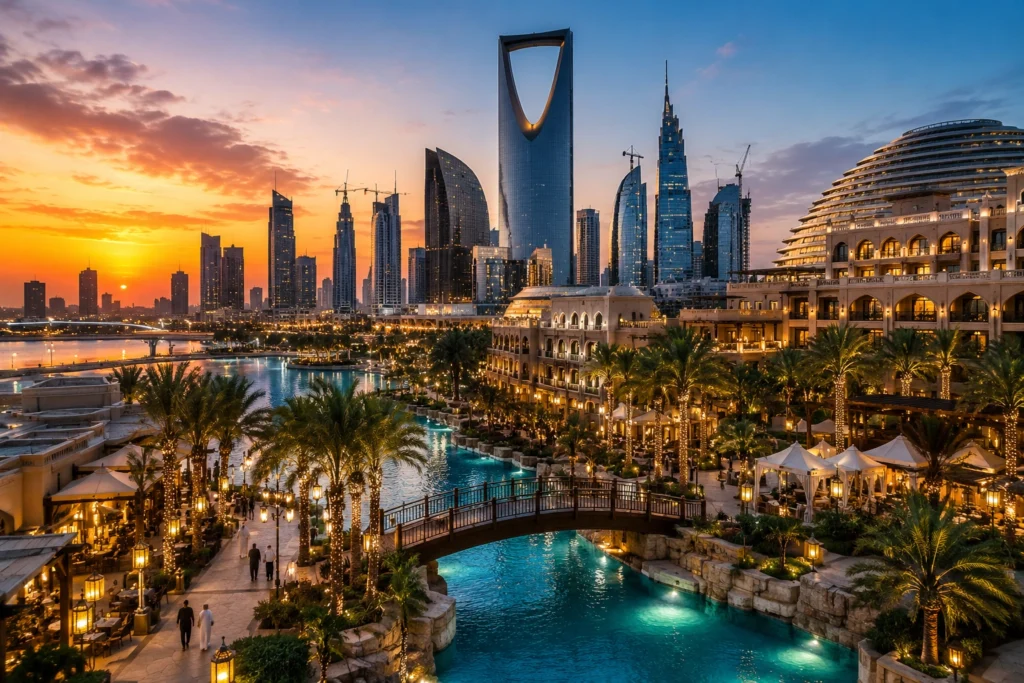
Saudi Arabia is rapidly emerging as one of the world’s fastest-growing tourism and hospitality destinations, with the nation’s hospitality market projected to reach an estimated USD 116.73 billion by 2034. Driven by the country’s ambitious Vision 2030 transformation strategy, the sector is forecast to expand at a strong compound annual growth rate of 9.12 percent as tourism infrastructure, international investment, and global hotel development accelerate across the kingdom.
The transformation reflects Saudi Arabia’s broader economic diversification agenda, which aims to reduce dependence on oil revenues while positioning the kingdom as a leading global destination for leisure, luxury, business, religious, cultural, and adventure tourism.
Vision 2030 Continues Reshaping Saudi Arabia’s Tourism Landscape
At the center of the country’s tourism expansion is Vision 2030, the strategic national development program launched by Mohammed bin Salman in 2016. The initiative has fundamentally reshaped Saudi Arabia’s tourism ambitions by encouraging investment in hospitality, entertainment, aviation, infrastructure, and cultural development.
Under Vision 2030, Saudi Arabia is aggressively expanding airports, transportation networks, tourism districts, and hospitality projects designed to attract millions of international visitors over the coming decade.
The kingdom, historically known primarily for religious tourism linked to Hajj and Umrah pilgrimages, is now broadening its global appeal through luxury resorts, cultural attractions, entertainment experiences, sporting events, and eco-tourism initiatives.
Mega-Projects Drive Hotel and Resort Expansion
Several of Saudi Arabia’s landmark mega-projects are now serving as the foundation of the country’s hospitality growth strategy. Projects including NEOM, The Red Sea Project, and Diriyah Gate are attracting billions of dollars in investment while reshaping the kingdom’s tourism image on the global stage.
NEOM, the futuristic smart-city development on the Red Sea coast, is expected to become one of the world’s most ambitious tourism and hospitality destinations, combining advanced technology, sustainable development, luxury accommodation, and ecological tourism experiences.
Meanwhile, the Red Sea Project is introducing high-end island resorts, eco-tourism experiences, luxury marinas, wellness retreats, and marine adventure tourism aimed at attracting premium international travelers.
Industry analysts say these projects are accelerating demand for hotel development, tourism services, hospitality training, and aviation connectivity throughout Saudi Arabia.
International Hotel Brands Expand Across the Kingdom
Global hotel operators are increasingly expanding their presence within Saudi Arabia to capitalize on the country’s rapidly growing tourism market. Major international hospitality groups including Hilton, Marriott International, and Accor are actively developing properties in Riyadh, Jeddah, Dhahran, and emerging tourism zones.
The expansion includes luxury hotels, upscale resorts, business accommodations, lifestyle properties, and mid-market developments designed to serve both domestic and international visitors.
The increasing presence of global hotel brands is also helping strengthen Saudi Arabia’s international tourism credibility while supporting employment growth, hospitality training, and service quality improvements across the sector.
Religious Tourism Remains Central to Hospitality Demand
Despite the rapid rise of leisure tourism, religious travel continues serving as the backbone of Saudi Arabia’s hospitality economy. Millions of Muslim pilgrims travel annually to Makkah and Madinah for Hajj and Umrah, generating stable year-round demand for hotels, transportation, restaurants, and tourism services.
The Saudi government continues investing heavily in expanding pilgrimage infrastructure, improving transportation access, and increasing accommodation capacity around the kingdom’s holy cities.
During peak Hajj periods, hotel occupancy levels and tourism spending surge dramatically, contributing significantly to hospitality sector revenues and supporting long-term investment confidence.
Cultural and Adventure Tourism Expand Saudi Arabia’s Appeal
Saudi Arabia is also investing heavily in cultural, heritage, and adventure tourism experiences aimed at attracting a broader international visitor base. The historic destination of Al-Ula has emerged as one of the kingdom’s flagship tourism projects, offering archaeological attractions, desert experiences, luxury hospitality, and cultural events.
Adventure tourism initiatives linked to the Red Sea coastline, diving destinations, desert landscapes, and eco-resorts are helping Saudi Arabia position itself as a premium destination for experiential travel.
At the same time, wellness tourism investments including luxury spas, health retreats, and wellness-focused resorts are targeting one of the world’s fastest-growing tourism segments.
Challenges Emerge Alongside Rapid Expansion
While the growth outlook remains highly optimistic, Saudi Arabia’s hospitality sector also faces several operational challenges linked to its rapid expansion. Industry observers note that intense hotel development activity is increasing competition across several markets while creating strong demand for skilled hospitality workers and management professionals.
Training, workforce development, customer service standards, and sustainability implementation are increasingly becoming key priorities for both government agencies and private sector investors.
Developers are also placing greater emphasis on environmentally sustainable tourism projects, including green-certified resorts, renewable energy integration, and eco-conscious construction practices aligned with global hospitality trends.
Aviation and Infrastructure Investments Support Tourism Growth
The hospitality boom is closely connected to Saudi Arabia’s wider aviation and infrastructure expansion strategy. New airports, airline routes, rail connections, highways, and entertainment zones are improving accessibility across the kingdom while supporting larger visitor volumes.
Saudi Arabia’s national tourism goals include dramatically increasing international arrivals over the next decade while positioning Riyadh, Jeddah, and emerging tourism regions as major global travel hubs.
Industry experts believe integrated infrastructure planning will remain essential for sustaining the kingdom’s long-term hospitality growth trajectory.
Saudi Arabia Positioned as Emerging Global Tourism Powerhouse
With major tourism projects advancing rapidly and global hospitality investment accelerating, Saudi Arabia is increasingly being viewed as one of the most important emerging tourism markets worldwide. The kingdom’s combination of religious tourism stability, large-scale leisure developments, luxury hospitality expansion, and government-backed infrastructure investment is creating one of the most dynamic tourism growth stories in the global travel industry.
As Vision 2030 continues transforming the nation’s economic and tourism landscape, Saudi Arabia appears poised to become a major force shaping the future of international hospitality and travel throughout the Middle East and beyond.
For more travel news like this, keep reading Global Travel Wire