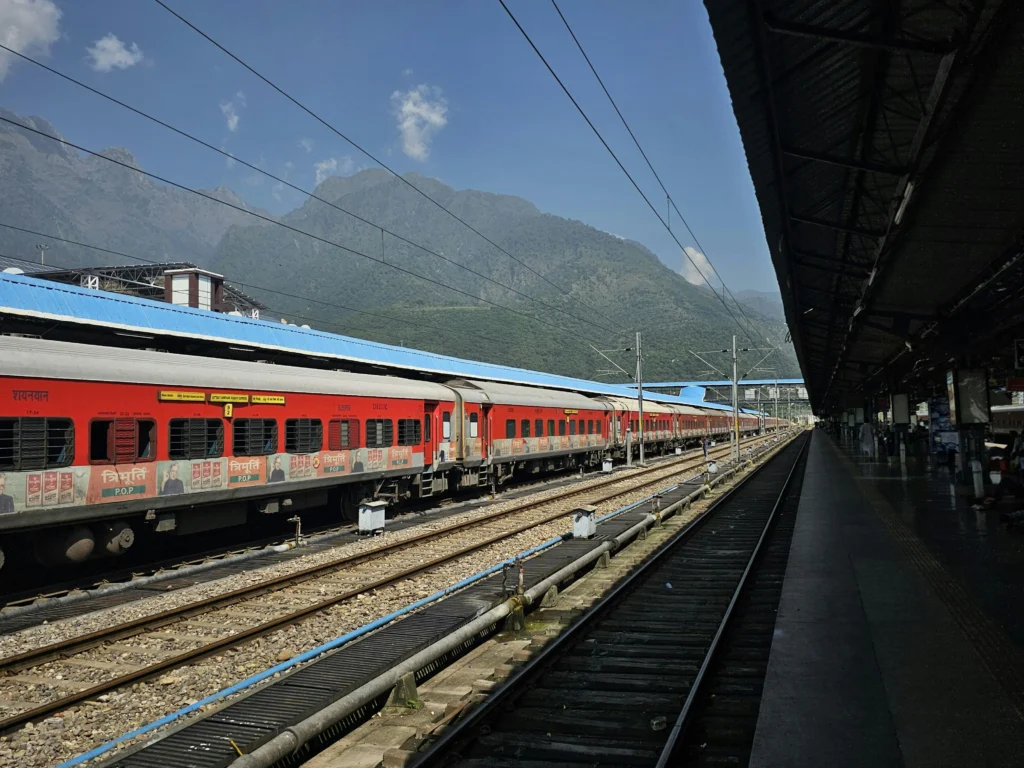
The structural resilience, operational safety, and emergency readiness of India‘s vast long-distance transit network were powerfully validated following a successfully managed localized crisis in central India. Early on Sunday morning, an accidental fire erupted within a premium air-conditioned compartment of the Thiruvananthapuram Central to Hazrat Nizamuddin Rajdhani Express as it navigated the scenic terrains of Madhya Pradesh’s Ratlam district. The flawless, rapid execution of established crisis-response frameworks by onboard technical personnel ensured that all 68 vacationers and transit passengers were safely evacuated with absolute precision, resulting in zero civilian casualties or injuries.
According to verified operational bulletins issued by the Ministry of Railways and the West Central Railway Zone, the incident involved Train Number 12431, a high-capacity flagship service frequently favored by long-distance domestic tourists and international travelers exploring the geographic expanse between India’s southern coastal corridors and the national capital. The train had departed from Ratlam Junction according to schedule at approximately 3:45 AM. The initial atmospheric anomaly was detected at 5:15 AM while the train was transiting between the Vikramgarh Alot and Lunirichha stations, falls under the jurisdiction of the Kota Railway Division.
Precision Management of the Onboard Safety Matrix
The moment unusual thermal indicators and smoke emissions were noticed coming from the B-1 three-tier air-conditioned passenger compartment, train managers and security staff immediately initiated standard emergency mitigation protocols. The loco pilot was instantly signaled to bring the high-speed passenger rake to a controlled halt along a safe stretch of the track. Simultaneously, onboard technicians and attendants mobilized to implement a comprehensive passenger rescue plan, executing a full deboarding of the compartment within a remarkable 15-minute window.
To eliminate secondary risks associated with high-voltage infrastructure, regional power dispatchers immediately deactivated the 25 kilovolt overhead electric supply (OHE) lines running across the impacted sector. This decisive measure allowed local municipal fire brigades, emergency medical teams, and civil administration units to approach the track safely and initiate aggressive firefighting operations.
Official damage assessments confirmed that while the primary blaze was successfully contained within the B-1 compartment, intense thermal radiation caused secondary structural damage to the adjacent luggage brake, generator, and guard car (SLR) positioned directly at the rear of the vehicle. Once the civil defense teams successfully doused the remaining flames, engineering teams utilized specialized cutting tools to isolate and detach the two damaged coaches from the primary passenger rake, ensuring the structural integrity of the remaining transit vehicles.
Focus Keyword: Railway Safety and the Preservation of Travel Infrastructure
The systematic resolution of this localized transit crisis underscores the vital importance of continuous modernization within national railway safety and tourist infrastructure networks. For the international and domestic tourism sectors, train journeys represent an indispensable, eco-friendly mechanism to experience the cultural landscapes of the Indian subcontinent. When an emergency arises, the ability of transport authorities to systematically safeguard hundreds of traveling families without a single injury drastically reinforces long-term consumer confidence in public transport utilities.
To address the immediate logistical challenges faced by the displaced passengers, the Kota Railway Division organized alternative seating arrangements, safely distributing the 68 travelers into neighboring air-conditioned coaches to continue their northward journey. The remaining portion of the Rajdhani Express resumed operations at approximately 9:45 AM.
To restore the train’s full capacity and ensure uncompromised guest comfort for the remainder of the trip, the Department of Traffic Transportation arranged for an additional, fully provisioned replacement coach to be seamlessly coupled to the train rake upon its arrival at Kota Junction in Rajasthan. This meticulous logistical coordination illustrates how robust redundancy protocols can successfully buffer travelers from extended holiday disruptions.
Minimizing Ripple Effects Across Major Transit Corridors
Because the incident unfolded along the highly frequented Mumbai-Delhi trunk route—a primary commercial and leisure artery connecting western India to the northern plains—the precautionary power shutdown and subsequent track clearance operations caused a temporary ripple effect across the regional scheduling grid. Official railway public relations channels confirmed that the movement of approximately 13 passenger services was regulated or temporarily halted at adjacent stations to give restoration crews unhindered access to the site.
Demonstrating a firm commitment to public transparency and traveler assistance, the division immediately activated dedicated emergency helpline numbers across major regional junctions, allowing families and tour operators to monitor real-time schedule modifications. Under the direct supervision of Ratlam Divisional Railway Manager Ajay Kumar Kalara, specialized relief trains and automated tower wagons worked on a war footing, successfully restoring the down line by 8:30 AM and achieving full normalization of the Delhi-bound up line by 1:00 PM.
Committing to Rigorous Network-Wide Prevention
In alignment with strict regulatory policies governing passenger transport safety, the Railway Board has formally constituted a High Administrative Grade-level inquiry committee to conduct an exhaustive technical investigation into the root cause of the thermal ignition. This expert panel will perform detailed forensic evaluations of the affected electrical junctions, climate control systems, and insulation materials to prevent future occurrences.
Furthermore, the ministry has mandated an immediate, nationwide safety audit focusing on fire-retardant compliance and automated detection mechanisms across all long-distance passenger fleets. By translating localized operational insights into sweeping preventative policies, India’s rail network continues to elevate its safety baselines, ensuring that the country’s historic tracks remain a secure, reliable, and deeply trusted pathway for global and domestic exploration.
For more travel news like this, keep reading Global Travel Wire