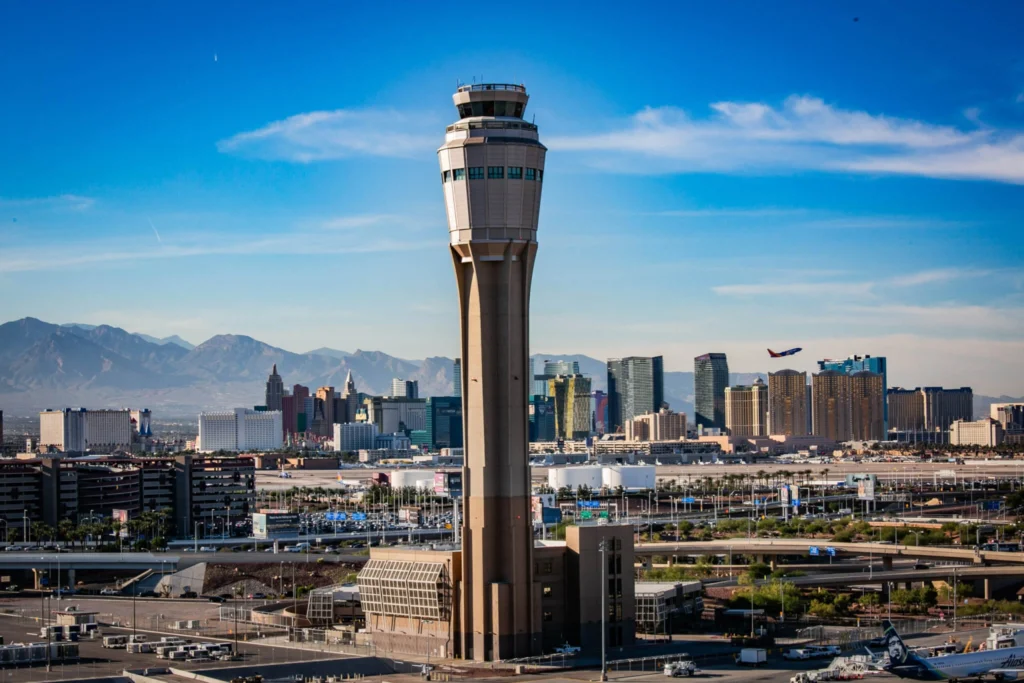
Harry Reid International Airport in Las Vegas became the center of major U.S. aviation disruption after airlines including Delta Air Lines, Southwest Airlines, United Airlines, Horizon Air, Alaska Airlines, and several others faced nearly 699 flight delays and 14 cancellations during a peak travel period, stranding passengers across key destinations including Seattle, New York, Salt Lake City, Newark, Chicago, and Anchorage.
The operational breakdown created widespread travel chaos throughout the national airline network as delays rapidly cascaded across interconnected flight schedules. Travelers encountered crowded terminals, extended gate waits, shifting departure times, missed connections, and lengthy rebooking lines as airlines struggled to stabilize schedules amid mounting congestion and operational pressure.
The disruption highlighted growing vulnerabilities within the U.S. aviation system, where tightly scheduled aircraft rotations, limited operational flexibility, crew availability restrictions, and congestion at major airports continue creating challenges during periods of elevated travel demand.
Las Vegas Airport Faces Severe Operational Pressure
Harry Reid International Airport, one of the busiest airports in the United States, was operating near maximum capacity as the disruption unfolded. The airport’s four runways and two main terminals handle extensive domestic and international traffic daily, making Las Vegas a critical node within the broader U.S. aviation network.
During the disruption, crowded taxiways, gate congestion, and limited scheduling flexibility amplified delays throughout the airport. Even relatively minor operational disruptions quickly escalated as late-arriving aircraft, delayed crews, and air traffic bottlenecks combined to strain airport systems already under pressure from heavy passenger volumes.
Passengers throughout the terminals reported continuously changing departure boards, repeated public address announcements, and prolonged waits at customer service counters as airlines attempted to recover disrupted schedules.
The incident demonstrated how operational strain at a single major airport can trigger nationwide ripple effects due to the highly interconnected nature of modern airline scheduling systems.
Delta, Southwest, United and Alaska Among Hardest Hit
Several major U.S. carriers experienced significant disruption during the operational breakdown, with delays spreading across domestic and transcontinental networks.
Delta Air Lines experienced multiple delays involving routes between Las Vegas, Salt Lake City, and New York. Because Delta relies heavily on hub-and-spoke scheduling systems, even minor disruptions on early departures can rapidly impact flights across multiple regions.
Southwest Airlines also faced widespread delays as its point-to-point operational model encountered cascading schedule disruptions once aircraft rotations began falling behind schedule. Flights connecting Las Vegas with major domestic destinations experienced substantial delays throughout the day.
United Airlines reported operational difficulties on transcontinental routes connecting Las Vegas with East Coast and Midwest hubs including Newark and Chicago. Tight crew scheduling windows and delayed aircraft repositioning added further pressure to recovery efforts.
Regional carrier Horizon Air and Alaska Airlines also experienced disruptions, particularly on routes connecting Las Vegas with Seattle, Anchorage, and other West Coast markets.
While airlines cited varying operational causes, most disruptions stemmed from broader network congestion, delayed aircraft rotations, and crew scheduling limitations.
National Airspace Congestion Intensifies Delays
Although weather conditions in Las Vegas remained relatively stable during the disruption period, operational challenges at other major U.S. airports contributed significantly to the chaos. Delays and congestion across East Coast and West Coast aviation hubs created downstream impacts that spread throughout the national airspace system.
Air traffic control congestion also played a major role, particularly as overlapping flight volumes stressed multiple airspace sectors simultaneously. Modern airline scheduling systems are designed to maximize aircraft utilization with minimal downtime between flights, leaving little margin for operational recovery once delays begin accumulating.
Federal crew-duty regulations further complicated recovery efforts. U.S. aviation safety rules strictly limit the number of hours pilots and cabin crews may operate before mandatory rest periods become required. Once delays pushed some crews beyond allowable duty limits, airlines were forced to delay or cancel additional flights while replacement crews were arranged.
Industry analysts increasingly warn that high passenger demand, limited airport capacity expansion, and lean airline scheduling practices are making the U.S. aviation network more vulnerable to large-scale operational disruptions during peak travel periods.
Travelers Face Missed Connections and Rising Frustration
For travelers, the disruption extended far beyond delayed departures. Many passengers missed connecting flights, experienced overnight disruptions, or were forced to modify carefully planned itineraries at short notice.
Hotels near the airport experienced increased demand from stranded passengers, while rideshare and transportation services also saw elevated pressure as travelers attempted to reorganize plans.
Travel experts recommend that passengers increasingly prepare for potential disruptions during busy travel periods by monitoring airline apps closely, allowing longer connection windows, and packing essential items in carry-on luggage. Flexible travel planning is becoming increasingly important as operational volatility continues affecting major airport networks.
Airlines also encouraged travelers to use mobile rebooking tools and self-service kiosks where possible, helping reduce pressure on airport customer service counters.
Growing Pressure on U.S. Aviation Infrastructure
The large-scale disruption at Harry Reid International Airport reflects broader challenges facing the U.S. aviation industry as passenger demand continues climbing while airport infrastructure and airline operational systems remain under strain.
Experts note that while this disruption may ease in the short term, similar operational challenges are likely to reappear during future holiday periods, summer travel surges, and major event weekends.
Airlines and airport operators are expected to review contingency planning procedures and operational resilience strategies following the disruption. However, the incident reinforces how quickly localized delays can escalate into nationwide aviation problems within today’s tightly interconnected travel environment.
For travelers heading into future peak seasons, the events at Harry Reid Airport serve as another reminder that preparation, flexibility, and real-time travel monitoring have become essential parts of modern air travel.
For more travel news like this, keep reading Global Travel Wire