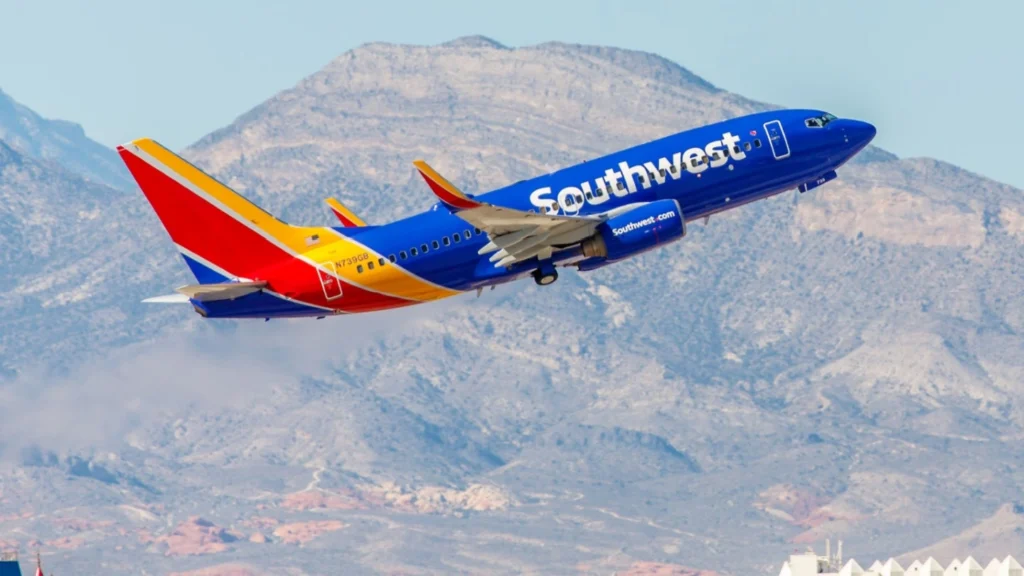
Kansas City International Airport became the latest flashpoint in growing U.S. aviation disruption after Southwest Airlines, United Airlines, Horizon Air, Alaska Airlines, and several additional carriers cancelled 11 flights and delayed another 177, creating widespread travel chaos that extended far beyond Missouri into major hubs including Los Angeles, Detroit, Dallas, Denver, Chicago, and other key destinations nationwide.
The operational disruption unfolded throughout the day as severe weather conditions, crew scheduling limitations, aircraft rotation challenges, and air traffic management restrictions combined to overwhelm airline operations. What initially began as isolated delays quickly escalated into a cascading nationwide disruption that stranded travelers, disrupted connections, and intensified pressure on airport systems already operating under high passenger demand.
Passengers at Kansas City International Airport reported long queues at airline counters, repeated gate changes, delayed departure announcements, and mounting uncertainty over connecting flights as disruptions spread across tightly interconnected airline networks.
Kansas City Airport Faces Mounting Operational Pressure
Although Kansas City International Airport is smaller than major aviation hubs such as Dallas/Fort Worth International Airport or Denver International Airport, its extensive domestic connectivity makes it highly vulnerable to nationwide airline disruptions. Delays involving inbound aircraft from larger hubs frequently trigger operational complications that affect multiple subsequent departures.
Airport officials described the disruption as significant but manageable, though travelers experienced mounting frustration as delays stretched from late morning through evening peak travel hours. Most delays remained under two hours, but some extended substantially longer as aircraft rotations and connecting flight schedules continued falling behind.
The situation highlighted the fragile balance within modern airline operations, where aircraft utilization schedules, crew duty regulations, maintenance requirements, and air traffic flow all function within tightly coordinated timeframes. Even relatively small disruptions at a mid-sized airport can rapidly create ripple effects across multiple airline networks nationwide.
Travelers throughout the terminals watched continuously changing departure boards while customer service lines grew longer as passengers sought rebooking assistance and updated itinerary information.
Southwest, United, Alaska and Horizon Among Most Affected
Several major U.S. carriers experienced substantial operational difficulties during the disruption period, with Southwest Airlines reporting multiple delays and at least three cancellations from Kansas City. The airline cited a combination of weather impacts, crew scheduling complications, and aircraft rotation delays.
Because Southwest operates one of the nation’s largest domestic point-to-point networks, delays at a single airport can rapidly cascade throughout the broader system as aircraft and crews fall behind schedule across multiple destinations.
United Airlines also experienced multiple delays and two cancellations linked to late inbound aircraft and crew availability constraints. Operational issues at major United hubs including Denver and Chicago contributed to the spread of disruptions affecting Kansas City passengers and connecting travelers.
Alaska Airlines reported one cancellation and several delays connected to broader network scheduling challenges involving aircraft utilization and staffing pressures. Horizon Air, operating primarily as a regional affiliate carrier, also experienced cancellations and delays that complicated passenger itineraries involving codeshare connections with larger airlines.
Additional carriers operating through Kansas City International Airport also reported varying degrees of delay, contributing to the total of 177 disrupted flights recorded during the operational breakdown.
Weather, Crew Scheduling and Air Traffic Congestion Drive Delays
Several operational factors combined simultaneously to create the widespread disruption. Severe storms, strong winds, and reduced visibility conditions affected air traffic flow and airport operations, limiting departure flexibility and creating scheduling bottlenecks across multiple airports.
Airline scheduling systems also came under pressure due to the highly intensive utilization of aircraft fleets. Most airlines schedule aircraft to operate multiple flight segments daily with minimal downtime between departures. When earlier flights experience delays, subsequent departures often inherit those operational setbacks throughout the day.
Crew duty regulations added further complications. Federal aviation safety rules strictly regulate how long pilots and flight attendants may work before mandatory rest periods become required. Delays that push crews beyond allowable duty windows frequently force additional cancellations or prolonged operational adjustments.
Air traffic management restrictions around major hubs such as Dallas, Denver, and Chicago further amplified the disruption. Congested airspace sectors and restricted departure windows slowed the movement of aircraft across national routes, contributing to broader network instability.
Maintenance inspections and unexpected mechanical issues also played a role in extending delays for some aircraft, as airlines prioritized safety compliance before allowing departures.
Ripple Effects Spread Across Major U.S. Hubs
The Kansas City disruption quickly expanded into a wider national aviation problem as delays spread across connected airports. In Los Angeles and Detroit, passengers experienced secondary delays involving flights connected to Kansas City operations, while Dallas and Denver faced additional pressure as delayed aircraft and crews created bottlenecks across busy domestic schedules.
Industry analysts note that the modern airline system functions as a highly interconnected network where delays at one airport frequently trigger operational disruptions far beyond the original location. A delayed inbound aircraft may affect several later departures, creating snowball effects that continue throughout the day.
For travelers, the disruption reinforced the growing unpredictability of peak-season air travel across the United States. Experts increasingly recommend that passengers monitor airline apps continuously, allow longer connection windows, carry essential items onboard, and remain flexible with travel plans during busy periods.
Airlines Continue Investing in Operational Resilience
The Kansas City disruptions reflect broader challenges facing the U.S. aviation industry as airlines attempt to balance strong passenger demand with operational efficiency and limited system flexibility.
Airlines continue investing heavily in predictive analytics, real-time tracking systems, operational planning software, and automated passenger communication tools designed to minimize disruption impacts. However, weather volatility, airport congestion, staffing constraints, and high aircraft utilization rates continue testing the resilience of airline operations nationwide.
For travelers, Kansas City’s experience serves as another reminder that modern air travel remains highly vulnerable to cascading operational issues. Preparation, flexibility, and close monitoring of schedules are becoming increasingly essential for navigating today’s complex airline environment.
For more travel news like this, keep reading Global Travel Wire