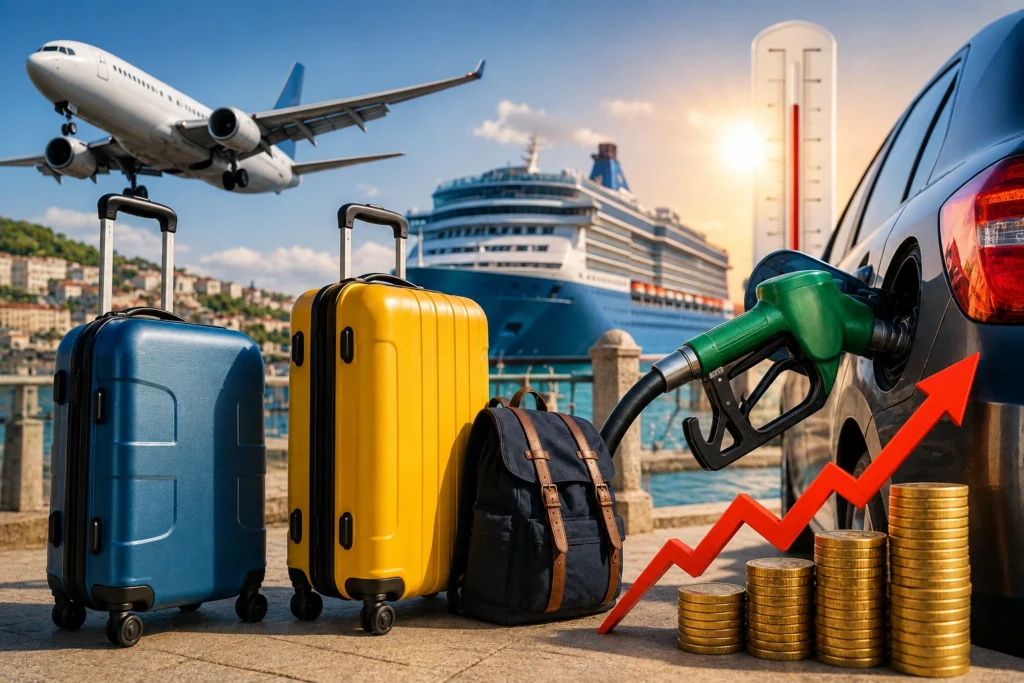
Greece has joined Ireland, Germany, the United States, the United Kingdom, Spain, Italy, France, and several other countries confronting severe tourism pressures as soaring fuel prices drive transport costs sharply higher ahead of the peak summer travel season. Airlines, ferry operators, cruise companies, and ground transportation providers are facing escalating operational expenses that are now being passed directly to travelers through rising fares and surcharges.
The surge in fuel-related costs is creating one of the most expensive summer travel seasons in recent years, forcing tourists and tourism businesses alike to adjust plans, budgets, and operations. Across Europe and North America, travel demand remains strong, but affordability concerns are increasingly shaping booking behavior and destination choices.
Greece Faces Intense Pressure on Island Tourism Routes
Greece, one of Europe’s most popular summer tourism destinations, is experiencing some of the sharpest operational cost increases due to its heavy reliance on ferry and aviation networks connecting the mainland with island destinations.
Greek ferry operators report that fuel-related operating expenses on some medium-distance routes have nearly doubled, while longer island services are facing dramatic cost increases that are placing pressure on ticket pricing and tourism logistics. Popular island destinations including Mykonos, Santorini, and Crete are expected to see significantly higher transportation costs during the summer travel period.
Airlines serving Greece have also introduced fare increases as jet fuel expenses continue rising globally. Domestic and international flights to Greek tourism hotspots are becoming increasingly expensive, creating additional financial strain for families and international travelers planning Mediterranean holidays.
Tourism operators across Greece are now encouraging early reservations and longer-stay itineraries as travelers attempt to maximize value amid rising transportation expenses.
Europe’s Major Tourism Markets Face Growing Travel Inflation
The wider European tourism sector is also experiencing substantial pricing pressure. Spain, Italy, France, Germany, Ireland, and the United Kingdom are all reporting higher transportation and tourism-related operating costs linked to fuel inflation, staffing expenses, and strong seasonal demand.
In Spain, ferry routes and regional flights connecting mainland destinations with islands such as Mallorca and Ibiza have become notably more expensive. Domestic train and bus operators are also adjusting pricing structures to offset rising energy costs.
Italy’s tourism sector is facing similar challenges, particularly on routes serving Sardinia and Sicily, where ferry services remain critical to tourism activity. French tourism operators are likewise reporting increased airfare, rail, and ferry pricing affecting both domestic and inbound travel demand.
Germany, one of Europe’s largest outbound tourism markets, is seeing travelers become increasingly selective about destinations as higher transportation costs affect long-haul and southern European travel plans. Many tourists are reportedly shifting toward shorter regional holidays to manage overall expenses.
Ireland and the United Kingdom are also experiencing significant increases in aviation and ferry pricing, with operators introducing additional surcharges to maintain profitability during the peak travel season.
United States Travelers Feel Impact of Higher Fuel Prices
The United States is facing similar tourism pressures as elevated gasoline and aviation fuel costs affect domestic and international travel demand. Traditional summer road trips have become considerably more expensive, influencing destination choices and travel duration for many American families.
Airlines across the US market have also raised ticket prices on major domestic and international routes to compensate for higher fuel expenses. Tourism analysts note that some travelers are now favoring shorter vacations, flexible travel dates, and off-peak departures to reduce costs.
The broader North American tourism sector continues adapting to increased operational expenses while attempting to preserve strong travel demand throughout the summer season.
Additional Countries Struggle With Rising Tourism Costs
Beyond Europe’s largest tourism economies, several additional countries are also dealing with growing travel inflation linked to fuel and transportation pressures.
The Netherlands, Switzerland, Poland, Romania, Cyprus, and Bulgaria have all reported rising transportation costs affecting domestic and international tourism movement. Ferry operators, rail services, and bus companies across these markets are introducing fare adjustments to absorb higher operating expenses.
Island tourism destinations such as Cyprus are particularly vulnerable due to their dependence on aviation and maritime transportation networks. Tourism businesses in Eastern European destinations are also modifying travel packages and operational pricing to remain competitive while managing escalating costs.
Travelers Adjust Behavior Amid Expensive Summer Season
The combination of rising fuel prices, transportation surcharges, and operational inflation is significantly altering traveler behavior for summer 2026. Tourism operators report growing demand for early bookings, flexible itineraries, and regional travel alternatives as tourists seek to control expenses.
Industry analysts describe the current environment as a “perfect storm” for tourism operators, with high energy costs coinciding with strong seasonal demand and limited transport capacity across several major tourism markets.
Travel advisors are increasingly recommending advance reservations, alternative travel routes, and longer-duration stays to help visitors manage transportation expenses more effectively. Some travelers are also prioritizing destinations reachable by rail or short-haul flights instead of expensive long-distance journeys.
Global Tourism Industry Faces New Economic Reality
The current surge in travel expenses highlights the growing vulnerability of international tourism to fuel price volatility and operational cost inflation. Airlines, ferry operators, cruise lines, and hospitality providers are all under pressure to balance affordability with long-term operational sustainability.
Despite rising costs, tourism demand across Europe and North America remains resilient, supported by strong consumer interest in leisure travel and summer holidays. However, industry leaders acknowledge that affordability concerns are becoming a defining factor shaping tourism strategies and traveler decisions in 2026.
As fuel markets remain volatile, tourism authorities and travel companies across Greece, Spain, Italy, France, the United Kingdom, the United States, and other affected countries continue preparing for a summer season defined by higher costs, operational complexity, and changing traveler expectations.