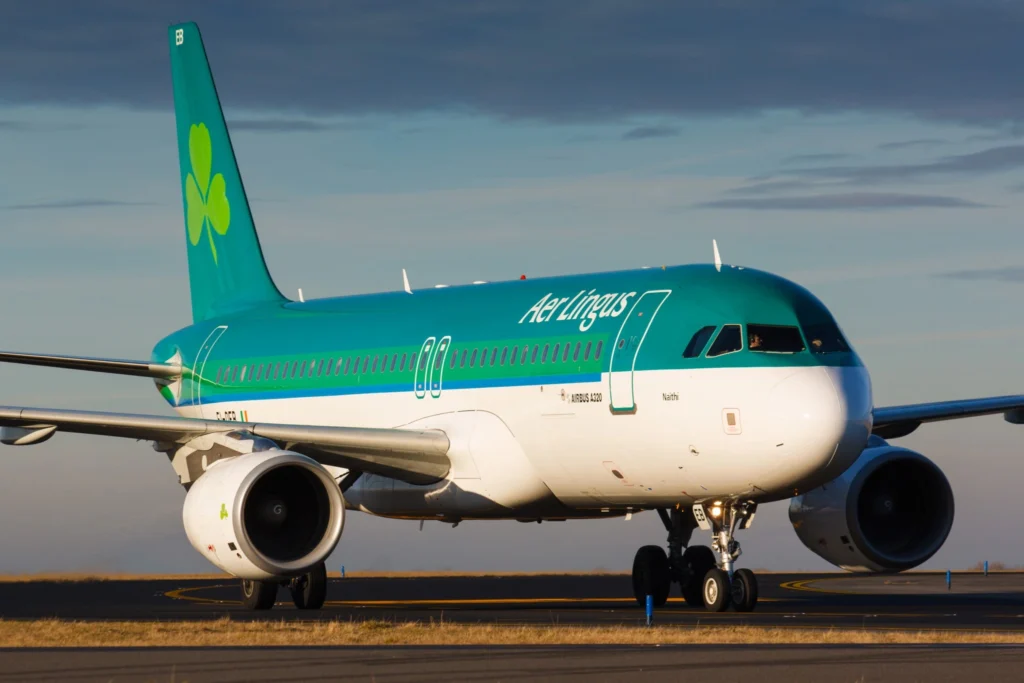
An Aer Lingus flight traveling from Dublin to Geneva declared an in-flight emergency before diverting near Gatwick Airport, triggering a major emergency response operation and causing disruption across connecting air travel schedules. Aviation authorities have now launched a formal investigation into the incident as airline teams, airport emergency units, and regulatory agencies review the circumstances behind the dramatic midair event.
The aircraft was granted immediate landing priority under established aviation emergency procedures after the flight crew issued an emergency declaration while en route. Ground responders, airport fire and rescue units, medical personnel, and operational control teams were rapidly mobilized to support the aircraft’s arrival and passenger handling procedures.
Initial reports indicated there were no catastrophic injuries among passengers or crew, although the incident created significant operational disruption and prompted immediate technical inspections following the aircraft’s landing.
Emergency Declared During Dublin to Geneva Journey
The Aer Lingus service was operating between Dublin and Geneva when the flight crew initiated emergency protocols after identifying an onboard issue requiring immediate operational attention. Air traffic control teams responded by prioritizing the aircraft’s routing and coordinating a diversion toward Gatwick due to runway access, available emergency support infrastructure, and proximity at the time of the incident.
Standard aviation emergency procedures were immediately activated, including coordination between flight crews, airport authorities, air navigation teams, and emergency response services. Ground operations at Gatwick were adjusted to accommodate the diverted aircraft while maintaining broader airport traffic flow and safety management.
Passengers onboard were later guided through a controlled disembarkation process supervised by airline personnel and airport teams following the aircraft’s arrival.
Gatwick Emergency Response Teams Mobilized
Emergency teams at Gatwick Airport prepared designated response zones as the aircraft approached for landing. Fire and rescue crews, medical support teams, and airport operational units were positioned on standby to provide immediate assistance if required.
The landing itself was completed under controlled but expedited conditions as authorities worked to secure the aircraft and evaluate the onboard situation before normal passenger transfer procedures resumed. Airport officials also coordinated temporary operational adjustments to minimize wider disruption across scheduled flights.
Following the landing, security personnel and technical specialists conducted preliminary evaluations of the aircraft while emergency response protocols remained active across parts of the airport infrastructure.
Passenger Welfare and Rebooking Operations Activated
Aer Lingus initiated passenger support procedures shortly after landing, providing travelers with information updates, refreshments, rebooking assistance, and logistical coordination for onward journeys. Medical evaluations were also made available for passengers requiring additional attention following the stressful in-flight experience.
Airline representatives acknowledged the emotional impact often associated with emergency flight diversions and confirmed that welfare support resources were offered during the recovery process. Ground transportation coordination and alternative flight arrangements were also organized for affected passengers experiencing onward travel disruption.
The incident caused ripple effects across connected flight schedules as airline operational teams worked to stabilize services and minimize additional delays.
Technical Investigation Now Underway
The aircraft involved in the emergency diversion has since undergone detailed technical inspection by engineering and maintenance teams. Aviation investigators are expected to examine flight data recordings, cockpit communications, maintenance histories, and crew reports to establish the precise cause of the emergency declaration.
Authorities will also review whether any mechanical malfunction, onboard system issue, or operational factor contributed to the incident. Maintenance records and previous service reports are expected to form part of the broader investigation process overseen by aviation safety regulators.
Aer Lingus operational control teams are additionally reviewing internal procedures and crew actions as part of standard aviation safety assessments following emergency events.
Flight Operations and Airport Traffic Temporarily Affected
The emergency response operation resulted in temporary adjustments to Gatwick Airport traffic management systems as runway access and aircraft movement patterns were modified to prioritize the diverted flight. Air traffic coordination teams worked closely with nearby airports and aviation service providers to limit wider network disruption.
Although airport operations continued throughout the incident, some flights experienced delays, revised departure sequencing, or minor rerouting while emergency procedures remained active. Aviation analysts note that such coordinated responses are considered standard practice during in-flight emergency situations involving commercial passenger aircraft.
Aviation Industry Focuses on Emergency Preparedness
The incident has renewed attention on airline emergency preparedness, crew training standards, and coordination between airports and aviation authorities during unexpected in-flight events. Industry experts continue emphasizing the importance of rapid communication, technical oversight, and passenger welfare systems in maintaining aviation safety during emergencies.
The successful handling of the Aer Lingus diversion has been viewed by aviation professionals as an example of established safety protocols functioning effectively under operational pressure. Emergency response coordination between flight crews, air traffic control, airport services, and airline operations helped prevent escalation while protecting passenger safety throughout the event.
Regulators are expected to monitor follow-up corrective measures and any procedural recommendations that may emerge from the investigation once final findings are completed.
For more travel news like this, keep reading Global Travel Wire